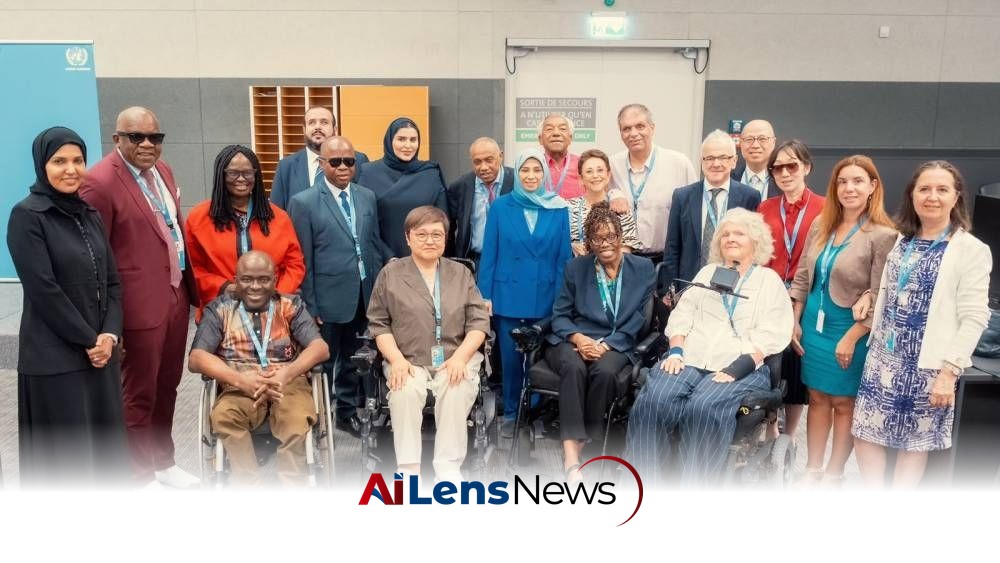


Qatar wraps up discussions with the UN Committee on the Rights of Persons with Disabilities, emphasizing human rights and international cooperation.
Doha, Qatar Aug 15, 2026 ALN: The State of Qatar concluded its discussion of its combined report covering the second to fourth periodic reports on the implementation of the provisions of the Convention on the Rights of Persons with Disabilities, during the interactive dialogue with the United Nations Committee on the Rights of Persons with Disabilities, held in Geneva on August 12 and 13.
This dialogue is part of a broader framework established by the United Nations to monitor and promote the rights of persons with disabilities globally. The Convention on the Rights of Persons with Disabilities (CRPD), adopted in 2006, is a landmark international treaty aimed at ensuring that individuals with disabilities enjoy the same rights and freedoms as everyone else. It underscores the importance of accessibility, inclusion, and participation in society for all individuals, regardless of their physical or mental challenges.
In the concluding statement, Minister of State for International Cooperation HE Maryam bint Ali bin Nasser Al Misnad expressed her sincere thanks and appreciation to the Chair and members of the Committee for the constructive and objective dialogue held during the discussion. The Minister commended the contributions of representatives of national entities and non-governmental organizations, the technical bodies of the United Nations in Geneva, interpreters, and all those who contributed to facilitating and enriching the dialogue. Such contributions are vital as they help to ensure that diverse perspectives and experiences are considered in the discussions surrounding disability rights.
Minister Al Misnad emphasized that the dialogue and the exchange of views and experiences constitute an important foundation for achieving the desired progress in the field of human rights. This sentiment reflects a growing recognition among nations that collaboration and open communication are essential in addressing complex human rights issues. The interactive dialogue represents a valuable opportunity to build bridges of understanding and international cooperation, and to exchange expertise and best practices, contributing to safeguarding human dignity and achieving justice and comprehensive and sustainable development.
During the dialogue, the Minister explained that the State of Qatar would benefit from the outcomes of the discussions, particularly the concluding observations and recommendations to be issued by the Committee. These insights will aid Qatar in continuing to develop its relevant legislation, policies, and national programs concerning the rights of persons with disabilities. The approach taken by Qatar is grounded in respect for human dignity, equality, and nondiscrimination, emphasizing full and effective participation, accessibility, transparency, and accountability.
The commitment to human rights is not merely a legal obligation for Qatar but is considered a fundamental pillar of the comprehensive reform and development efforts pursued by the State. This aligns with global trends where nations are increasingly recognizing the importance of integrating human rights into their national development agendas. By prioritizing human rights, Qatar aims to create an inclusive society where all individuals, regardless of their abilities, can contribute to and benefit from social and economic development.
Furthermore, the Minister noted that cooperation with United Nations human rights mechanisms complements the State's national and international efforts to promote and protect human rights and to consolidate their values and principles. This cooperation is crucial as it allows Qatar to align its national practices with international standards, thereby enhancing its credibility and commitment to human rights.
In this context, the Minister of State for International Cooperation expressed the State of Qatar's aspiration to strengthen cooperation with the United Nations Training and Documentation Center for Human Rights for South-West Asia and the Arab Region. This partnership aims to develop training and awareness programs targeting various national entities, thereby contributing to raising awareness of the provisions of the Convention on the Rights of Persons with Disabilities. Such initiatives are vital in ensuring that all stakeholders are equipped with the knowledge and tools necessary for effective implementation of the Convention.
Moreover, the Minister called on the Committee's experts to benefit from the knowledge and expertise gained from the experiences of States while taking into account the differences in their legal systems, policies, and national specificities. This call for consideration of diversity is particularly important in the context of the CRPD, as different countries face unique challenges and opportunities in promoting the rights of persons with disabilities. By reflecting this diversity in the Committee's work, including when preparing general comments and guidelines, it can assist States Parties in understanding, interpreting, and implementing the provisions of the Convention more effectively.
In this regard, Minister Al Misnad affirmed that promoting and protecting human rights can be achieved through the exchange of positive and diverse models and experiences. This approach not only enriches the dialogue but also fosters a sense of solidarity among nations striving for the same goals. By sharing successful strategies and practices, countries can learn from one another and adapt solutions that are most appropriate for their specific contexts.
She concluded by affirming the State of Qatar's belief that international cooperation represents the optimal means of achieving sustainable progress in the field of human rights. This perspective aligns with the broader international community's efforts to ensure that no one is left behind in the pursuit of development and equality. Qatar's commitment to working with the Committee, the international community, non-governmental organizations, and all other stakeholders reflects a proactive approach to addressing the challenges that threaten human rights.
The implications of Qatar's engagement with the UN Committee on the Rights of Persons with Disabilities are significant. By actively participating in international dialogues, Qatar not only seeks to improve its domestic policies but also positions itself as a leader in the region on issues related to disability rights. This engagement can inspire other nations in the Gulf Cooperation Council and beyond to prioritize the rights of persons with disabilities, fostering a regional movement towards greater inclusivity.
In conclusion, the recent discussions in Geneva represent a crucial step for Qatar in its ongoing efforts to enhance the rights of persons with disabilities. The outcomes of this dialogue will likely influence future legislation and policies, ultimately contributing to a more inclusive society where all individuals, regardless of their abilities, can thrive. As Qatar continues to navigate its path towards comprehensive reform and development, its commitment to human rights will remain a central pillar of its national identity and international standing.
To learn more about the latest developments in Crime & Law, stay updated with our exclusive reports and analyses on AiLensNews.

