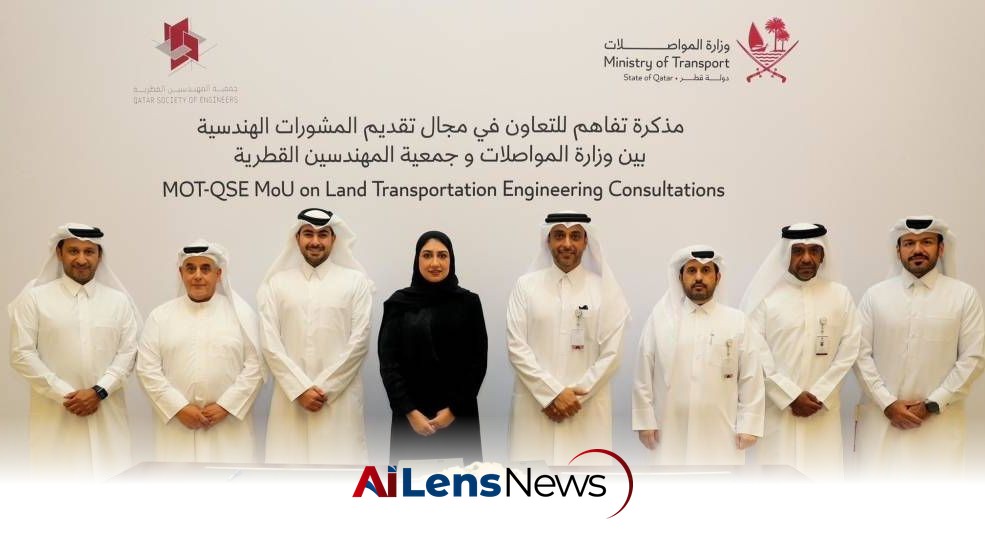


The Ministry of Transport and Qatar Society of Engineers have signed a MoU to enhance collaboration in smart transportation research and development.
Doha, Qatar Jul 24, 2026 ALN: The Ministry of Transport (MoT) and Qatar Society of Engineers (QSE) on Thursday signed a Memorandum of Understanding (MoU) aimed at strengthening collaboration in research and development (R&D) within the realm of smart transportation. This partnership will focus on various critical areas, including studies related to road safety, relevant laws and legislation, and the overall advancement of smart transportation systems.
The significance of this MoU cannot be understated, as it serves as a strategic initiative to enhance the expertise of national talents in the field of road transportation. To achieve this, the MoU outlines plans for the development of specialized training programs, workshops, educational sessions, and upskilling initiatives designed to build capacity in mobility innovation. This is particularly important in a rapidly evolving transportation landscape where technology and safety are paramount.
One of the key components of this agreement is the provision of training programs accessible to personnel engaged in engineering roles at MoT’s Land Transport Affairs. This access to tailored training is expected to equip these professionals with the necessary skills and knowledge to adapt to new technologies and methodologies in transportation engineering.
The MoU was signed at MoT’s office by Eng Abdullah Saif Al Sulaiti, the Assistant Undersecretary for Land Transport Affairs at MoT, and Eng Amna Mohammed Al Naama, the Chairperson of the Qatar Society of Engineers. Their collaboration symbolizes a commitment to fostering innovation and expertise in transportation, which is vital for the ongoing development of Qatar’s infrastructure.
This initiative aligns with Qatar's broader strategic goals, particularly as outlined in the Ministry of Transport Strategy, the National Development Strategy 3 (NDS3), and the Qatar National Vision 2030 (QNV 2030). These policies emphasize the importance of sustainable development and the integration of advanced technologies in various sectors, including transportation.
Smart transportation systems are increasingly recognized as essential components of modern urban infrastructure. They leverage technology to improve traffic management, enhance safety, and reduce environmental impacts. The collaboration between the MoT and QSE aims to position Qatar at the forefront of these developments, ensuring that the nation can effectively manage its growing transportation needs.
The implications of this MoU extend beyond immediate training and development. By fostering a culture of innovation and collaboration, Qatar is taking proactive steps to address the challenges posed by urbanization and population growth. As cities become more congested, the demand for efficient and safe transportation solutions continues to rise.
Moreover, the focus on road safety and relevant legislation is crucial in light of the increasing number of vehicles on the roads. Enhancing safety measures and ensuring compliance with laws can lead to a significant reduction in traffic accidents, ultimately saving lives and resources. This is particularly relevant in a region where rapid development often outpaces the establishment of comprehensive safety regulations.
Furthermore, the MoU highlights the importance of continuous professional development in engineering fields. As technology evolves, so too must the skill sets of those working within the industry. By providing access to ongoing education and training, the MoT and QSE are not only enhancing the capabilities of their workforce but are also contributing to the overall growth of the engineering profession in Qatar.
The partnership also opens avenues for future collaborations, potentially leading to joint ventures in research projects, pilot programs for new technologies, and the sharing of best practices from around the world. Such initiatives can foster a robust ecosystem of innovation that benefits not only the transportation sector but also other industries that rely on efficient mobility solutions.
In conclusion, the signing of this MoU between Qatar's Ministry of Transport and the Qatar Society of Engineers marks a significant step towards enhancing the capabilities and safety of the nation’s transportation system. As both organizations work together to develop innovative solutions and training programs, they are laying the groundwork for a smarter, safer, and more efficient transportation future for Qatar. This initiative is a testament to the country’s commitment to embracing technology and fostering a culture of continuous improvement in its infrastructure development efforts.
To contextualize the importance of this MoU, it is essential to recognize the rapid pace of urbanization in Qatar. With the population steadily increasing and the demand for transportation services rising, the need for smart transportation solutions has never been more pressing. The integration of technology into transportation systems not only enhances efficiency but also contributes to environmental sustainability, a key goal of Qatar's development strategies.
Smart transportation encompasses a wide range of technologies, including intelligent traffic management systems, real-time data analytics for public transport, and the use of artificial intelligence to optimize traffic flow. These innovations can significantly reduce congestion, improve air quality, and enhance the overall travel experience for residents and visitors alike.
The collaboration between the MoT and QSE is particularly timely, given the global shift towards smart cities and sustainable urban development. As cities worldwide grapple with similar challenges, Qatar's proactive approach in fostering local expertise in smart transportation positions it as a potential leader in the region. The emphasis on training and capacity building will ensure that local engineers are well-equipped to implement and manage these advanced systems, ultimately contributing to the resilience of the nation's infrastructure.
In addition to the immediate benefits of improved transportation systems, this MoU also reflects a broader commitment to fostering a knowledge-based economy in Qatar. By investing in the skills and abilities of its workforce, Qatar is not only preparing for the future of transportation but is also enhancing its competitiveness in the global market. This aligns with the goals of Qatar National Vision 2030, which aims to diversify the economy and reduce dependence on oil and gas revenues.
The collaboration may also inspire similar agreements between various sectors, encouraging a multi-disciplinary approach to problem-solving in urban development. By leveraging the expertise of engineers, urban planners, and technology developers, Qatar can create integrated solutions that address the complexities of modern urban living.
As Qatar continues to develop its infrastructure in preparation for upcoming international events and a growing population, the significance of this MoU will likely increase. The partnership between the MoT and QSE is not just a step towards improving transportation; it is a vital component of Qatar's long-term vision for sustainable and smart urban development. Through this initiative, Qatar is setting a precedent for how nations can effectively harness technology to meet the challenges of the future.
To learn more about the latest developments in Crime & Law, stay updated with our exclusive reports and analyses on AiLensNews.

