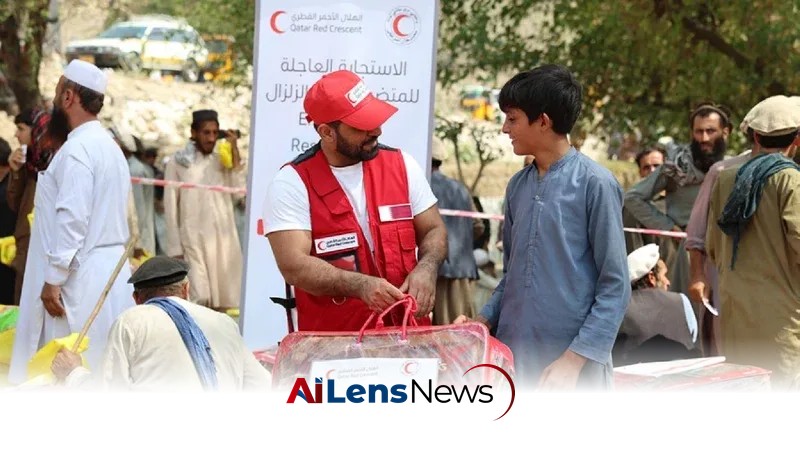


In the first half of 2026, QRCS completed 167 projects across 20 countries, benefiting over 4.17 million people with a focus on health and emergency response.
Doha, Qatar Aug 18, 2026 ALN: The Qatar Red Crescent Society (QRCS) has made significant strides in humanitarian aid, completing 167 relief and development projects across 20 countries during the first half of 2026. This initiative has positively impacted 4,175,837 individuals, with a total financial commitment of QAR 114,603,732. The scale of QRCS's operations reflects a growing commitment to addressing humanitarian needs on both local and global scales, showcasing the organization's ability to mobilize resources and expertise effectively.
Mohammed Bader Al Sada, Assistant Secretary-General for the Relief and International Development Sector at QRCS, emphasized the importance of preparedness and effective partnerships in responding to the increasing frequency of global crises and disasters. This acknowledgment of the evolving landscape of humanitarian needs is critical, as the world faces a multitude of challenges ranging from natural disasters exacerbated by climate change to protracted conflicts that displace millions.
QRCS's approach to humanitarian response is built on three foundational pillars: integration with Qatar’s emergency management system, active membership in the International Red Cross and Red Crescent Movement, and ongoing investments in human and operational capabilities. These pillars not only enhance QRCS’s operational effectiveness but also ensure that its efforts are aligned with international standards and best practices in humanitarian aid.
On a national level, QRCS collaborates with the Civil Defense Council and relevant authorities to participate in emergency and disaster response plans. This collaboration is essential for ensuring a coordinated and efficient response to emergencies within Qatar. By working closely with local authorities, QRCS can leverage existing infrastructure and resources, thereby maximizing the impact of its humanitarian interventions.
Internationally, its affiliation with the International Red Cross and Red Crescent Movement provides access to global expertise and resources, enhancing the coordination of humanitarian interventions. This network allows QRCS to share knowledge and best practices with other national societies, further strengthening its capacity to respond to crises effectively. The importance of such collaborations cannot be overstated, especially in a world where crises often transcend borders and require a unified response.
The organization has also focused on developing its rapid response teams, logistics systems, and strategic stockpiles, alongside operating a 24-hour Disaster Information Management Center to monitor crises and support decision-making. The establishment of such a center is crucial in today’s fast-paced humanitarian landscape, where timely information can significantly affect response strategies and outcomes.
Notably, QRCS became the first organization globally to receive international accreditation for its psychosocial support emergency response unit and is pursuing similar accreditation for its Type II field hospital. This pioneering effort underscores QRCS's commitment to enhancing the quality of its services and ensuring that they meet international standards. Psychosocial support is increasingly recognized as a vital component of humanitarian response, addressing the mental health needs of individuals affected by crises.
Throughout the first half of 2026, QRCS responded to several complex humanitarian crises, particularly in the Gaza Strip, while also providing assistance in Sudan, Yemen, Afghanistan, and other regions where it maintains offices and representative missions. The diverse geographic scope of QRCS's operations highlights the organization's flexibility and adaptability in responding to a wide range of humanitarian needs.
Its relief and development efforts have concentrated on enhancing health services through the provision of medicines and medical supplies, strengthening hospitals and health centers, distributing food and shelter materials, improving water and sanitation services, and offering psychosocial support and early recovery programs. These multifaceted interventions are designed to address the immediate needs of affected populations while also laying the groundwork for longer-term recovery and resilience-building.
Among its key initiatives was the 10th Disaster Management Training Camp, which received official sponsorship from the Qatar Fund for Development. The nine-day program attracted around 300 participants and covered 12 training fields. Such training initiatives are critical for building local capacity and ensuring that communities are better prepared to respond to disasters when they occur.
QRCS also activated its Information Management Center, which produced eight situation summary reports detailing humanitarian developments in countries such as Venezuela, Mozambique, Afghanistan, Kenya, Chile, the Philippines, Indonesia, and Colombia. The ability to generate and disseminate timely information is essential for effective humanitarian response and coordination among various stakeholders.
In response to the earthquakes in Venezuela, QRCS deployed a team comprising medical and relief personnel along with psychosocial support specialists. This rapid deployment exemplifies QRCS's commitment to providing immediate assistance in the wake of disasters, ensuring that affected populations receive the support they need as quickly as possible.
Al Sada noted that QRCS’s ability to respond swiftly relies on thorough preparation before disasters strike, which includes continuously updated emergency plans, regular training and simulations, ready response teams, and strategic stocks of relief and medical supplies. This proactive approach is vital in minimizing the impact of disasters on vulnerable populations and ensuring that humanitarian assistance is delivered effectively.
He added that QRCS remains committed to investing in the training of staff and volunteers, with programs covering disaster management, emergency medical services, logistics, information management, shelter, psychosocial support, leadership, and team management. By equipping its personnel with the necessary skills and knowledge, QRCS enhances its operational capacity and ensures that it can respond effectively to the evolving humanitarian landscape.
QRCS is dedicated to enhancing its capabilities and expanding its humanitarian impact under the motto "Saving Lives and Preserving Dignity." This guiding principle reflects the organization's commitment to not only providing immediate relief but also promoting the dignity and well-being of those it serves. As QRCS continues to evolve and adapt to the challenges of the modern humanitarian landscape, its efforts remain crucial in addressing the needs of vulnerable populations around the world.
To learn more about the latest developments in Health & Public Safety, stay updated with our exclusive reports and analyses on AiLensNews.

