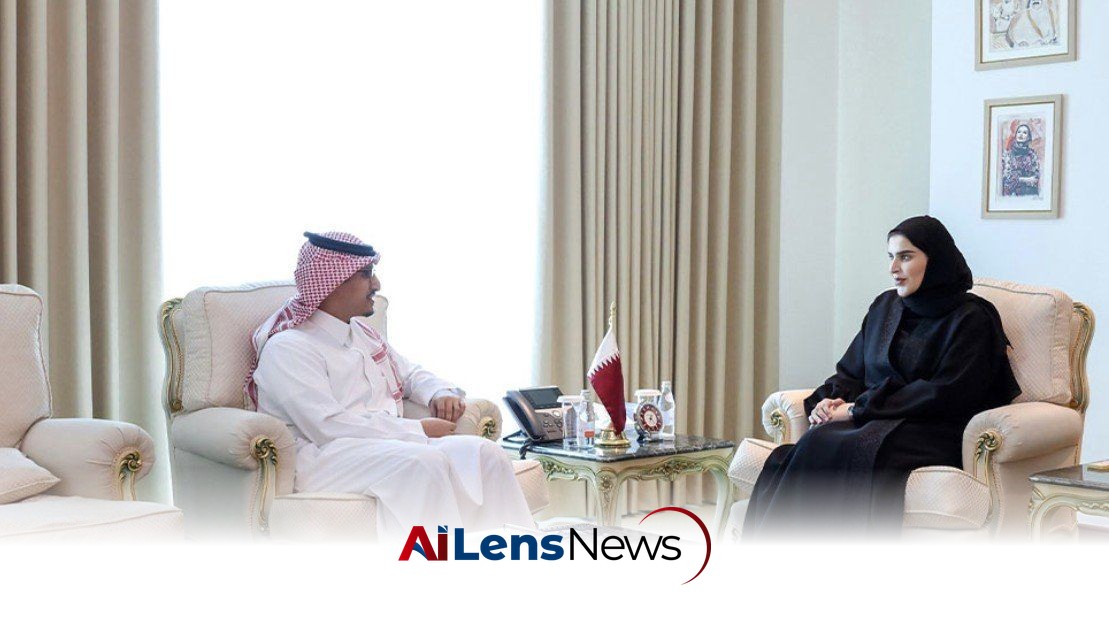


In a significant meeting, Qatar's Minister of State for International Cooperation and the Saudi Ambassador discussed strengthening ties and cooperation between the two nations.
Doha, Qatar Jul 27, 2026 ALN: HE Dr Maryam bint Ali bin Nasser Al Misnad, the Minister of State for International Cooperation in Qatar, recently met with HRH Prince Saad bin Mansour bin Saad bin Saud bin Abdulaziz Al Saud, the Ambassador of Saudi Arabia to Qatar. This meeting signifies an important step in the ongoing diplomatic relations between the two Gulf nations, which have a complex history marked by periods of both cooperation and tension.
During their discussions, the two officials reviewed the existing cooperation frameworks between Qatar and Saudi Arabia and explored avenues to further strengthen their bilateral relations. This engagement underscores the commitment of both nations to enhance diplomatic ties, focusing on mutual interests that benefit their respective populations.
The context of this meeting is set against a backdrop of evolving geopolitical dynamics in the Gulf region. Qatar and Saudi Arabia are both members of the Gulf Cooperation Council (GCC), an economic and political union established in 1981 to foster regional integration and cooperation. However, the relationship between the two countries has experienced significant strain, particularly during the diplomatic crisis that began in June 2017. At that time, Saudi Arabia, along with the United Arab Emirates, Bahrain, and Egypt, imposed a blockade on Qatar, accusing it of supporting terrorism and destabilizing the region. This blockade lasted until January 2021, when the Al-Ula Declaration was signed, marking a restoration of relations.
Since the lifting of the blockade, there has been a concerted effort from both sides to mend ties and enhance cooperation across various sectors, including trade, security, and cultural exchange. The recent meeting between Dr. Al Misnad and Prince Saad reflects this ongoing commitment to dialogue and collaboration. Both nations recognize the importance of regional stability and the need to work together to address shared challenges, including security threats and economic diversification efforts.
Furthermore, the discussions between the two leaders highlight the significance of bilateral relations in the context of broader regional cooperation. The GCC has faced challenges in recent years, not only due to the rift between Qatar and its neighbors but also because of shifting alliances and external influences from global powers. Strengthening ties between Qatar and Saudi Arabia could serve as a stabilizing force within the GCC, fostering greater unity among member states.
In addition to political and security cooperation, economic ties between Qatar and Saudi Arabia are also crucial. Both countries have significant investments in each other's economies, and there is potential for further collaboration in sectors such as energy, tourism, and technology. The meeting between Dr. Al Misnad and Prince Saad may pave the way for upcoming initiatives aimed at enhancing trade relations and attracting foreign investment.
The implications of this meeting extend beyond bilateral relations. As Qatar continues to position itself as a key player in the region, its relationship with Saudi Arabia will likely influence its interactions with other Gulf states and international partners. The ability to maintain a positive relationship with Saudi Arabia could enhance Qatar's diplomatic leverage and contribute to its efforts in promoting regional stability.
Moreover, the ongoing discussions about cooperation are also timely given the global economic challenges posed by fluctuating oil prices and the need for diversification away from hydrocarbon dependency. Both Qatar and Saudi Arabia are actively working on national visions aimed at economic diversification; Qatar's National Vision 2030 and Saudi Arabia's Vision 2030 are frameworks designed to reduce reliance on oil revenues and promote sustainable development. Collaborative efforts between the two nations could yield benefits in achieving these ambitious goals.
As the two countries continue to engage in dialogue, it is essential to recognize the role of public perception and societal attitudes in shaping bilateral relations. The recent thaw in relations has been welcomed by many in both nations, who see the value in cooperation and mutual support. Cultural exchanges, educational partnerships, and joint initiatives could further foster goodwill and understanding between the peoples of Qatar and Saudi Arabia.
In conclusion, the meeting between HE Dr Maryam bint Ali bin Nasser Al Misnad and HRH Prince Saad bin Mansour bin Saad bin Saud bin Abdulaziz Al Saud underscores a renewed commitment to enhancing bilateral relations between Qatar and Saudi Arabia. As both nations navigate the complexities of regional dynamics and pursue mutual interests, their collaboration could play a pivotal role in shaping the future of the Gulf Cooperation Council and promoting stability in the region.
Such discussions are vital in fostering a collaborative environment that benefits both countries and contributes to broader regional cooperation. By continuing to engage in meaningful dialogue, Qatar and Saudi Arabia can work towards a more integrated and prosperous future, reflecting the aspirations of their citizens and the collective goals of the GCC.
To understand the significance of this meeting, it is important to delve deeper into the historical context of Qatar-Saudi relations. The two nations share not only geographical proximity but also cultural and economic ties that have evolved over decades. Despite their shared heritage, their political paths have diverged, particularly in recent years. The blockade initiated in 2017 was a manifestation of these differences, driven by concerns over Qatar's foreign policy choices, including its relationships with Iran and various non-state actors in the region.
The blockade had severe economic implications for Qatar, leading to a need for rapid adaptation and diversification of its economy. In response, Qatar accelerated its efforts to establish new trade routes and strengthen ties with countries outside the GCC, including Turkey and Iran. This period of isolation prompted Qatar to invest heavily in its domestic production capabilities, particularly in food security and infrastructure development, which has since positioned it as a resilient economy.
On the other hand, Saudi Arabia, under the leadership of Crown Prince Mohammed bin Salman, has been pursuing an ambitious reform agenda aimed at modernizing its economy and reducing its dependence on oil revenue. This Vision 2030 initiative seeks to diversify the Saudi economy through investments in sectors such as tourism, entertainment, and technology. The meeting between Dr. Al Misnad and Prince Saad can thus be seen as a strategic move to align their economic goals and explore collaborative opportunities that could enhance the effectiveness of their respective national visions.
The geopolitical landscape of the Gulf region is further complicated by the interests of global powers. The United States has historically maintained a strong alliance with Saudi Arabia, while Qatar has developed strategic partnerships with various nations, including Turkey and Iran, which has sometimes led to tensions with its Gulf neighbors. The balancing act that both nations must perform in navigating their relationships with these external powers adds another layer of complexity to their bilateral discussions.
In light of these dynamics, the recent meeting between Qatar and Saudi Arabia could also be interpreted as a signal to other Gulf states and international actors that both nations are committed to dialogue and cooperation, despite their past differences. It reflects an understanding that regional stability is paramount, and that collaboration can yield benefits not only for Qatar and Saudi Arabia but for the entire Gulf Cooperation Council.
As Qatar and Saudi Arabia move forward, the potential for joint initiatives in areas such as renewable energy, technology innovation, and cultural exchanges could prove beneficial. Both nations have recognized the importance of transitioning to sustainable energy sources, and collaborative projects in this field could not only serve to meet their domestic energy needs but also position them as leaders in the global energy transition.
The ongoing dialogue between these two nations also resonates with the broader aspirations of their populations. Citizens of both Qatar and Saudi Arabia have expressed a desire for greater cooperation and understanding, particularly in light of shared cultural heritage and economic interests. Initiatives that promote people-to-people connections, such as educational exchanges and cultural festivals, could help to bridge gaps and foster a sense of unity between the two nations.
In summary, the recent meeting between HE Dr Maryam bint Ali bin Nasser Al Misnad and HRH Prince Saad bin Mansour bin Saad bin Saud bin Abdulaziz Al Saud represents a critical juncture in Qatar-Saudi relations. As both countries work to overcome past grievances and build a cooperative future, their actions will have far-reaching implications, not only for their bilateral relationship but also for the stability and unity of the Gulf Cooperation Council as a whole. By prioritizing dialogue and collaboration, Qatar and Saudi Arabia can contribute to a more resilient and prosperous Gulf region, ultimately benefiting their citizens and enhancing regional security.
To learn more about the latest developments in Politics, stay updated with our exclusive reports and analyses on AiLensNews.

