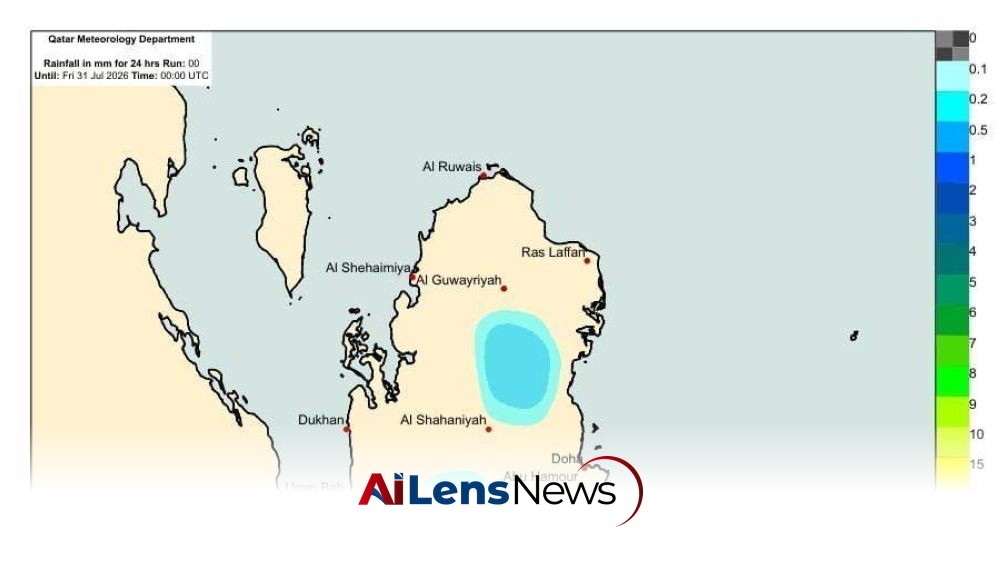



The Qatar Meteorology Department predicts local cloud formation that may lead to rain in some areas on Wednesday and Thursday, with hot temperatures expected.
Doha, Qatar Jul 29, 2026 ALN: Qatar Meteorology Department (QMD) has forecast chances of local cloud formation that may bring rain to some areas on Wednesday and Thursday. This forecast comes as part of a broader weather pattern that is typical for this time of year in the region, where fluctuations in temperature and humidity can lead to localized weather phenomena. The changing weather conditions are not only a reflection of seasonal transitions but also highlight the complexities of meteorological patterns typical for the Gulf region.
According to the latest weather updates, inshore areas on Wednesday are expected to experience scattered clouds and hazy conditions, with hot to very hot temperatures during the daytime. This is consistent with the climatic characteristics of Qatar, which is known for its arid desert climate, characterized by high temperatures and low precipitation levels. The summer months in Qatar often see soaring temperatures that can create discomfort for residents, making any forecast of rain particularly noteworthy.
The QMD has indicated that the temperatures during this period may reach levels typical for late summer in the Gulf region, where daytime highs can soar above 40 degrees Celsius. While the heat is a common occurrence, the potential for localized rainfall adds an interesting dynamic to the weather forecast. Such rain, although generally light, can provide brief relief from the heat and is often welcomed by residents, particularly in areas that may benefit from increased humidity and cooler temperatures. The interplay between high temperatures and the possibility of rain illustrates the unique weather patterns experienced in this desert climate.
Moreover, QMD said there is a possibility of local cloud development, which may be accompanied by rain in some places, particularly during the afternoon. This phenomenon is not uncommon in the Gulf region, where sudden weather changes can occur due to the interaction between land and sea breezes, especially in coastal areas. The formation of clouds and subsequent rainfall can be influenced by a variety of factors, including temperature differentials and humidity levels in the atmosphere. Understanding these interactions is crucial for meteorologists as they work to predict weather changes in a region where conditions can shift rapidly.
Rainfall in Qatar is typically sparse, averaging only a few millimeters annually, which makes these forecasts particularly significant for residents and local agriculture. The potential for rain, even if minimal, can have implications for water resources, agriculture, and even the daily activities of the population. In a region where water scarcity is a pressing issue, any precipitation, no matter how small, can be beneficial. The limited rainfall also means that farmers and agricultural planners must be particularly vigilant and adaptive in their practices, often relying on advanced irrigation techniques to sustain crops.
The department advised the public to stay updated with the latest weather forecasts and alerts. Given the unpredictable nature of weather patterns, especially in arid regions, it is essential for residents to remain informed about potential changes that could affect their daily lives. This is particularly relevant for outdoor activities, as unexpected rain can impact travel plans, outdoor events, and other activities that are sensitive to weather conditions. The importance of real-time weather updates cannot be overstated, especially for those involved in sectors such as construction, tourism, and agriculture, where weather conditions can directly affect operations.
In addition to the immediate effects of the weather, the forecast reflects broader climatic trends that have been observed in the region. Climate change has been a significant factor influencing weather patterns globally, and the Gulf region is no exception. Increased temperatures, changes in precipitation patterns, and more frequent extreme weather events have been noted in recent years. These changes can have profound implications for water management, agriculture, and public health in Qatar and neighboring countries. The impacts of climate change are prompting governments and organizations to seek innovative solutions to adapt to shifting conditions, including investments in renewable energy and sustainable water management practices.
Furthermore, the QMD plays a crucial role in providing timely and accurate weather information that helps the government and various sectors prepare for and respond to weather-related challenges. The department utilizes advanced meteorological technology and data analysis techniques to monitor weather conditions and predict changes. This capability is essential for disaster preparedness, particularly in a region that can experience extreme weather events, such as dust storms and flash floods, in addition to the occasional rain. The role of meteorological departments around the world is becoming increasingly vital as societies grapple with the effects of climate change and the need for effective disaster response strategies.
As Qatar continues to develop and modernize, the importance of accurate weather forecasting becomes even more critical. The country is investing in infrastructure and resources to enhance its resilience to climate-related challenges. This includes initiatives aimed at improving water conservation, enhancing agricultural practices, and developing urban planning strategies that take into account potential weather impacts. For instance, the government has been exploring desalination technologies and wastewater recycling as means to secure water resources in a water-scarce environment.
In conclusion, the forecast of rain chances for Wednesday and Thursday by the Qatar Meteorology Department highlights the dynamic nature of weather in the region and underscores the importance of staying informed about local weather conditions. As residents prepare for the possibility of rain amidst the typical heat of the season, it serves as a reminder of the intricate relationship between climate, weather, and the daily lives of those living in Qatar. The potential for localized rainfall, while modest, can have various implications for water resources, public safety, and the overall well-being of the population. Therefore, continued vigilance and preparedness are essential as the weather evolves in the coming days. The ability to adapt to changing weather patterns will be key for Qatar as it navigates the challenges posed by its unique climate.
To learn more about the latest developments in Crime & Law, stay updated with our exclusive reports and analyses on AILensNews.

