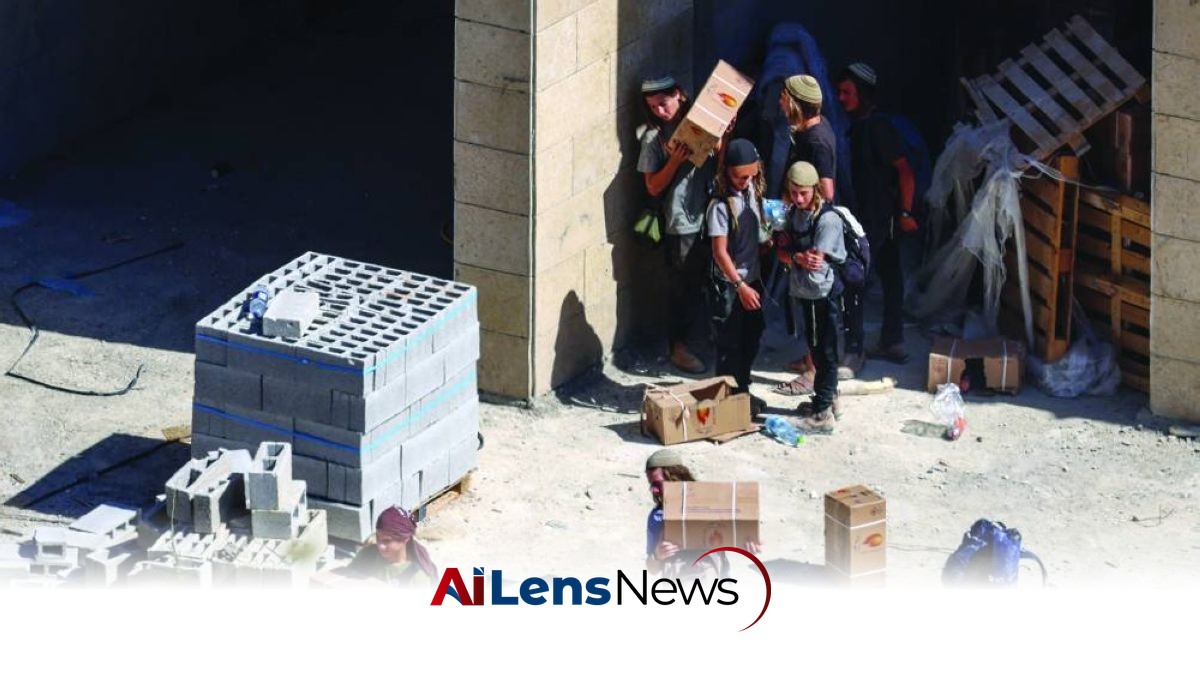


A Palestinian was shot and injured amid clashes during an Israeli settler march through several West Bank towns, escalating tensions in the region.
Doha, Qatar Aug 1, 2026 ALN: The ongoing Israeli-Palestinian conflict is marked by a long and complicated history that spans decades, deeply rooted in territorial disputes, national identity, and religious significance. The recent incident involving the wounding of a Palestinian during an Israeli settler march in the West Bank serves as a stark reminder of the tensions that continue to simmer in this region. The march, which took place in memory of two Israelis killed in clashes, has further exacerbated the already volatile situation in the West Bank, highlighting the challenges of coexistence and the impact of settlement expansion on Palestinian communities.
On the day of the march, occurring in the northern West Bank, Palestinian Red Crescent crews reported treating a young man who had been shot with live ammunition in the abdomen. This incident underscores the dangers faced by Palestinians during such confrontations, where clashes between settlers, Palestinians, and Israeli forces often lead to violence and injuries. The involvement of the Israeli army during these events raises questions about the use of force and the measures taken to maintain order in these highly charged situations.
The march was organized by Israeli settlers to commemorate two of their own who had been killed in clashes in the Palestinian town of Tell, near Nablus. The deaths of these individuals occurred during a period of heightened tensions, which also saw the deaths of four Palestinians. The cycle of violence and retaliation is a recurring theme in the conflict, with each side often responding to perceived threats or acts of aggression from the other. This incident illustrates the profound impact that individual acts of violence can have on broader community relations and the ongoing struggle for peace.
Approximately 100 to 150 settlers participated in the march, which included families with children, indicating that the settler movement remains a significant force in the region. The settlers moved through fields near Tell and into the nearby towns of Sarra and al-Junaid, where clashes with local Palestinians erupted. The presence of armed settlers, reported to be around ten, adds another layer of complexity to the situation. Armed settlers often patrol areas near their communities, which can lead to confrontations with Palestinians and contribute to an atmosphere of fear and hostility.
As the march progressed, the Israeli army was stationed along the route, tasked with managing the situation and preventing clashes from escalating. However, the army's response to incidents of violence has often been criticized, particularly regarding the use of tear gas and live ammunition. The Israeli Defence Forces (IDF) stated that they responded to rocks being thrown at Israeli civilians by firing warning shots into the air. This response raises concerns about the proportionality of force and the potential for escalation when tensions are already high.
In one particular incident, the IDF reported that a Palestinian was shot during a confrontation when soldiers responded to rocks being thrown at them. The army's initiation of the suspect apprehension protocol, which involved firing at what they termed a "primary instigator," reflects the military's approach to managing security threats in the region. However, this approach has led to significant casualties among Palestinians, often resulting in international condemnation and calls for accountability.
The broader context of these events is the Israeli occupation of the West Bank, which has been in place since 1967. This occupation has led to the establishment of numerous settlements, which are considered illegal under international law. The growth of these settlements has been a significant point of contention in the peace process, as they encroach upon land that Palestinians claim for a future state. With over 500,000 Israelis living in settlements across the West Bank, the demographic and political landscape is continually shifting, complicating efforts towards a two-state solution.
Israeli Prime Minister Benjamin Netanyahu's recent announcement to allow the establishment of more settlements in response to the deaths of the two Israelis in Tell further complicates the situation. This decision is likely to be met with backlash from the Palestinian community and the international community, which has consistently called for a halt to settlement expansion as a prerequisite for meaningful negotiations. The establishment of new settlements not only affects the immediate area but also sends a signal regarding Israel's commitment to a peaceful resolution of the conflict.
The implications of these events extend beyond the immediate violence. They highlight the ongoing cycle of retaliation and the challenges of achieving lasting peace in a region marked by deep-seated grievances and historical animosities. Each incident of violence, whether it involves settlers or Palestinians, risks igniting further conflict and complicating diplomatic efforts aimed at resolving the longstanding issues at the heart of the Israeli-Palestinian conflict.
As the situation continues to unfold, the international community remains watchful, with calls for restraint and dialogue growing louder. The need for a comprehensive approach to address the underlying issues of the conflict, including territorial disputes, security concerns, and the rights of both Israelis and Palestinians, has never been more urgent. Without meaningful engagement from both sides, the cycle of violence is likely to persist, further entrenching divisions and undermining the prospects for a peaceful resolution.
The Israeli-Palestinian conflict has its roots in the late 19th and early 20th centuries, with the rise of nationalist movements among both Jews and Arabs in the region. The establishment of the State of Israel in 1948, following the end of British mandate rule, led to the first Arab-Israeli war and the displacement of a significant number of Palestinians, an event that is referred to as the Nakba or "catastrophe" by Palestinians. Over the years, several wars, uprisings, and peace processes have shaped the current landscape, but a lasting resolution has remained elusive.
The issue of Israeli settlements in the West Bank is particularly contentious. Settlements are often built on land that Palestinians consider to be part of their future state, and their expansion is seen as a direct challenge to the viability of a two-state solution. International law, including various United Nations resolutions, has deemed these settlements illegal, yet successive Israeli governments have continued to support their growth, citing security concerns and historical claims to the land.
In addition to the physical presence of settlements, the psychological impact on both communities cannot be understated. For Palestinians, the expansion of settlements is often viewed as a daily encroachment on their rights and aspirations for statehood. For Israelis, particularly those living in settlements, there is a strong sense of security and a belief in their right to live in these areas based on historical and religious claims.
As violence continues to erupt in the West Bank, the prospects for peaceful coexistence appear dim. The cycle of violence perpetuates a narrative of victimhood on both sides, complicating efforts to foster understanding and reconciliation. Each incident, such as the recent shooting of a Palestinian during the settler march, reinforces existing stereotypes and deepens mistrust, making it increasingly difficult for leaders to advocate for peace.
In conclusion, the recent wounding of a Palestinian during an Israeli settler march in the West Bank is emblematic of the broader challenges faced in the Israeli-Palestinian conflict. The incident underscores the need for urgent dialogue and a reevaluation of strategies employed by both sides to address the underlying issues fueling the conflict. Without a commitment to addressing grievances and a shared vision for the future, the cycle of violence is likely to continue, further complicating the path to peace in this historically rich yet deeply divided region.
To learn more about the latest developments in Crime & Law, stay updated with our exclusive reports and analyses on AiLensNews.

