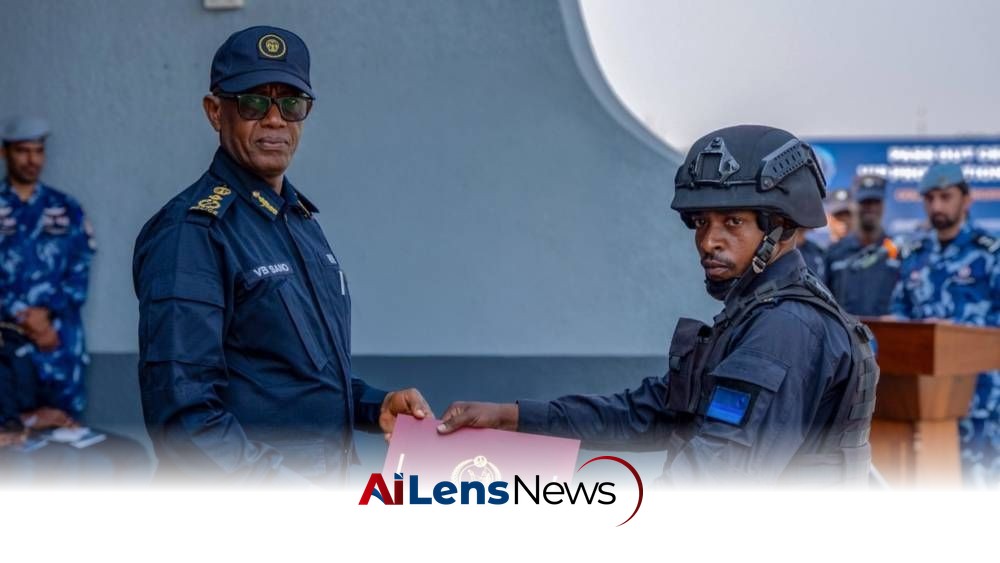


The Internal Security Force of Qatar has successfully concluded three specialized training courses for Rwandan National Police, enhancing bilateral security cooperation.
Doha, Qatar Jul 25, 2026 ALN: The Internal Security Force (Lekhwiya) has concluded three specialized training courses for members of the Rwandan National Police under the supervision of its Training Institute, further strengthening security cooperation between Qatar and Rwanda.
The programmes covered VIP protection, riot control, and combat operations in populated areas. The closing ceremony was attended by the Deputy Inspector General of the Rwanda National Police. This event not only marks the completion of the training but also symbolizes the ongoing commitment of both nations to enhance their security frameworks through collaboration.
The courses were held as part of the joint security cooperation between the State of Qatar and the Republic of Rwanda. They are aimed at enhancing the operational capabilities of Rwandan police personnel and improving their preparedness to respond effectively to a range of security challenges. Such training initiatives are crucial as they directly contribute to the safety and security of the populace, which is a primary responsibility of law enforcement agencies.
This initiative is significant in the context of international security cooperation, which has become increasingly important in a world facing diverse and complex security threats. The collaboration between Qatar and Rwanda reflects a broader trend in which countries are seeking to improve their security forces through training and resource sharing, particularly in areas that require specialized skills. In recent years, the international community has recognized that security is a shared concern, and partnerships like this one exemplify how nations can work together to address mutual challenges.
Qatar has been actively involved in various international security initiatives, particularly in regions where it can provide expertise and resources. This partnership with Rwanda is a part of Qatar's broader foreign policy strategy, which emphasizes the importance of building strong bilateral relationships with nations across Africa and beyond. The training provided by Lekhwiya not only enhances Rwanda's security capabilities but also reinforces Qatar's role as a key player in regional and global security matters. By investing in the training of foreign police forces, Qatar positions itself as a contributor to global peace and stability, aligning with its vision of being a responsible member of the international community.
The training courses offered by Lekhwiya are designed to address specific security needs and challenges faced by the Rwandan National Police. VIP protection is an essential skill for law enforcement agencies, especially in a world where political leaders and public figures often face threats. The training in riot control is equally critical, as civil unrest can arise from various socio-political issues, making it imperative for police forces to manage such situations effectively without escalating violence. This aspect of training is particularly relevant in the context of Rwanda, which has experienced significant political changes and social dynamics since the 1994 genocide.
Moreover, combat operations in populated areas present unique challenges, including the need to protect civilians while neutralizing threats. The training provided by Lekhwiya equips Rwandan police personnel with the necessary skills to navigate these complex scenarios, which is vital for maintaining public safety and order. The ability to conduct operations that minimize civilian casualties is a critical component of modern policing, especially in regions where the line between combatants and non-combatants can be blurred.
Rwanda, having undergone significant changes since the 1994 genocide, has made considerable progress in establishing a stable and secure environment. The Rwandan National Police has been at the forefront of these efforts, focusing on community policing and building trust with the public. The training from Lekhwiya aligns with these objectives, as it helps to professionalize the police force and enhance its capabilities to serve the community effectively. Community policing is essential in Rwanda, where the government has prioritized reconciliation and unity following decades of division and conflict.
Furthermore, the collaboration has implications beyond immediate security concerns. It fosters diplomatic ties between Qatar and Rwanda, potentially leading to further cooperation in other sectors such as trade, education, and health. As nations increasingly recognize the interconnectedness of global issues, such partnerships can pave the way for comprehensive strategies that address not just security, but also economic and social challenges. The strengthening of diplomatic relations through such initiatives can lead to mutual benefits, including economic investments and cultural exchanges, which are vital for long-term stability and development.
The closing ceremony of the training courses, attended by high-ranking officials, underscores the importance of this collaboration. It serves as a platform for both countries to reaffirm their commitment to working together in the field of security and beyond. The presence of the Deputy Inspector General of the Rwanda National Police highlights the Rwandan government's recognition of the value of this training and its commitment to enhancing the capabilities of its law enforcement agencies. Such high-level attendance reflects the seriousness with which both nations approach their partnership and the importance of security in their bilateral relations.
As global security dynamics continue to evolve, the need for specialized training and international cooperation will remain paramount. The successful completion of these courses marks a positive step towards building a more resilient security framework in Rwanda, one that is better equipped to handle the challenges of modern policing. With the rise of new threats, including cybercrime and terrorism, the capacity to adapt and respond to these challenges is crucial for any law enforcement agency.
In conclusion, the specialized training provided by Lekhwiya to the Rwandan National Police is a significant development in the realm of international security cooperation. It not only enhances the operational capabilities of Rwandan law enforcement but also strengthens the bilateral relationship between Qatar and Rwanda. As both nations continue to navigate the complexities of global security, such partnerships will be essential in fostering stability and addressing shared challenges. The implications of this collaboration extend beyond immediate security needs and have the potential to influence various aspects of bilateral relations, paving the way for a more secure and prosperous future for both nations.
To learn more about the latest developments in Crime & Law, stay updated with our exclusive reports and analyses on AiLensNews.

