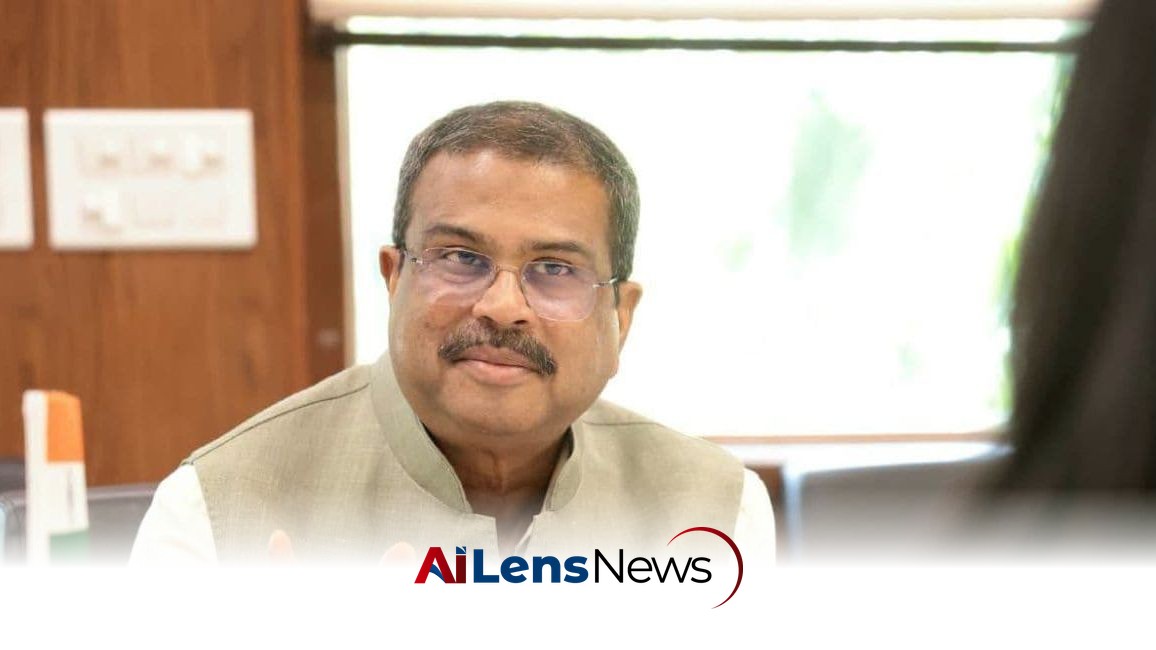


Dharmendra Pradhan's resignation is hailed as a victory for democracy by various leaders following student protests over the NEET-UG paper leak.
Doha, Qatar Jul 26, 2026 ALN: The resignation of Union Education Minister Dharmendra Pradhan has sparked widespread celebrations across social media platforms and among political leaders, public figures, and activists, who are viewing this development as a significant victory for democracy. Pradhan's resignation, which occurred on a Saturday, came in the wake of intense nationwide protests led by the Cockroach Janta Party (CJP), primarily concerning allegations of a leak in the NEET-UG examination paper. This examination is crucial for students aspiring to enter medical colleges in India, and any perceived irregularities can provoke serious public outcry.
The protests, which have been characterized by their fervor and organization, reflect a growing discontent among students regarding educational policies and the integrity of examination processes in India. The CJP, a student-led organization, has been at the forefront of these protests, demanding accountability and transparency from the government regarding the management of educational assessments. The NEET-UG examination, administered by the National Testing Agency (NTA), is a pivotal gateway for students aiming to pursue medical education in the country. Allegations of malpractice, such as paper leaks, threaten not only the fairness of the examination but also the future of countless students who invest significant time and resources into their preparation for this critical test.
The protests have gained momentum over the past few weeks, mobilizing thousands of students across various states. Demonstrators have utilized social media to share their experiences, grievances, and calls for reform, creating a collective voice that has resonated with many. The CJP's demands extend beyond the immediate issue of the NEET-UG paper leak; they encompass broader concerns regarding the transparency and fairness of all educational assessments in India, as well as the need for a more equitable education system. Pradhan's resignation came just hours before a scheduled third round of discussions between CJP representatives and Union ministers, indicating a potential shift in the government's approach to the ongoing crisis.
Among those celebrating the resignation is social activist Sonam Wangchuk, who has garnered attention for his commitment to the student cause, including a 21-day hunger strike. Wangchuk articulated his views on social media, framing Pradhan's resignation as a testament to the power of direct democracy, which he believes emerged from the grassroots level. His message emphasized the importance of peace, patience, and perseverance, suggesting that the protests were not merely about immediate demands but also about fostering a culture of civic engagement among the youth of India. Wangchuk's activism highlights the vital role that individuals can play in advocating for systemic change, inspiring others to take action in pursuit of their rights.
Chief Minister V D Satheesan also joined the chorus of voices celebrating the resignation, framing it as a victory for the younger generation, particularly Generation Z. His assertion that "democracy stands stronger" suggests a belief that the protests have reinforced constitutional values in the face of governmental challenges. This perspective resonates with many who see the protests as a pivotal moment in Indian democracy, where the voices of the youth have played a critical role in shaping political discourse. The engagement of young people in political matters is increasingly seen as essential for the health of democracy, as they represent a significant portion of the electorate and have unique perspectives on the issues that affect their lives.
Wayanad MP Priyanka Gandhi took the opportunity to underscore the historic significance of the day, marking it as a turning point in the relationship between the youth of India and their government. Her statement that the date should be remembered as a historic milestone illustrates the potential for these protests to influence future political narratives and youth engagement in governance. Gandhi's remarks reflect a broader sentiment among many young people who feel empowered to reclaim agency over their futures in a rapidly changing socio-political landscape. The participation of youth in protests is not merely a reaction to specific policies; it represents a broader desire for representation and accountability from their leaders.
In the context of these celebrations, CPI(M) general secretary M A Baby offered a more cautious perspective, acknowledging the resignation as a positive development but emphasizing that it should lead to further reforms. Baby called for the abolition of examinations conducted by the National Testing Agency (NTA) and the rollback of the National Education Policy (NEP) 2020, which has faced criticism from various quarters for its perceived commercialization of education. His comments highlight the complex nature of educational reform in India, where multiple stakeholders have differing views on the best path forward. The NEP 2020, introduced with the intention of overhauling the educational system, has been met with mixed reactions, with critics arguing that it prioritizes profit over accessibility and quality.
AAP national convenor Arvind Kejriwal also chimed in, framing Pradhan's resignation as a significant victory for democracy and the youth of India. His remarks reflect a growing sentiment that political leaders must be held accountable and that public pressure can lead to tangible changes in governance. Kejriwal's emphasis on the need for the government to listen to its citizens resonates with a broader narrative of disillusionment that has characterized many aspects of Indian politics in recent years. The relationship between the government and its constituents has been increasingly scrutinized, with calls for greater transparency and responsiveness to the needs of the populace.
However, not all responses have been uniformly celebratory. Congress leader Rahul Gandhi reminded the public that, despite the resignation, two of the protesters' key demands remain unaddressed. His call for the removal of the current government suggests a deeper political strategy aimed at galvanizing support among various disenfranchised groups, including farmers, laborers, and the economically disadvantaged. Gandhi's appeal to these groups reflects an understanding of the interconnected nature of social justice and educational reform, suggesting that the struggles of students are part of a larger fight for dignity and rights across society. The intersectionality of these issues underscores the need for a comprehensive approach to governance that addresses the diverse challenges faced by different segments of the population.
The implications of Pradhan's resignation extend beyond the immediate context of the protests. It raises questions about the future of educational policy in India, particularly regarding the NEP 2020, which has been criticized for its potential to exacerbate inequalities in access to quality education. The protests have illuminated the frustrations of a generation that feels marginalized by a system that they perceive as failing to meet their needs. As discussions about educational reform continue, the voices of young people will likely play a crucial role in shaping the direction of policy decisions. The youth's engagement in these discussions is essential, as they bring fresh perspectives and innovative ideas that can contribute to a more equitable and effective educational framework.
In conclusion, the resignation of Dharmendra Pradhan has become a focal point for discussions about democracy, accountability, and the role of youth in shaping the future of India. While celebrations abound, the real work lies ahead in addressing the systemic issues that prompted these protests in the first place. As stakeholders from various sectors engage in dialogue, the outcome will ultimately determine whether this moment represents a genuine turning point in Indian democracy or merely a temporary victory in a much larger struggle for reform. The ongoing discourse surrounding education and governance will likely continue to evolve as new challenges and opportunities arise, necessitating ongoing vigilance and activism from the citizenry.
To learn more about the latest developments in Crime & Law, stay updated with our exclusive reports and analyses on AiLensNews.

