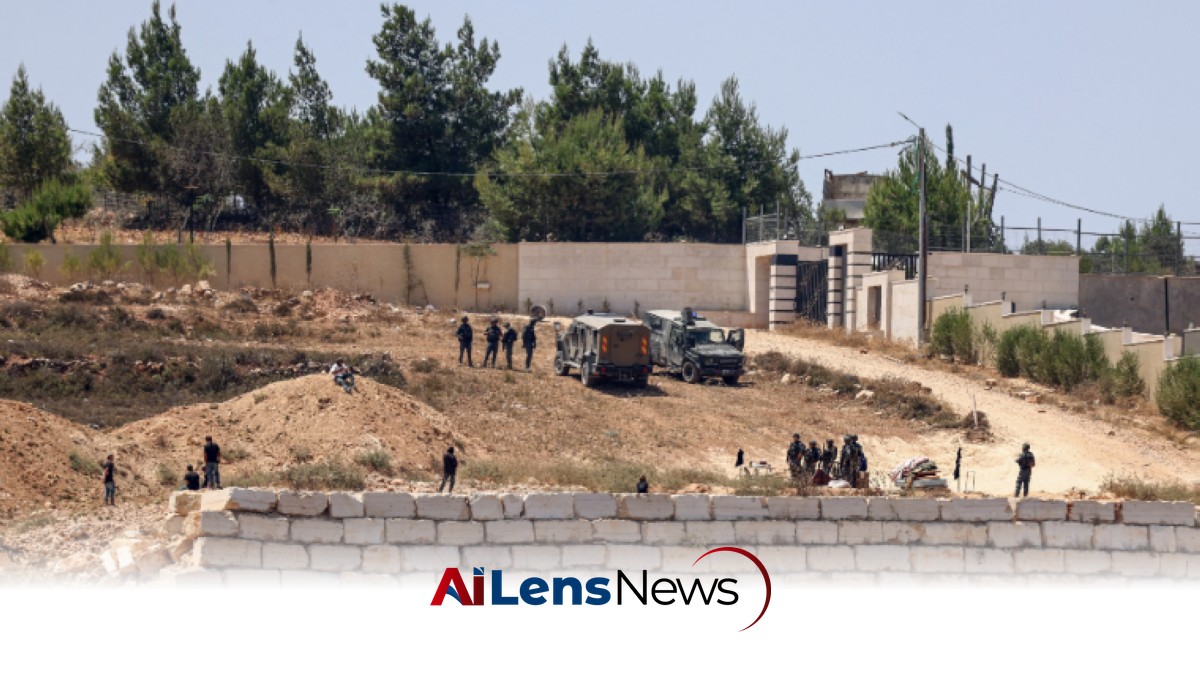


Recent days have seen a surge in violent incidents involving Israeli occupation forces and settlers across the West Bank and Jerusalem, leading to numerous injuries among Palestinians.
Doha, Qatar Aug 16, 2026 ALN: The Israeli occupation forces have significantly escalated their military operations in the occupied West Bank and Jerusalem, particularly evident on Saturday. This increase in military activity has been accompanied by a notable rise in settler violence against the Palestinian population, which has resulted in numerous injuries and detentions. The situation reflects a broader trend of escalating tensions in the region, which has been marked by cycles of violence and retaliatory actions from both sides.
The recent surge in violence can be traced back to longstanding grievances between Palestinians and Israeli settlers, which have been exacerbated by political instability and a lack of meaningful dialogue. The Israeli government’s policies regarding settlements in the West Bank have often been criticized for violating international law and contributing to the conflict. Settlements are considered illegal under international law, yet the Israeli government continues to expand them, leading to increased tensions and confrontations.
On Saturday, reports from the Palestinian News Agency (WAFA) indicated that a 16-year-old Palestinian sustained injuries after being severely assaulted by settlers near the Ain Shibli checkpoint, located southeast of Tubas. This incident underscores the growing volatility in the region, where such attacks have become more frequent and brazen. The targeting of minors and vulnerable individuals raises serious concerns regarding human rights and the safety of the Palestinian population.
In the Bethlehem governorate, Israeli soldiers conducted extensive raids in the Aida and Al-Azza refugee camps, as well as in the towns of Al-Ubeidiya, Dar Salah, Ash-Shawawra, and Za'atara to the east of the city. Despite the heavy military presence, no arrests were reported during these operations, leading to questions about the objectives of such raids. The psychological impact of military incursions on civilian populations can be profound, contributing to a climate of fear and anxiety among residents.
Meanwhile, in Jenin governorate, Israeli forces detained four Palestinians, including three members of the same family, during a raid on a residential building near the Arab American University. This operation reflects a pattern of targeted arrests that often disrupt family structures and exacerbate the humanitarian crisis in the region. Additionally, a young man from the Al-Marah neighborhood in Jenin city was also taken into custody, further illustrating the pervasive nature of these military actions.
Early on the same day, Israeli forces carried out another raid in the village of Bir Al-Basha, south of Jenin. During this incursion, multiple homes were stormed and searched, resulting in damage to personal belongings and the dehumanization of residents. Such military operations often leave lasting scars on communities, as they are not only physically invasive but also psychologically damaging.
In Tulkarm, Israeli forces detained a man from Shweika after raiding his home, adding to the growing list of individuals affected by these operations. The frequency and intensity of these raids raise significant concerns about the rule of law and the treatment of detainees, as many reports indicate that individuals are often held without charge or trial, a practice that contravenes international legal standards.
In the village of Al Mughayyir, located northeast of Ramallah, several Palestinians, including children, suffered from suffocation after Israeli soldiers fired toxic gas canisters during a raid that followed a settler rampage in the Shaab al-Louz neighborhood. The use of tear gas and other crowd control measures in residential areas has been condemned by various human rights organizations, which argue that such tactics are indiscriminate and disproportionately affect civilians, particularly children and the elderly.
Furthermore, a young man from Silwan, situated south of the Al-Aqsa Mosque, was detained after being assaulted in the Batn Al-Hawa neighborhood. Silwan is a flashpoint in the Israeli-Palestinian conflict due to its proximity to significant religious sites and its contentious demographic landscape, where tensions often flare between Palestinian residents and Israeli settlers.
The Wall and Settlement Resistance Commission (WSRC) has reported alarming statistics regarding the violence perpetrated against Palestinians. In July alone, Israeli soldiers and settlers executed a staggering 2,256 rampages against Palestinians, their lands, and properties. This figure includes 1,458 rampages carried out by Israeli forces and 798 by settlers, indicating a troubling convergence of military and settler violence. These numbers reveal a systematic pattern of aggression that is not only aimed at individuals but also targets the very fabric of Palestinian society and their right to exist in their homeland.
The Commission highlighted that the assaults were particularly concentrated in the governorates of Ramallah and Al-Bireh, with 260 attacks; Nablus with 247; Jenin with 190; Bethlehem with 185; and Hebron with 170. These statistics reflect a troubling integration of Israeli military force with settler violence, which often provides protection and support to settlers, enabling their actions to expand and solidify their impacts on the ground. The implications of these actions are profound, as they contribute to an ongoing cycle of violence and retaliation, undermining any potential for peace and reconciliation between the two communities.
The international community has expressed concern over the rising violence and the humanitarian implications for the Palestinian population. Various human rights organizations and international bodies have called for accountability and a reassessment of policies that contribute to the cycle of violence. However, the political landscape remains complex, with entrenched positions on both sides making dialogue and compromise increasingly difficult. The escalation of violence in the West Bank and Jerusalem not only exacerbates the humanitarian crisis but also poses significant challenges to any efforts aimed at achieving a lasting peace in the region.
To learn more about the latest developments in World News & International Affairs, stay updated with our exclusive reports and analyses on AiLensNews.

