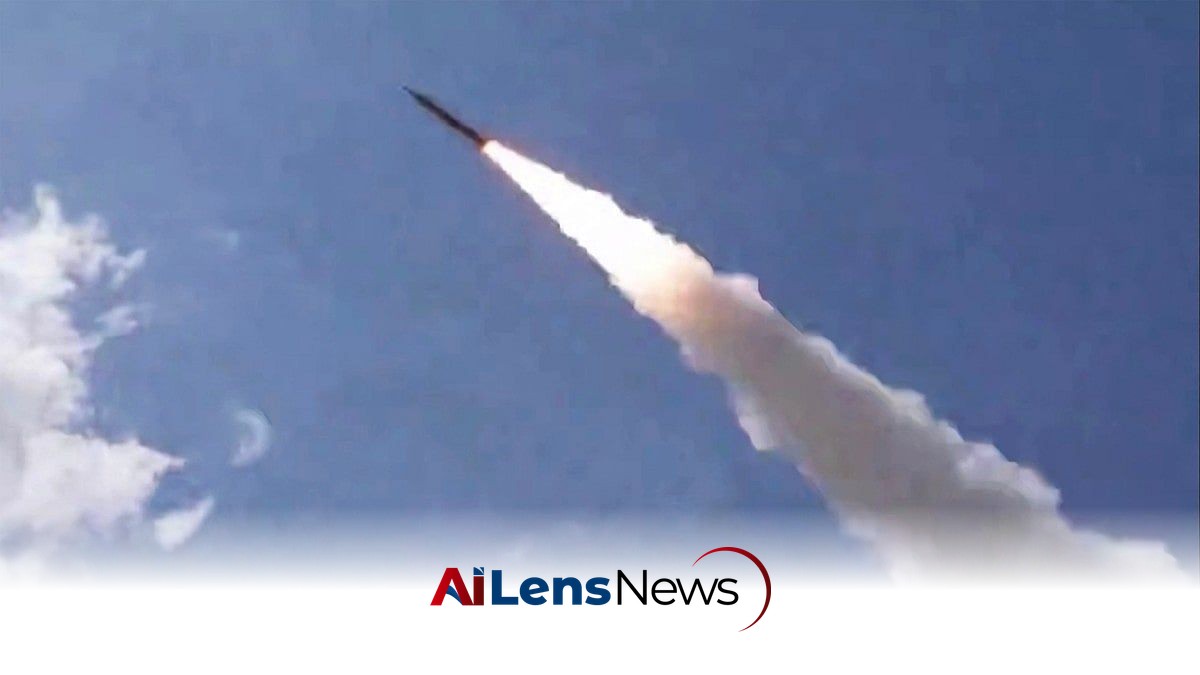


The Iranian Revolutionary Guard Corps has conducted a missile strike on a purported US command centre in Syria, marking a significant escalation in regional tensions.
Doha, Qatar Jul 20, 2026 ALN: Iran's Islamic Revolutionary Guard Corps (IRGC) announced it executed a missile strike on what it termed an "enemy" special operations command centre in southeastern Syria. This marks Tehran's first publicly acknowledged attack on Syrian soil since the regional conflict intensified earlier this year. The IRGC, a branch of Iran's armed forces, has been increasingly active in the region, particularly in Syria, where it supports the government of Bashar al-Assad in the ongoing civil war.
According to a statement from state news agency IRNA via Telegram, the Guards declared, "a surprise attack on the enemy special operations command center in the Al-Tanf region of Syria in revenge for the blood of martyred soldiers of Iranshahr," a city located in southeastern Iran. This declaration highlights the IRGC's ongoing commitment to retaliate against perceived threats and attacks on Iranian forces and interests, particularly in the context of the broader geopolitical tensions in the Middle East.
IRNA reported that the strike targeted a US special operations command centre in the Al-Tanf area, which lies near Syria's borders with Iraq and Jordan. The Al-Tanf base has been a focal point of US military operations against ISIS and has served as a training ground for Syrian opposition forces. The area is strategically significant, acting as a corridor for various military and logistical movements, and has been a point of contention between US and Iranian forces.
The IRGC stated that the strike was a response to the deaths of Iranian soldiers who were killed in a recent US missile attack on an army base in Iranshahr, located in Iran's southeastern Sistan and Baluchestan province. This incident underscores the ongoing cycle of violence and retaliation that characterizes the conflict in the region, where both state and non-state actors are engaged in complex and often violent confrontations.
The Guards claimed that this operation was part of the 11th wave of what they refer to as "Operation Nasr-2", asserting that it destroyed radar systems and military assets at the target location. However, these claims have not been independently verified. The lack of independent verification raises questions about the accuracy of the IRGC's assertions and highlights the fog of war that often complicates assessments of military engagements in conflict zones.
A Syrian military source has denied that the al-Tanf base itself was struck, stating that missiles landed in the vicinity without causing any casualties or damage. This denial reflects the broader narrative battles that occur in the context of military conflicts, where both sides seek to control the narrative surrounding military actions and their implications.
The US military has not publicly confirmed the Iranian account of the incident. The absence of an official US response may indicate a strategic decision to downplay the incident or to avoid escalating tensions further. The US has been involved in the Syrian conflict primarily through its fight against ISIS and its support for certain opposition groups, complicating its relationship with both the Assad regime and Iranian forces.
Earlier this year, Washington announced the completion of its withdrawal of American forces from the al-Tanf garrison, a strategically significant base located at the junction of Syria, Iraq, and Jordan, which had served as a hub for US special operations and anti-Islamic State missions. The withdrawal of US forces from this area has shifted the balance of power, allowing Iranian-backed forces to potentially expand their influence and operational capabilities in southeastern Syria.
The IRGC's missile strike can be seen as part of a broader strategy by Iran to assert its military presence and influence in Syria, particularly in the face of perceived threats from the US and its allies. Iran has long viewed the presence of American forces in the region as a challenge to its interests and has sought to counteract this through military operations, support for allied militias, and strategic partnerships with local actors.
Furthermore, the incident has implications for regional stability, as it highlights the ongoing tensions between Iran and the US, as well as the complex interplay of various actors in the Syrian conflict. The potential for escalation remains high, as both sides may feel compelled to respond to provocations, leading to a cycle of violence that could have far-reaching consequences for the region.
In addition to the immediate military implications, the strike may also have political repercussions within Iran, as the IRGC seeks to bolster its image as a defender of national interests and a key player in regional geopolitics. The Iranian leadership has historically relied on the IRGC to project power and influence beyond its borders, and successful military operations can serve to enhance its legitimacy at home.
As the situation in Syria continues to evolve, the international community remains watchful of the dynamics between Iran, the US, and other regional actors. Diplomatic efforts to de-escalate tensions and address the underlying causes of the conflict will be crucial in preventing further violence and instability in the region. The complexities of the Syrian civil war, coupled with the involvement of external powers, create a challenging environment for peace-building efforts, necessitating a multifaceted approach to address the myriad issues at play.
In conclusion, the recent missile strike by the IRGC underscores the ongoing volatility in Syria and the broader Middle East, where military actions can quickly escalate tensions and lead to unintended consequences. The interplay of regional rivalries, national interests, and the quest for influence continues to shape the conflict, making it imperative for stakeholders to engage in dialogue and seek peaceful resolutions to the myriad challenges facing the region.
To learn more about the latest developments in World News & International Affairs, stay updated with our exclusive reports and analyses on AiLensNews.

