

More
Checking your session
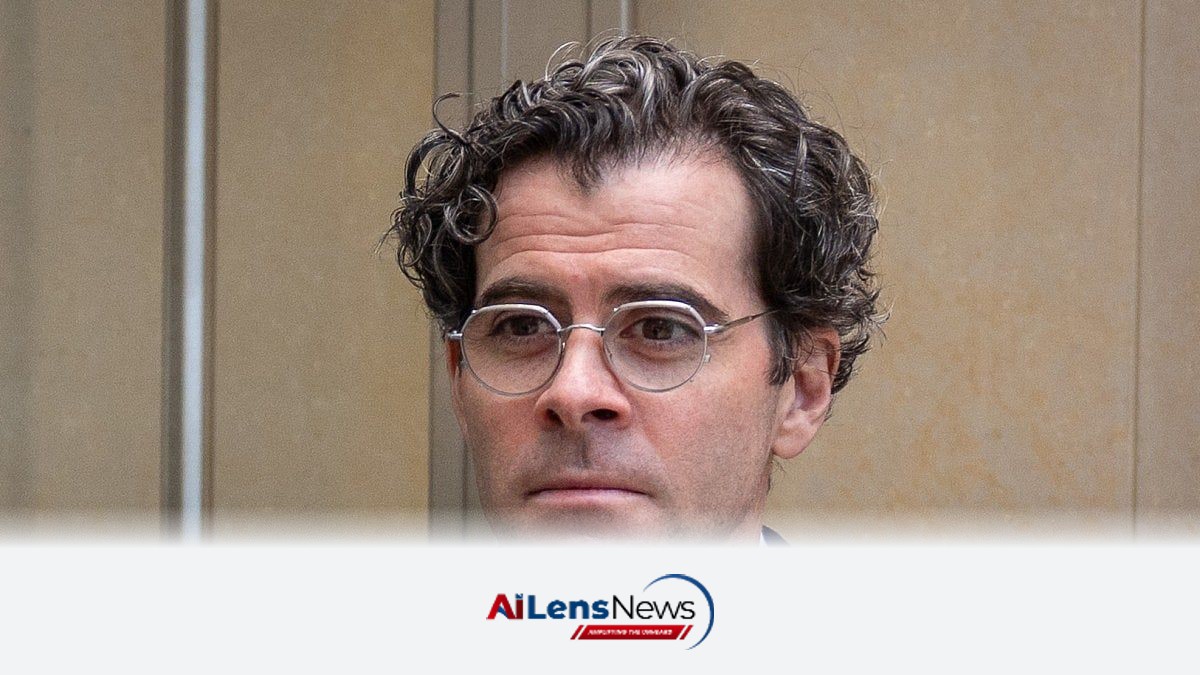



Adam Mosseri admits in court that Instagram's teen safety features had low adoption rates, contradicting previous claims about their effectiveness.
Doha, Qatar Aug 26, 2026 ALN: Adam Mosseri, the head of Instagram at Meta, admitted in a California court on Tuesday that he promoted newly-launched safety tools for teens without revealing their low adoption rates from early testing conducted several years ago.
With over three billion users globally, Meta faces allegations from a coalition of 29 US states, claiming the company intentionally designed its products to engage children and collect their data while misleading the public.
The trial, which entered its second week on Monday, is expected to continue through late September.
Get it: Fast, verified news for FREE ... download the Gulf News app — simply
During the proceedings, Jason Slothouber, a lawyer from the Colorado Attorney General's office, questioned Mosseri about the minimal usage of the tools, known as Take a Break and Quiet Mode, which were launched in 2021 and 2023, respectively.
Other witnesses have testified that these tools were ineffective, although Mosseri disputed the notion that their adoption remained low.
"This is one feature with a disappointingly low usage rate which since this time has significantly improved," Mosseri stated.
On December 8, 2021, Mosseri testified at a Congressional hearing regarding the negative impacts of social media on youth. The day before, Meta published a blog post authored by Mosseri about the rollout of new safety features for teens.
"Early test results show that once teens set the reminders, more than 90% of them keep them on," the blog post claimed.
However, that statistic referred to the number of users who maintained the settings after activation.
When asked if Meta disclosed its low adoption rates, which only reached 1 or 2 percent of accounts, Mosseri acknowledged that the company did not disclose this information but mentioned that the safety features were later activated by default in Teen Accounts, which include parental controls and were launched in 2024.
However, Mosseri could not recall if Meta had ever revealed the percentage of teen accounts with parental controls enabled.
Mosseri is set to continue his testimony on Wednesday, and Meta's founder and CEO Mark Zuckerberg is also expected to testify, although the timing remains uncertain.
Meta was aware that its tools aimed at protecting teenagers on Instagram were largely ineffective, as testified by other witnesses.
Internal Meta documents presented to jurors on Tuesday revealed that Take a Break, which allows users to set reminders to stop scrolling, achieved an adoption rate of only 1.8 percent, while Quiet Mode, which silences notifications during late hours, reached 8.7 percent.
Under questioning from state attorneys, Francesco Fogu, Meta's director of product design at Instagram, admitted he was unaware of these figures but conceded that the company "knew adoption rates would be lower" if those tools were not activated by default.
Judge Yvonne Gonzalez Rogers, who will make the final decision based on the jury's verdict, appeared astonished that Fogu was unaware of the internal data.
If Meta is found guilty, US states will pursue approximately $200 billion in penalties, and a court defeat could necessitate fundamental changes to its business model, potentially sending shockwaves through the industry.
Two former employees also testified that Take a Break and Quiet Mode were ineffective.
"In my experience, Take a Break is a feature that's designed to fail," testified Arturo Bejar, a former Meta engineering director.
George Volichenko, a data scientist who worked on safety features at Instagram in 2022 and 2023, stated that adoption rates for these features were "very low and disappointing" and merely "a drop in the ocean."
He depicted Meta's leadership as disinterested in genuinely enhancing their usage.
Leadership did not approve the activation of Quiet Mode by default for younger teens, which hindered adoption due to the setting being difficult to locate within the app, Volichenko explained.
Activating the safety features by default could have resulted in a "notable negative impact" on user engagement, he added.
Meta's business model relies on advertising revenue, and the company profits more when users spend additional time on its platforms.
To learn more about the latest developments in Crime & Law, stay updated with our exclusive reports and analyses on AILensNews.