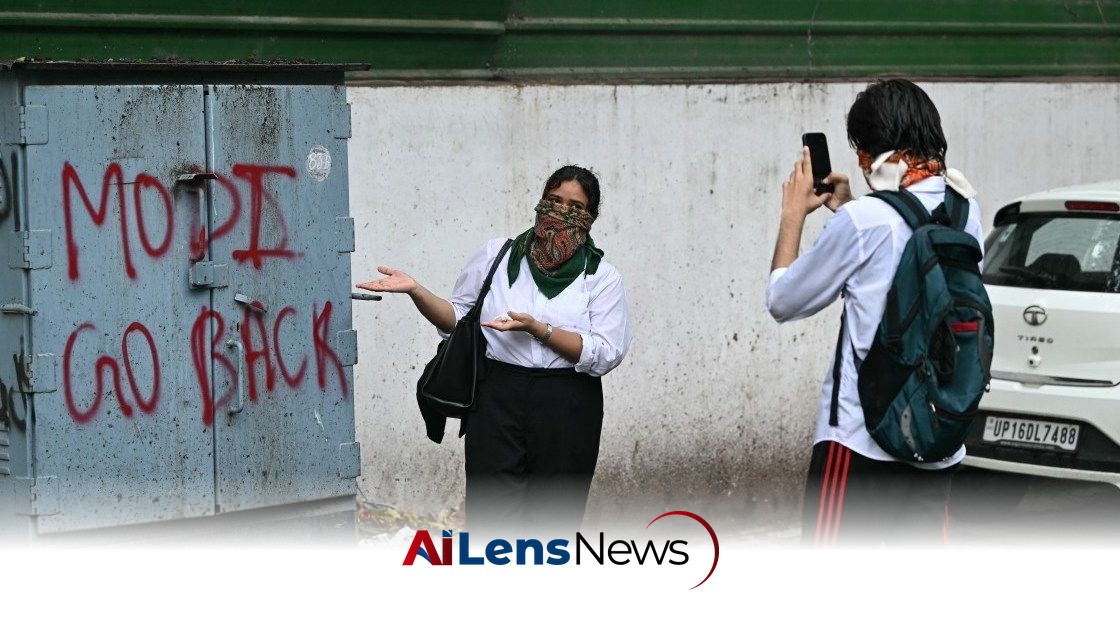


Following violent clashes with police, leaders of India's 'Cockroach Movement' announce a pause on street protests while continuing their campaign for accountability in the education sector.
Doha, Qatar Jul 21, 2026 ALN: Leaders of India’s “cockroach movement” have announced a strategic pause in their street protests following a violent police crackdown during a recent march towards the Indian Parliament. This decision comes amid rising concerns for the safety of their supporters, particularly after reports of over 150 protesters sustaining injuries due to police actions that included the use of tear gas and physical assaults with batons. The movement, which has gained significant traction among youth in India, is primarily focused on demanding accountability from the government regarding serious flaws in the education system, specifically targeting Education Minister Dharmendra Pradhan.
Abhijeet Dipke, the founder of the Cockroach Janta Party (CJP), expressed deep concerns about the safety of protesters, stating, “We will not march again because the police will hurt the youth again.” This sentiment echoes the fears of many activists and supporters who witnessed the violent response during the march that saw more than 10,000 participants. The protests were ignited by a scandal involving the leak of exam papers that forced 2.2 million aspiring doctors to retake their examinations. This incident has had tragic repercussions, reportedly leading to at least 12 student suicides, which has intensified the urgency of the movement's demands.
The CJP is not only calling for the resignation of Education Minister Pradhan but is also advocating for substantial compensation of 10 million rupees (approximately $104,000) for the families of the students who died by suicide following the exam leak. The movement's leaders argue that the education system's failures are systemic and that those in power must be held accountable for their negligence. Ashutosh Ranka, another prominent figure within the CJP, reiterated the movement's resolve, stating, “We won’t stop. Pradhan has to be sacked.”
The protests have drawn the attention of political leaders, including Rahul Gandhi and Priyanka Gandhi, members of the Indian National Congress party. They staged a protest outside Prime Minister Narendra Modi's residence, demanding accountability for the police's violent actions against the students. Rahul Gandhi took to social media platform X to share their demands, emphasizing the need for answers regarding the brutality faced by young students during the protests.
The situation has garnered international attention, with human rights organizations like Amnesty International condemning the police's actions as a suppression of peaceful dissent in India. The organization highlighted the increasing trend of violence against protesters and the government's attempts to stifle opposition voices. One protester, Sahil Singh, described the ordeal, stating, “They beat us black and blue, and they damaged our protest site. We want accountability to be set with Pradhan’s resignation.”
The scale of the protests has been remarkable, with the number of participants exceeding expectations, fueled by a wave of anger over the treatment of veteran activist Sonam Wangchuk. Wangchuk, who had been on a hunger strike for three weeks in solidarity with the CJP, was forcibly taken by police and hospitalized against his will. His situation prompted further outrage among supporters and activists, culminating in the large turnout for the march. Following a legal challenge by Wangchuk's wife, the Delhi High Court ruled that he could be transferred from a government hospital to a private healthcare facility, citing concerns over his treatment.
In the aftermath of the clashes, approximately 200 protesters gathered at the CJP’s protest site in Jantar Mantar, New Delhi, continuing to voice their demands despite the adverse weather conditions. Paramilitary personnel were seen patrolling central areas of the capital, and barricades were erected to control traffic and prevent further gatherings. The Delhi police reported that nearly 180 individuals were injured during the altercations, including 60 protesters and 118 security personnel, and that legal action would be initiated against 70 detained protesters.
Despite the violence, the CJP and its supporters remain hopeful for change. A representative from the movement noted that a federal minister had indicated the government would consider their demands, suggesting that dialogue may still be possible. Parliamentary Affairs Minister Kiren Rijiju commented on the situation, stating, “I think when the talks are going on in a right direction, the atmosphere should not be vitiated.”
The CJP's campaign began as an online movement, utilizing satirical memes to mock the government and quickly gaining millions of followers on social media. The term “cockroach movement” was adopted after a controversial comment made by the Chief Justice of India, who likened some unemployed youth to cockroaches. Rather than being deterred by the insult, activists embraced the term, turning it into a symbol of resilience and defiance against a system they perceive as dismissive of their struggles and aspirations.
The implications of this movement extend beyond immediate demands for accountability and reform within the education sector. It highlights a growing discontent among India's youth, who are increasingly vocal about their frustrations with government policies and systemic issues affecting their lives. The movement's ability to mobilize large numbers of protesters demonstrates a significant shift in political engagement among younger generations, who are leveraging social media to organize and amplify their voices.
As the situation continues to unfold, the government faces mounting pressure to address the concerns raised by the CJP and other student organizations. The ongoing protests serve as a reminder of the critical role that youth activism plays in shaping political discourse in India, as well as the potential for grassroots movements to challenge established power structures. The coming days will be crucial in determining whether the government will engage constructively with the protesters or continue to respond with force, further escalating tensions between the state and civil society.
To learn more about the latest developments in Crime & Law, stay updated with our exclusive reports and analyses on AiLensNews.

