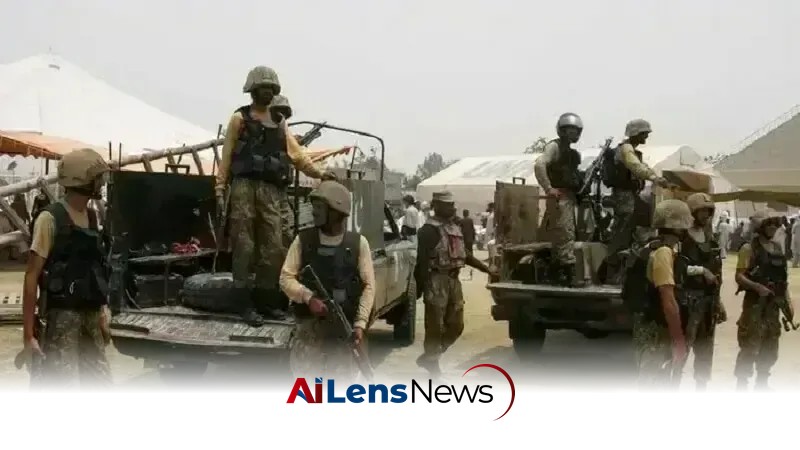


In a significant operation in Balochistan's Mastung district, security forces killed four terrorists, recovering substantial weaponry and apprehending several suspects.
Islamabad, Pakistan Jul 24, 2026 ALN: Security forces in Pakistan have recently intensified their operations against terrorist groups in Balochistan, a region that has been plagued by violence and instability for years. In a significant development, four terrorists were killed during an operation in the Khad Kocha area of the Mastung district. This operation was confirmed by the interior ministry and reported by state broadcaster Radio Pakistan on a Friday. The context of this operation is crucial to understanding the ongoing security challenges in Balochistan.
The term "Fitna-al-Hindustan" used by the state to describe the terrorists highlights the narrative that links local insurgencies to external influences, specifically pointing towards India. This characterization is part of a broader strategy employed by the Pakistani government to frame domestic terrorism within the context of foreign interference, thereby justifying military actions against these groups. Such narratives have been prevalent in Pakistan's political discourse, particularly in relation to Balochistan, which has a complex socio-political landscape characterized by ethnic tensions and historical grievances.
During the recent operation, security sources reported that a substantial cache of weapons and ammunition was recovered from the deceased terrorists. Additionally, several individuals suspected of facilitating terrorism were apprehended. This not only underscores the ongoing threat posed by these groups but also reflects the heightened efforts of security forces to disrupt their operations. The interior ministry's confirmation of the operation, along with a statement from Interior Minister Mohsin Naqvi praising the security forces, indicates a concerted effort by the government to project strength in the face of ongoing violence.
The operation in Mastung was part of a broader series of actions taken by security forces in the region. Just a day prior, six terrorists were reported killed in a different operation in the Khud Kocha area, which was launched based on credible intelligence. The security forces also apprehended several individuals, including women identified as suicide bombers and their facilitators, highlighting the diverse tactics employed by terrorist groups in Balochistan. The destruction of terrorist hideouts during these operations further illustrates the aggressive stance taken by the authorities in combating the insurgency.
To facilitate these operations, the Balochistan Home Department imposed an indefinite curfew in the Khud Kocha area. This decision came in the wake of a gun attack on a passenger bus bound for Karachi, which resulted in three deaths and additional injuries. Such incidents have contributed to the deteriorating security situation in Balochistan, prompting the government to take drastic measures to restore order. The curfew was a necessary step to allow security forces to conduct operations without interference from civilians, although it also raises concerns about the impact on daily life for residents in the area.
The security challenges in Balochistan are not new. The region has been a hotspot for militant activity, with various groups vying for control and influence. The ongoing conflict has roots in ethnic and political grievances, particularly among the Baloch population, who have long sought greater autonomy and control over their resources. The Pakistani state has responded with military operations, often leading to accusations of human rights abuses and further alienation of local populations.
Recent assessments of the security landscape in Pakistan have highlighted a troubling trend. A report by the Pakistan Institute for Conflict and Security Studies (PICSS) indicated that after a period of relative calm, the security situation in the country deteriorated sharply in May 2023, driven primarily by escalated terrorist violence in Balochistan and Khyber Pakhtunkhwa. Balochistan was particularly affected, with 71 terrorist attacks reported in May, a staggering increase from 34 in April. This surge in violence has raised alarms among security analysts and policymakers alike, prompting calls for a reassessment of strategies to combat terrorism in the region.
Moreover, the report revealed a disturbing rise in kidnappings, with 52 of the 54 reported abductions occurring in Balochistan. This alarming statistic underscores the growing operational reach and confidence of terrorist groups in the province, further complicating the security landscape. The increase in kidnappings often correlates with the activities of militant groups seeking to finance their operations or exert pressure on the state.
In response to the rising tide of violence, Prime Minister Shehbaz Sharif convened a meeting of the Provincial Apex Committee on the National Action Plan, where he emphasized the need for a unified approach to combat terrorism. His remarks came in the wake of several major terrorist incidents, including a deadly attack on a police post that resulted in the deaths of 27 officers. Such incidents have galvanized the government and military leadership to adopt a more aggressive posture against terrorism, with a focus on coordinating efforts between civil and military authorities.
The military's Inter-Services Public Relations (ISPR) has also played a pivotal role in shaping the narrative around terrorism in Balochistan. In a recent press conference, ISPR Director General Lt Gen Ahmed Sharif Chaudhry pointedly accused India and Afghanistan of being behind a series of attacks in the region. This framing serves to reinforce the government’s position that external actors are complicit in the instability affecting Pakistan, thereby legitimizing military operations against both domestic and foreign threats.
As the situation in Balochistan continues to evolve, the implications of these operations extend beyond immediate security concerns. The ongoing violence has significant socio-economic repercussions for the region, which is already grappling with issues such as poverty, unemployment, and lack of infrastructure. The military operations, while aimed at restoring security, may also exacerbate tensions between the state and local populations, particularly if perceived as heavy-handed or indiscriminate.
In conclusion, the recent operation in Mastung and the broader military campaign in Balochistan reflect the complex interplay of security, politics, and social dynamics in the region. As Pakistan grapples with the persistent threat of terrorism, the government's strategies will be crucial in determining not only the immediate outcomes of these operations but also the long-term stability and peace in Balochistan and beyond. The challenges ahead are formidable, requiring a nuanced approach that addresses the underlying grievances of local populations while simultaneously combating the violent extremism that threatens the nation.
To learn more about the latest developments in Crime & Law, stay updated with our exclusive reports and analyses on AiLensNews.

