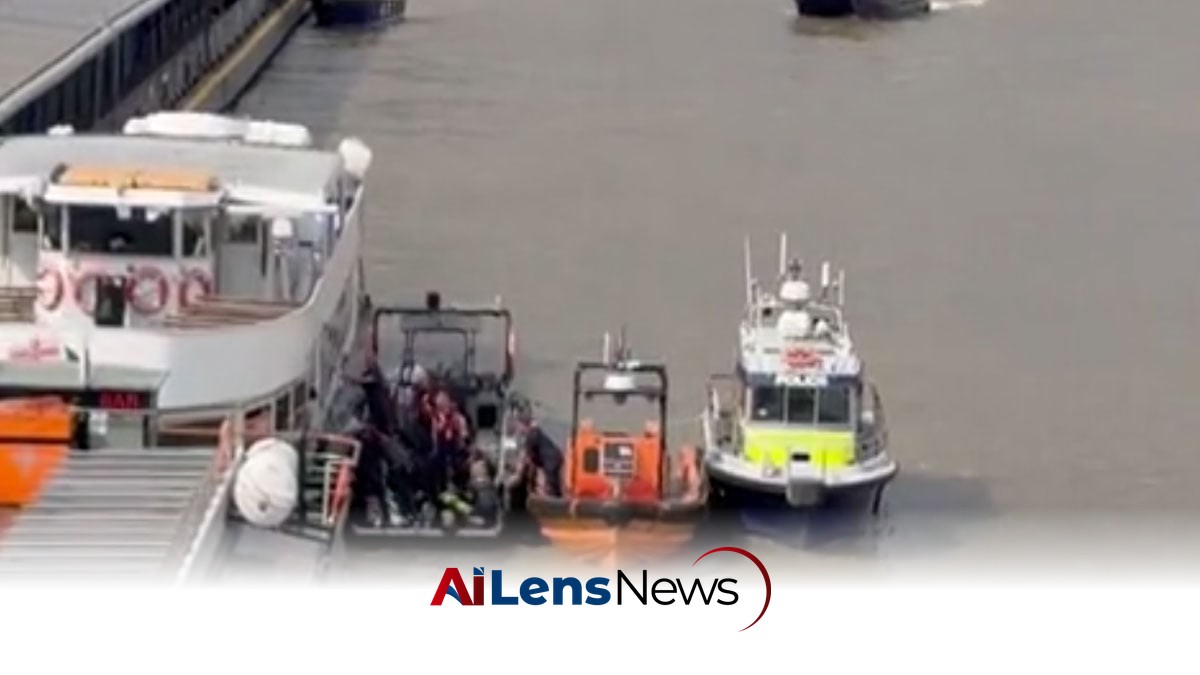


New footage captures the moment a police boat crashes into Westminster Bridge, injuring four officers and prompting a swift emergency response.
Islamabad, Pakistan Jul 25, 2026 ALN: New footage has shown the exact moment a police boat on the River Thames crashes into Westminster Bridge.
Four police officers were seriously injured when the boat crashed yesterday. They were treated at the scene and taken to hospital. A fifth officer was also taken for treatment but was later discharged. This incident has sparked a significant response from both law enforcement and the community, raising concerns about safety protocols and operational procedures for police units operating on busy waterways.
The incident occurred during a routine patrol in the busy waters of the Thames, a vital artery running through London that is often bustling with both commercial and recreational traffic. The River Thames is not only significant for its historical and cultural importance but also serves as a crucial transportation route, with numerous boats, ferries, and leisure craft navigating its waters daily. The river's central location in London makes it a focal point for tourism and commerce, further complicating the environment in which police operate.
New footage shown to Metro captures the moment the police boat veers towards the structure of the bridge and flips on its side. The video reveals the chaotic scene as the vessel loses control, highlighting the dangers faced by law enforcement on the water. As it pushed forward, a number of people were visible in the water, raising concerns about the safety of those nearby and the potential for additional casualties. The presence of bystanders adds another layer of complexity, as the police must balance their operational duties with the safety of civilians.
Following the crash, Commander Nick John addressed the media, expressing concern for the injured officers and gratitude for the immediate response from the public and emergency services. He stated, ‘Our thoughts are with all those involved, in particular our officers who were injured and those who responded in challenging circumstances.’ This statement underscores the risks that police officers face, particularly those in maritime units who operate in unpredictable environments. The Thames is known for its swift currents and varying weather conditions, which can pose significant challenges for even the most experienced officers.
Commander John further noted that, ‘The four officers who remain in hospital have serious but non-life-threatening injuries. We will give them all every support as they recover.’ This highlights the seriousness of the incident while also reassuring the public that the injuries sustained, while significant, are not life-threatening. The support for the injured officers is critical, as recovery from such incidents can be both a physical and psychological challenge. The mental health implications of traumatic incidents in the line of duty are increasingly recognized, and support systems for officers are essential in helping them cope with the aftermath.
‘I must also offer our thanks to those river users who came to the aid of the officers, as well as other police and emergency service colleagues who immediately made their way to the scene to assist,’ Commander John added. This acknowledgment of the community's role in providing assistance during emergencies reflects the collaborative spirit often seen in such incidents, where bystanders act heroically to help those in need. The swift action of civilians can often be the difference between life and death in emergency situations, and it highlights the importance of community engagement in public safety.
In the aftermath of the collision, several ambulances, fire crews, and police vehicles were seen parked along Embankment while a helicopter and air ambulance circled overhead. The presence of multiple emergency response units indicates the scale of the incident and the immediate need for medical assistance. Such a rapid mobilization is typical in emergency situations, where every second counts in ensuring the safety and health of those involved. The coordination between various emergency services is crucial, and the ability to respond quickly can significantly impact outcomes in critical situations.
Traffic was brought to a standstill, and buses and coaches travelling along the cordon were forced to reverse and find another route. This disruption not only affected local commuters but also highlighted the challenges of managing urban traffic in the wake of an emergency. The River Thames, being a central thoroughfare, often experiences heavy traffic, and incidents like these can lead to significant delays and rerouting of public transport. The impact on daily commuters and local businesses can be profound, as such disruptions can lead to economic losses and increased frustration among the public.
The collision has raised questions about the safety protocols in place for police operations on the water. As urban waterways become increasingly crowded, ensuring the safety of both officers and civilians is paramount. The police have a responsibility to operate their vessels safely, especially in high-traffic areas like the Thames, where the potential for accidents increases significantly. This incident may prompt a reevaluation of current training practices and operational guidelines for maritime police units.
Moreover, the incident brings attention to the broader implications of policing in maritime environments. Police forces across the UK are increasingly investing in training and resources for their marine units to better prepare them for the unique challenges they face. The need for specialized training in navigation, emergency response, and crowd management is critical, particularly in a city as dynamic as London. As the Thames sees a rise in both commercial and recreational traffic, the importance of effective training cannot be overstated.
In light of this incident, there may also be discussions regarding the adequacy of current safety measures and equipment used by police boats. Investigations into the cause of the crash will likely focus on various factors, including the condition of the vessel, the experience of the officers on board, and environmental conditions at the time of the incident. The findings of these investigations will be crucial in determining whether changes need to be made to improve safety and prevent similar incidents in the future.
As the investigation unfolds, it will be essential for the police to communicate transparently with the public about their findings and any changes that may be implemented as a result. Public trust in law enforcement can be significantly impacted by how incidents are handled, both in terms of immediate response and long-term policy changes. Maintaining an open dialogue with the community is vital for fostering trust and cooperation, especially in the wake of an incident that raises concerns about safety.
In conclusion, while the immediate focus remains on the recovery of the injured officers and the support provided to them, the implications of the crash extend far beyond this single incident. It serves as a stark reminder of the dangers faced by police officers in the line of duty, particularly in challenging environments like the River Thames. The incident may prompt a reevaluation of safety protocols and operational procedures, ensuring that both officers and the public can navigate these vital waterways with confidence and security. Ultimately, the lessons learned from this incident could lead to enhanced safety measures that benefit not only the police but also the broader community that relies on the Thames for transportation and recreation.
To learn more about the latest developments in Crime & Law, stay updated with our exclusive reports and analyses on AiLensNews.

