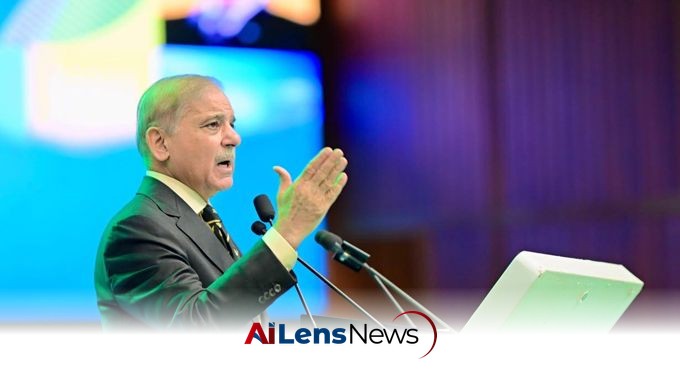



Prime Minister Shehbaz Sharif announces a groundbreaking employment policy aimed at equipping Pakistan's youth with essential skills and job opportunities.
Islamabad, Pakistan Aug 13, 2026 ALN: On a significant day for the youth of Pakistan, Prime Minister Muhammad Shehbaz Sharif announced the launch of the First National Youth Employment Policy during a ceremony held on International Youth Day. This initiative represents a concerted effort by the government to address the pressing challenges faced by the youth in a rapidly evolving global landscape, characterized by technological advancements and shifting job markets. The Prime Minister's address underscored a commitment to equipping young people with modern technological skills and education that align with the demands of today's economy.
The youth demographic in Pakistan is substantial, with approximately 64% of the population under the age of 30. This demographic dividend presents both an opportunity and a challenge for the nation. While a young and educated workforce can drive economic growth, the lack of job opportunities and access to quality education can lead to disenchantment and social unrest. Recognizing this, the Prime Minister's policy aims to harness the potential of the youth by creating pathways for employment and entrepreneurship.
In his speech, Prime Minister Sharif emphasized the necessity of equal educational opportunities, particularly for talented and deserving students, resonating with the vision of Pakistan's founder, Quaid-e-Azam Muhammad Ali Jinnah. He articulated that the sacrifices made during the creation of Pakistan would remain unfulfilled without ensuring that all citizens have access to quality education and job opportunities. This historical context is vital, as it reflects Pakistan's foundational ethos of equality and social justice.
The First National Youth Employment Policy includes several key components designed to promote inclusivity in the labor market. A notable aspect of the policy is the introduction of a 35% quota for women in the labor force, which aims to empower women and promote gender equality in a traditionally male-dominated job market. Additionally, the policy allocates a 10% annual quota for young startups, fostering innovation and entrepreneurship among the youth. This dual focus on gender inclusivity and support for startups is critical in addressing the unique challenges faced by young people in Pakistan.
As the Prime Minister pointed out, we are living in an era dominated by Artificial Intelligence (AI) and Information Technology (IT). He stressed that without incorporating the latest knowledge and skills in these fields into daily life, the youth would struggle to compete with developed nations. This acknowledgment of the importance of technology in education and employment is crucial, especially as Pakistan seeks to position itself in the global economy. The government's commitment to providing resources for quality education at world-renowned institutions is a step toward ensuring that Pakistani youth can thrive in competitive environments.
The ceremony was attended by a diverse group of stakeholders, including ministers, parliamentarians, diplomats, teachers, and young students, highlighting the broad support for the initiative. The Prime Minister's remarks also addressed the need to eliminate disparities in access to quality education between the elite and underprivileged classes. He referenced his previous efforts as Khadim e Aala of Punjab, where he launched Danish schools aimed at providing quality education to talented but disadvantaged students. This initiative is being expanded to reach all corners of the country, reaffirming the government's commitment to educational equity.
The establishment of Danish schools in remote and underserved areas reflects a strategic approach to addressing educational inequalities in Pakistan. These schools are designed to offer high-quality education to students who might otherwise lack access, aligning with the vision of creating a society where opportunities are available based on merit and hard work, rather than socioeconomic status.
In conjunction with the employment policy, the government has earmarked substantial funds in the recent fiscal budget to support youth initiatives. One notable program involves sending 1,000 agri-educators to China at the government’s expense to gain exposure to the latest agricultural technologies. This initiative is part of a broader strategy to enhance the skills of the youth in key sectors, ensuring they are well-equipped to contribute to the country's development.
Furthermore, the Prime Minister announced plans for additional batches of youth to be sent to China for training in AI and IT, emphasizing a merit-based selection process. This focus on international exposure and training is essential for developing a workforce that is not only skilled but also adaptable to global trends and technologies.
In a bid to further support education, the Prime Minister revealed the establishment of a Danish University in the federal capital, set to commence its academic session next year. This institution will focus on technology and innovation, providing access to deserving and talented students. The creation of such educational institutions is a vital investment in the future of Pakistan, as they will cultivate a generation of skilled professionals capable of driving economic growth.
The government's efforts also include the distribution of technology to students, with 700,000 laptops already provided to students based on merit. In addition, 250,000 high-achieving students will receive Chrome Books as awards this year. These initiatives are designed to bridge the digital divide and ensure that students have the tools necessary for success in an increasingly digital world.
In conclusion, the launch of the First National Youth Employment Policy marks a pivotal moment for Pakistan's youth. By focusing on education, inclusivity, and skill development, the government aims to empower young people to build a better future for themselves and their country. As expressed by Prime Minister Sharif, "The future is not something you wait for; the future is something you build." This sentiment encapsulates the spirit of the new policy and the government's commitment to fostering an environment where youth can thrive and contribute to the nation's progress.
To learn more about the latest developments in Crime & Law, stay updated with our exclusive reports and analyses on AILensNews.

