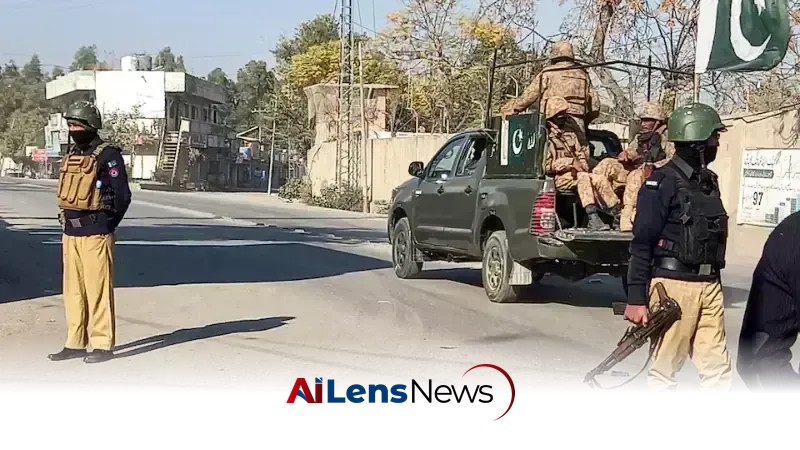



A terrorist attack on a police checkpost in Hangu, Khyber Pakhtunkhwa, resulted in the deaths of nine officers, including a DSP, and injuries to 28 others.
Islamabad, Pakistan Jul 30, 2026 ALN: A tragic incident unfolded late on Wednesday when nine police officers, including a deputy superintendent of police (DSP), were killed in a terrorist attack on the Khazina Banda checkpost located in Hangu district, Khyber Pakhtunkhwa. This attack is part of a troubling trend of escalating violence in the region, which has seen a resurgence of militant activities in recent years. The implications of such attacks extend beyond immediate loss of life, affecting the overall security landscape of Pakistan and raising questions about the effectiveness of current counter-terrorism strategies.
A statement issued by Khyber Pakhtunkhwa Inspector General (IG) Zulfiqar Hameed provided details about the attack, stating that the checkpost was targeted by a group referred to as Fitna al Khawarij, a term used by the state to describe terrorists affiliated with the banned Tehreek-i-Taliban Pakistan (TTP). The TTP has been responsible for numerous attacks across Pakistan, particularly in the Khyber Pakhtunkhwa province, where they have exploited the rugged terrain to launch ambushes against security forces. The attack occurred while police personnel were stationed at the checkpost, highlighting the ongoing risks faced by law enforcement in the region, which has historically been a hotspot for militant activity.
In his statement, IG Hameed praised the courage and professionalism of the police personnel who responded to the attack. Despite being ambushed, the officers fought back valiantly, and additional support was dispatched to assist them. The terrorists managed to inflict damage on an armored personnel carrier during the skirmish, underscoring the intensity of the confrontation. The IG reported that during the prolonged exchange of gunfire, nine police officers, including DSP Diyar Khan, lost their lives, and 28 others sustained injuries. The loss of such a significant number of officers in a single incident raises concerns about the adequacy of protective measures and the need for enhanced security protocols at vulnerable checkposts.
Hameed emphasized the resilience of the Khyber Pakhtunkhwa police, asserting that their morale remains high and that the fight against terrorism would persist until all threats are eradicated from the province. This commitment reflects the broader strategy of law enforcement agencies in Pakistan to combat terrorism, which has plagued the nation for over a decade. The government has faced criticism for its handling of security issues, and the recent spike in violence has intensified calls for a reassessment of counter-terrorism policies and resource allocation.
In a separate incident on the same night, another police checkpost in the Adezai area, under the jurisdiction of the Mattani police station in Peshawar, was also targeted by terrorists. Fortunately, in this case, the police managed to respond effectively, forcing the attackers to retreat without any casualties among the police personnel. This incident highlights the unpredictable nature of security operations in the region, where the presence of well-armed militants poses a constant threat to law enforcement officials.
The attack in Hangu has drawn widespread condemnation from various officials. Interior Minister Mohsin Naqvi expressed his outrage, offering condolences to the families of the fallen officers and wishing for the swift recovery of the injured. Similarly, Khyber Pakhtunkhwa Information Minister Shafi Jan labeled the attack as “cowardly” and expressed deep sorrow over the loss of life. He honored the sacrifices made by the police and reiterated the government’s commitment to supporting the bereaved families during this difficult time. Such statements are crucial for maintaining public morale and reinforcing the government's stance against terrorism, but they also reflect a growing frustration with the persistent violence that has become a hallmark of life in certain areas of Pakistan.
The recent attack is part of a disturbing pattern of violence that has been on the rise in Khyber Pakhtunkhwa and other regions of Pakistan. A monthly security assessment released by the Pakistan Institute for Conflict and Security Studies (PICSS) indicated that after a brief period of improved security, the situation deteriorated significantly in May, largely due to an increase in terrorist activities in Khyber Pakhtunkhwa and Balochistan. This trend raises concerns about the effectiveness of current security measures and the ability of law enforcement agencies to protect their personnel and the general public. The increase in attacks also suggests a potential resurgence of organized militant groups that had previously been weakened by military operations.
Earlier on the same day as the Hangu attack, another violent incident occurred, resulting in the deaths of a policeman and four members of a village defense committee. This attack was part of a joint security operation targeting TTP militants in the mountainous areas of Kabal and Matta tehsils, where six terrorists were also reported killed. Such operations are indicative of the ongoing efforts by security forces to dismantle terrorist networks and restore stability in affected areas. However, the loss of life among security personnel and local defense groups raises questions about the sustainability of these operations and the long-term strategy for countering militancy.
The situation in Pakistan's border regions remains precarious. On July 6, a significant incident in Balochistan saw 27 policemen martyred in a terrorist attack on a police post in Ziarat district, where nine officers were killed immediately, and the others were reportedly executed after being taken hostage. This incident, along with the attack in Hangu, illustrates the grave risks faced by security personnel in their line of duty. The frequency and brutality of such attacks highlight the ongoing challenges in securing these regions, where militant groups often have the advantage of local knowledge and support.
In light of these recent events, the interior minister met with President Asif Ali Zardari to discuss the deteriorating law and order situation, particularly in Khyber Pakhtunkhwa and Balochistan. The discussions emphasized the need for a coordinated response to terrorism and the importance of supporting law enforcement agencies in their efforts to combat this persistent threat. President Zardari acknowledged the bravery and sacrifices of the security forces, reiterating the nation's solidarity with them in the fight against terrorism and the quest for lasting peace in Pakistan. Such high-level meetings are crucial for formulating effective policies and ensuring that law enforcement agencies receive the necessary resources and support to carry out their duties effectively.
The ongoing violence and loss of life among police and military personnel raise critical questions about the effectiveness of Pakistan's counter-terrorism strategies. The government faces increasing pressure to enhance security measures and address the root causes of extremism that fuel such attacks. The sacrifices made by law enforcement officials serve as a stark reminder of the challenges that lie ahead in ensuring the safety and security of citizens in a region fraught with conflict. These challenges are compounded by socio-economic factors, including poverty, unemployment, and lack of education, which can create an environment conducive to radicalization.
As the situation continues to evolve, it is imperative for all stakeholders, including the government, law enforcement agencies, and civil society, to work collaboratively to address the threats posed by terrorism and to create a safer environment for all citizens. The resilience and dedication of the police force, as demonstrated in the face of such adversity, remain crucial in the ongoing struggle against extremism in Pakistan. Efforts must be made to improve intelligence-sharing, enhance community policing initiatives, and engage with local populations to build trust and cooperation in the fight against terrorism.
To learn more about the latest developments in Crime & Law, stay updated with our exclusive reports and analyses on AILensNews.

