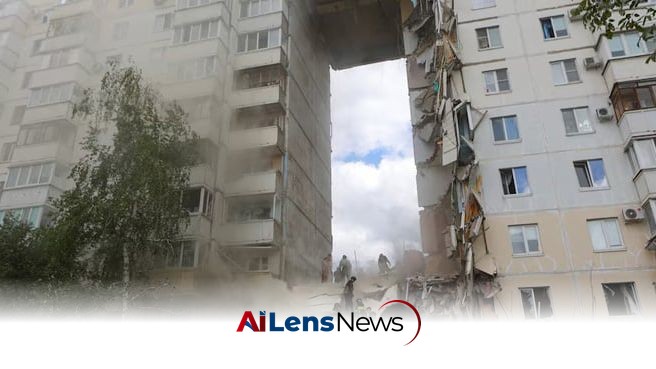


An overnight drone attack on Moscow resulted in three injuries, as Ukraine intensifies its long-range strikes into Russian territory.
Islamabad, Pakistan Aug 16, 2026 ALN: KYIV, Ukraine: Six hundred drones targeted the Moscow region in a sustained overnight assault that wounded three people, the Russian capital’s mayor said on Sunday, as Ukraine steps up long-range attacks into Russian territory.
The recent drone assault on Moscow is part of a broader escalation in the ongoing conflict between Ukraine and Russia, which has been raging since 2014. The use of drones in warfare has become increasingly prevalent, with both sides employing these unmanned aerial vehicles (UAVs) for surveillance, reconnaissance, and direct attacks. Ukraine has been particularly innovative in its use of drones, adapting them to strike at targets deep within Russian territory, a significant shift in the dynamics of the conflict.
In the hours leading up to the attack, Mayor Sergei Sobyanin reported that the drones were launched towards Moscow from various locations. The incident marks one of the largest drone assaults on the Russian capital, illustrating Ukraine's growing capabilities in drone warfare. The mayor stated that from the evening of the assault until 6:30 am (0330 GMT) the following day, 600 drones were detected approaching the Moscow region, with Russian air defenses reportedly destroying 201 of them.
"From yesterday evening until 6:30 am (0330 GMT) today, 600 drones were flying towards Moscow region, of which 201 were destroyed in Moscow region," Sobyanin posted on the state-backed MAX platform. The scale of the attack raises questions about the effectiveness of Russian air defense systems and their ability to protect critical infrastructure in the capital.
In addition to the injuries reported in Moscow, the drone assault had deadly repercussions in Russia’s southern Rostov region, which shares a border with Ukraine. Regional authorities reported that three people were killed and another injured during the overnight assault. Rostov region governor Yuri Sliusar confirmed the casualties and stated that medical personnel were providing necessary assistance to the injured. This incident underscores the potential for collateral damage in areas close to the conflict zone, as drone strikes can have far-reaching consequences beyond the intended target.
Sliusar also indicated that Russian forces were able to intercept and destroy more than 150 drones and missiles over three cities and nine districts within the Rostov region. This highlights the ongoing challenges faced by both sides in terms of air defense and offensive capabilities. The governor noted that the attacks resulted in damage to residential and industrial buildings in the Kamensky district, with reports of roof damage in several structures and blown-out windows in an apartment block and at the city’s railway station.
The implications of this drone assault extend beyond immediate casualties and damage. It reflects a significant shift in the nature of warfare in the region, with Ukraine demonstrating its ability to project power into Russian territory. This escalation may provoke a stronger military response from Russia, potentially leading to further intensification of hostilities. Additionally, the psychological impact on the Russian populace cannot be understated; attacks on the capital can create a sense of vulnerability and insecurity among residents, which may influence public sentiment regarding the ongoing conflict.
The use of drones in this conflict has raised various strategic questions. For Ukraine, the ability to strike deep into Russian territory may serve as a deterrent against further aggression and could bolster morale among its military and civilian population. Conversely, for Russia, the inability to fully defend against such attacks could undermine confidence in its military capabilities and lead to calls for increased investment in air defense systems.
As the conflict continues, the international community is closely monitoring developments, particularly with regard to military support for Ukraine. The United States and its allies have been providing various forms of assistance, including advanced weaponry and training, which may have contributed to Ukraine's enhanced drone capabilities. The ongoing conflict has also prompted discussions about the future of military engagement in the region and the potential for diplomatic solutions.
In conclusion, the drone assault on Moscow represents a significant event in the ongoing conflict between Ukraine and Russia. With casualties reported and damage to infrastructure, the implications of this attack are likely to reverberate through both military strategy and public perception in the region. As both sides continue to adapt to the evolving nature of warfare, the potential for further escalation remains a pressing concern for the international community.
To learn more about the latest developments in World News & International Affairs, stay updated with our exclusive reports and analyses on AiLensNews.

