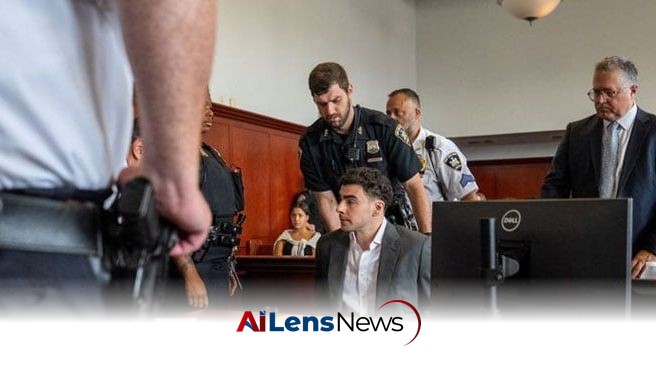


Luigi Mangione has admitted to fatally shooting health insurance executive Brian Thompson, pleading guilty to federal charges of stalking with intent to kill.
Islamabad, Pakistan Aug 15, 2026 ALN: Luigi Mangione admitted in court on Friday that he fatally shot health insurance executive Brian Thompson and pleaded guilty to two federal charges of stalking the CEO with the intent to kill him.
“I shot Mr. Thompson in Manhattan and he died,” Mangione said. He wore beige prison garb and spoke clearly and calmly as he read from a prepared statement laced with criticism of the U.S. health insurance system.
Thompson’s widow sat in the front row of the gallery with other members of his family. When Mangione admitted to shooting Thompson, she choked up while two women seated next to her comforted her. This moment underscored the profound emotional impact of the crime, as Thompson’s family grappled with the loss of a loved one in such a violent manner.
The guilty plea will avert a federal trial in the closely watched case over the killing of the 50-year-old UnitedHealthcare CEO, a brazen crime that was condemned by public officials but became emblematic of Americans’ frustration with health insurance industry practices. The case has drawn significant media attention not only because of the high profile of the victim but also due to the broader implications regarding public sentiment towards the healthcare system in the United States.
Mangione, 28, entered his plea without a deal with federal prosecutors, and there was no guarantee that taking responsibility would result in any leniency at sentencing. Prosecutors said they would seek a sentence of life in prison—the maximum allowable—at his sentencing on December 18. The decision to pursue the maximum sentence reflects the seriousness of the crime and the impact it has had on the community and the healthcare industry as a whole.
U.S. District Judge Margaret Garnett is allowed to consider Mangione’s decision to plead guilty as a mitigating factor when determining his punishment. This aspect of the legal process is crucial, as it allows the court to weigh Mangione’s acceptance of responsibility against the heinous nature of his actions. However, the judge’s discretion is bounded by the gravity of the crime, which involved the premeditated killing of a prominent figure in the healthcare sector.
The federal guilty plea also allowed Mangione’s lawyers to file a motion to dismiss separate state murder and weapons charges ahead of a trial in that case, arguing that he should not have to be punished for the same conduct twice under New York’s law prohibiting double jeopardy. This legal maneuver highlights the complexities of the judicial system when dealing with high-profile cases that cross both federal and state jurisdictions.
Jamie McDonald, the Manhattan U.S. Attorney, said his office had made no accommodations or concessions to Mangione. “No grievance or ideological cause can ever justify murder,” McDonald told reporters. His statement reflects a firm stance from law enforcement that regardless of any underlying motivations, the act of taking a life is unacceptable and must be met with appropriate legal repercussions.
Thompson’s family said in a statement that the plea marked an “important step toward justice.” They expressed hope that the court would ensure that sentencing reflects the severity of this crime. The family’s statement indicates their desire not only for justice for their loved one but also for a broader acknowledgment of the issues surrounding healthcare and the potentially dangerous frustrations that can arise from systemic failures.
The killing of Brian Thompson has sparked discussions about the state of the health insurance industry in the United States, which has been under scrutiny for years due to rising costs, complicated policies, and perceived inequities in access to care. Many Americans have expressed discontent with the way health insurance companies operate, often feeling that profits are prioritized over patient care. This incident has amplified those concerns, as it raises questions about the lengths to which individuals might go when they feel wronged by a system that is supposed to protect their health.
In the wake of Thompson's death, there have been calls for reforms in the healthcare industry, with advocates pushing for more transparency and accountability from insurance companies. The tragedy has become a rallying point for those advocating for change, as they seek to address the frustrations that many Americans feel towards the healthcare system. This case serves as a stark reminder of the potential consequences of unchecked anger and despair in the face of systemic issues.
As the sentencing date approaches, the implications of Mangione’s actions will likely continue to resonate throughout the community and beyond. The case has not only captured media attention but has also prompted discussions among policymakers, healthcare advocates, and the general public about the need for comprehensive reform in the healthcare sector.
Moreover, the relationship between mental health and societal frustrations cannot be overlooked in this context. Mental health advocates emphasize the importance of addressing underlying issues that can lead to violent acts, suggesting that more resources and support systems are needed to help individuals cope with their grievances in constructive ways. The tragedy of Thompson’s death may serve as a catalyst for broader conversations about mental health resources and the need for support systems that can help prevent such incidents in the future.
In conclusion, the case of Luigi Mangione and the murder of Brian Thompson highlights not only the personal tragedy of a family grieving the loss of a loved one but also the larger societal issues surrounding the healthcare system in America. The forthcoming sentencing will not only determine Mangione’s fate but may also influence public discourse on healthcare reform and the importance of addressing the frustrations that many Americans face in navigating the complexities of health insurance.
Thompson, who was a well-known figure in the health insurance sector, had been instrumental in shaping policies that affected millions of Americans. His leadership at UnitedHealthcare, one of the largest health insurance companies in the country, placed him at the forefront of discussions regarding healthcare accessibility and affordability. The loss of such a pivotal figure has left a vacuum in the industry, prompting discussions about the future of health insurance leadership and the ethical responsibilities that come with it.
The incident has also reignited debates over the safety of public figures, particularly those involved in contentious sectors like healthcare. As healthcare continues to be a polarizing issue in American society, the murder of Thompson raises serious questions about the potential risks faced by executives and decision-makers in the industry. This tragedy may lead to increased security measures for those in similar positions, as well as a reevaluation of how the industry addresses public grievances.
Furthermore, the case has implications for how mental health is perceived in relation to violent crime. The motivations behind Mangione’s actions, as he expressed them in court, reflect a deep-seated frustration with the healthcare system, which many individuals can relate to. This connection may prompt a broader societal reflection on the importance of mental health awareness and the need for accessible mental health services. Advocates argue that addressing mental health concerns can play a crucial role in preventing future acts of violence and ensuring that individuals have the tools to manage their frustrations in a healthy manner.
As the community processes the aftermath of this tragic event, there is a collective hope that it will serve as a turning point for meaningful discussions about healthcare reform, mental health resources, and the importance of addressing systemic issues that lead to such violence. The legacy of Brian Thompson, while marked by his untimely death, may ultimately inspire a movement towards a more equitable and compassionate healthcare system that prioritizes the needs of patients over profits.
In the end, the case of Luigi Mangione will not only be remembered for the crime itself but also for the conversations it has sparked about the intersections of healthcare, mental health, and public safety. The outcomes of these discussions could shape the future of healthcare policy in the United States and influence how society addresses grievances within the system.
To learn more about the latest developments in Crime & Law, stay updated with our exclusive reports and analyses on AiLensNews.

