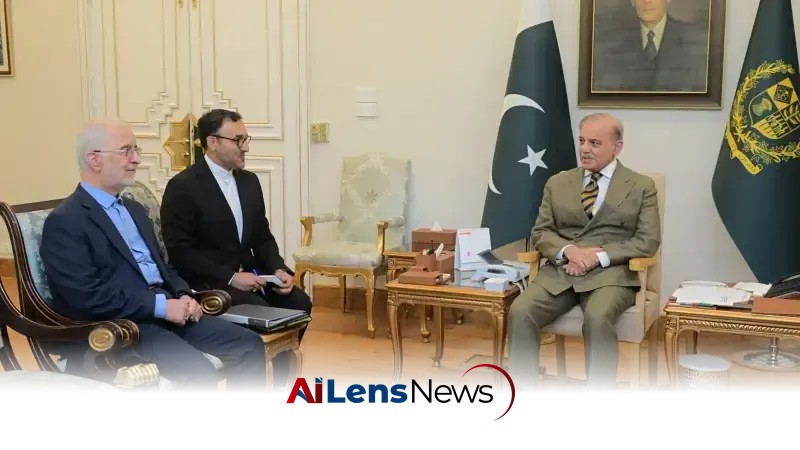


Iran's Interior Minister Eskandar Momeni met with Prime Minister Shehbaz Sharif in Islamabad to discuss ongoing diplomatic efforts amid escalating tensions with the US.
Islamabad, Pakistan Jul 21, 2026 ALN: Iran’s interior minister, Eskandar Momeni, held a significant meeting with Prime Minister Shehbaz Sharif at the PM House in Islamabad on Tuesday. This high-level engagement comes at a time of escalating tensions in the region, particularly concerning the ongoing conflict between the United States and Iran, which has seen a resurgence of hostilities in recent weeks. The meeting signifies the importance of diplomatic relations between Iran and Pakistan, especially given the complex geopolitical environment in which both countries operate.
Momeni arrived in Pakistan on an official visit on Monday night, where he was received by Interior Minister Mohsin Naqvi. His delegation, which is described as high-level, indicates the importance of this visit for both nations. The Prime Minister's Office (PMO) confirmed the commencement of the meeting through a post on social media, although details regarding the discussions were not disclosed. This lack of information could suggest the sensitive nature of the topics discussed, particularly given the ongoing tensions in the region.
In addition to his meeting with PM Sharif, Momeni is scheduled to meet with Chief of Defence Forces and Chief of the Army Staff Field Marshal Syed Asim Munir. This suggests that discussions may extend beyond bilateral relations to include issues of regional security and cooperation, particularly in light of the recent military escalations involving the US and Iran. The Pakistani military's involvement in these discussions highlights the strategic importance of Pakistan in the context of regional security frameworks.
The backdrop of Momeni's visit is critical. Earlier reports indicated that he would interact with Pakistani officials who had previously acted as mediators in a now-collapsed interim ceasefire agreement between the US and Iran. This ceasefire was seen as a potential pathway to de-escalation in a conflict that has seen significant military engagements since its inception, particularly following US-Israeli attacks on Iran in late February. The failure of this ceasefire agreement underscores the fragility of diplomatic efforts in the region and the challenges faced by mediators like Pakistan.
Prior to his meeting with PM Shehbaz, a ceremonial parade was held by police in Momeni’s honour in Islamabad, showcasing the diplomatic importance of his visit. Accompanied by Minister of State for Interior Tallal Chaudhry, Momeni also visited the Pakistan Monument, where he received a guard of honour from a Federal Constabulary contingent. Such ceremonies are customary in diplomatic visits and serve to reinforce the cordial relations between the two countries. These formalities are not merely ceremonial; they reflect the mutual respect and the desire to foster stronger ties amidst regional instability.
The timing of Momeni’s visit is particularly poignant as Pakistan, having served as a mediator, continues its diplomatic efforts to rescue the Islamabad Memorandum of Understanding (MoU) signed last month between the US and Iran. This agreement aimed to establish a framework for peace and to end the hostilities that have characterized US-Iran relations in recent years. However, the situation has deteriorated rapidly, with hostilities resuming almost immediately after the MoU was signed. The breakdown of this agreement illustrates the difficulties in achieving lasting peace in a region fraught with historical grievances and competing interests.
Reports indicate that the US has conducted airstrikes in Iran for the tenth consecutive day, escalating the conflict further. In retaliation, Iran has targeted US radar and air defense installations in the Gulf, marking a significant escalation in military actions between the two nations. This cycle of attack and counterattack raises concerns about a broader regional conflict, with implications for international security and stability. The potential for miscalculation in such a volatile environment is high, and the consequences could extend beyond the immediate parties involved.
Statements from both sides reflect the gravity of the situation. US President Donald Trump recently declared that the ceasefire between Washington and Tehran was "over," a sentiment echoed by Iranian President Masoud Pezeshkian, who stated that Iran is engaged in a "full-scale war." Tehran has accused Washington of violating the MoU, which adds to the complexities of the diplomatic landscape. The rhetoric from both leaders indicates a hardening of positions, making it increasingly difficult to return to the negotiating table.
Despite the ongoing military confrontations, Iranian foreign ministry spokesman Esmaeil Baqaei has indicated that diplomatic exchanges with the US are still taking place through mediators. This suggests that, despite the heightened tensions, there remains a willingness on both sides to explore avenues for dialogue and potential de-escalation, albeit under increasingly strained circumstances. This willingness to engage diplomatically, even amidst conflict, highlights the importance of dialogue in conflict resolution, albeit in a context where trust is severely lacking.
Simultaneously, the geopolitical dynamics in the region are shifting. As Iran's truce with the US collapsed, Tehran has reimposed its blockade of the strategically vital Strait of Hormuz, a key maritime route for global oil shipments. In response, the US has intensified its blockade of Iranian ports, further exacerbating the economic and military tensions in the region. The Strait of Hormuz is a critical chokepoint for global oil supplies, and any disruption there could have far-reaching implications for global energy markets and economic stability.
Adding to the complexity of the situation, Yemen’s Houthi rebels have also entered the fray, announcing an immediate maritime embargo on Saudi Arabia. Houthi military spokesman Yahya Saree framed this move as a retaliation against Saudi Arabia, which has been involved in the Yemen conflict for several years. The Saudi foreign ministry condemned the Houthi blockade, reaffirming Riyadh’s support for Yemen’s Aden-based government. This development opens another front in the ongoing conflict, highlighting the interconnected nature of regional disputes and the potential for broader conflict involving multiple actors. The involvement of non-state actors like the Houthis complicates the already intricate web of alliances and enmities in the region.
In conclusion, Eskandar Momeni’s visit to Pakistan and his discussions with Prime Minister Shehbaz Sharif occur against a backdrop of heightened tensions and complex geopolitical dynamics. The outcome of these meetings may influence not only bilateral relations between Iran and Pakistan but also the broader regional security landscape, especially in light of the ongoing conflict between the US and Iran and the involvement of other regional players like Saudi Arabia and the Houthis. The situation remains fluid, and the implications of these developments will likely resonate throughout the region for the foreseeable future. The challenges ahead will require careful navigation by all parties involved to avoid further escalation and to seek pathways towards peace and stability.
To learn more about the latest developments in World News & International Affairs, stay updated with our exclusive reports and analyses on AiLensNews.

