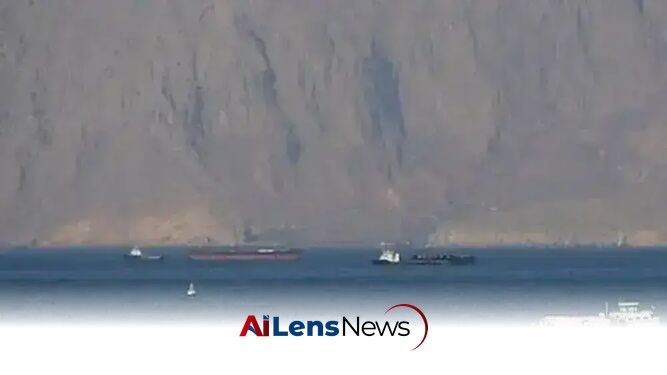


Iran's Revolutionary Guards have stopped four ships attempting to transit the Strait of Hormuz, escalating tensions in a critical shipping route.
Islamabad, Pakistan Jul 25, 2026 ALN: Iran’s Revolutionary Guards, formally known as the Islamic Revolutionary Guard Corps (IRGC), recently announced that they intercepted four ships attempting to transit the highly strategic Strait of Hormuz over a 24-hour period. This incident underscores the ongoing tensions in one of the world’s most crucial shipping routes, which plays a pivotal role in global energy trade and maritime security.
The IRGC stated that their naval forces fired warning shots before stopping the vessels, which were reportedly using what Iranian officials described as an illegal and unsafe route in the southern area of the strait. The specific details regarding the ships, including their identities, flags, destinations, or cargo, were not disclosed in the statement released by Iranian state television. This lack of transparency raises questions about the nature of the vessels intercepted and the motivations behind their routing.
This incident is not isolated; it follows a series of recent actions by Iran targeting tankers navigating routes along the Omani coast. Iranian authorities have increasingly sought to redirect commercial vessels through waters they consider to be under their jurisdiction, often citing safety concerns. Such maneuvers reflect Iran's broader strategy to exert control over maritime activities in the region, which has historically been fraught with geopolitical tensions. The IRGC's actions can be interpreted as a continuation of Iran's long-standing practice of asserting its sovereignty over the Persian Gulf and the Strait of Hormuz, particularly in the face of perceived external threats.
The Strait of Hormuz is a vital global energy corridor, connecting the Persian Gulf with international markets. It is the route through which a significant portion of the world’s oil and liquefied natural gas (LNG) is transported. Approximately one-fifth of the world’s oil supply passes through this narrow waterway, making it a focal point for international shipping. Consequently, any disruption in the strait can have immediate and far-reaching effects on global shipping and energy supplies, leading to increased oil prices and heightened economic uncertainty. The strategic importance of the strait cannot be overstated, as it serves as a critical juncture for energy exports from the Gulf countries to global markets.
In recent weeks, Iran has ramped up its maritime enforcement activities, which includes a pattern of pressuring vessels to adhere to routes that pass through Iranian-controlled waters. Reports indicate that Iranian authorities have also been demanding payment for safe passage, raising concerns among shipping companies about the safety and security of their operations in the region. Such actions have drawn criticism from various international stakeholders, who view them as attempts to assert dominance over the critical maritime corridor. The implications of these demands could lead to increased costs for shipping companies, potentially prompting them to reconsider their logistical strategies and routes.
The geopolitical implications of these incidents are significant. The Strait of Hormuz has long been a flashpoint for U.S.-Iran tensions, particularly since the United States withdrew from the Iran nuclear deal in 2018 and reinstated sanctions against the Iranian economy. In response, Iran has adopted a more aggressive posture in the region, including threats to close the strait entirely, which would have catastrophic implications for global oil markets. The potential closure of the strait would not only disrupt oil supplies but could also lead to a spike in global oil prices, affecting economies worldwide.
The U.S. and its allies have consistently maintained a naval presence in the Gulf region to ensure the free flow of commerce through the Strait of Hormuz. This includes conducting freedom of navigation operations and deploying naval assets to deter Iranian aggression. However, the presence of foreign military forces has also exacerbated tensions, leading to a cycle of provocations and responses that heighten the risk of miscalculation and conflict. The potential for an armed confrontation in these waters remains a critical concern for regional and global security, as both sides may feel compelled to assert their rights and interests.
Furthermore, the recent interception of vessels by the IRGC could be seen as a signal to both domestic and international audiences. Domestically, Iran may be trying to project strength and control in the face of ongoing economic challenges and political pressures. This display of military capability could serve to bolster the regime's legitimacy among its populace, particularly as it faces discontent over economic hardships exacerbated by sanctions. Internationally, these actions may serve to remind other nations of Iran's capability and willingness to assert its interests in the face of perceived threats, particularly from the U.S. and its allies.
As maritime traffic continues through the strategically important waterway, the potential for further incidents remains high. Shipping companies are likely to reassess their routes and operational protocols in light of these developments. Additionally, the international community will be closely monitoring the situation, as any escalation could have broader implications for regional stability and global energy security. The responses from other nations, particularly those whose shipping routes are affected, will be crucial in shaping the future of maritime operations in the region.
In conclusion, the interception of four ships by Iran’s Revolutionary Guards is a reflection of the heightened tensions in the Strait of Hormuz, a critical artery for global energy supplies. As Iran continues to assert its influence in the region through maritime enforcement, the implications for international shipping, energy markets, and geopolitical stability are profound. Stakeholders must remain vigilant as the situation evolves, with the potential for further confrontations looming on the horizon. The international community's response to these developments will play a significant role in determining the future dynamics of the Strait of Hormuz and the broader geopolitical landscape in the Gulf region.
To learn more about the latest developments in Crime & Law, stay updated with our exclusive reports and analyses on AiLensNews.

