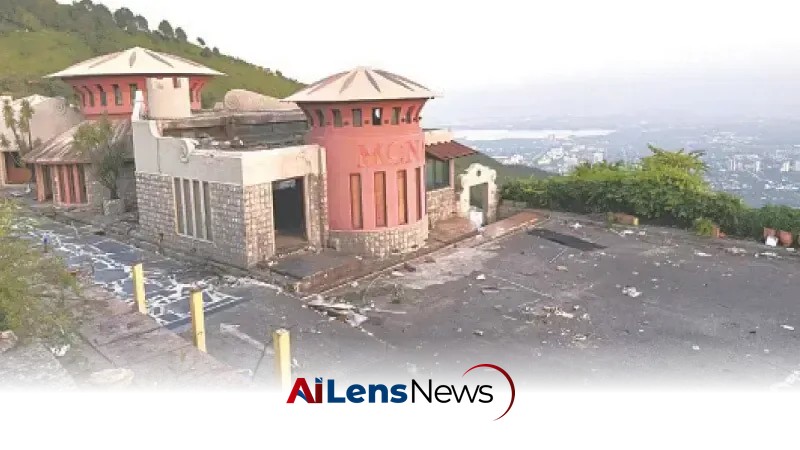


The Federal Constitutional Court has annulled a Supreme Court decision that allowed the demolition of restaurants in Margalla Hills National Park, emphasizing legal processes over emotional judgments.
Islamabad, Pakistan Jul 13, 2026 ALN: The Federal Constitutional Court (FCC) on Monday set aside a Supreme Court (SC) judgment from August 2024 that had paved the way for the demolition of infrastructure developed by the Monal Group of Companies, La Montana and Gloria Jeans inside the picturesque Margalla Hills National Park (MHNP). This decision marks a significant shift in the legal landscape surrounding the management and preservation of national parks in Pakistan, particularly in relation to commercial enterprises operating within them.
The SC had ordered the closure of Monal and the adjacent La Montana restaurant on August 21, 2024, with the closures taking effect the following month. This decision was primarily aimed at protecting the park’s biodiversity, which has been increasingly threatened by human activities and encroachment. The Margalla Hills National Park, established in 1980, is known for its rich biodiversity, including various species of flora and fauna, some of which are endemic to the region. The park serves as a crucial ecological zone, providing habitat for wildlife and acting as a buffer against urban expansion.
A bench headed by Justice Syed Hasan Azhar Rizvi, along with Justices Aamer Farooq and Syed Arshad Hussain Shah, took up review petitions filed by the Capital Development Authority (CDA) and the Metropolitan Corporation Islamabad (MCI). These petitions challenged the SC’s earlier directives which mandated the Islamabad Wildlife Management Board (IWMB) to take possession of the restaurants located within the park. The involvement of the CDA and the Islamabad Capital Territory Police was also stipulated to assist the wildlife board in this endeavor.
The FCC’s decision to overturn the SC ruling not only reinstates the operations of the restaurants but also highlights the complexities surrounding land use and environmental regulations in Pakistan. The FCC ruled that disputes related to ownership must be resolved by trial courts without being swayed by previous court observations. Furthermore, it asserted that administrative matters should be handled by the appropriate regulatory bodies, thus clarifying the jurisdictional boundaries between different legal entities involved in environmental governance.
In its ruling, the FCC also urged trial courts to expedite the resolution of pending cases related to the disputed properties. During the proceedings, Justice Rizvi expressed regret that several critical issues had not been adequately considered in the SC’s decision. He emphasized that judicial determinations should be grounded in legal principles rather than emotional responses, suggesting that the earlier ruling may have overlooked important legal frameworks and considerations.
Senior counsel Ahsan Bhoon, representing the interests of the restaurants, expressed appreciation for the FCC’s decision. However, Justice Rizvi responded by indicating that the court's role is not to seek praise but to ensure that decisions are made based on legal merit. This exchange underscores the judiciary's commitment to upholding the rule of law and ensuring that judicial decisions are rooted in sound legal reasoning.
Earlier in the legal proceedings, the SC had issued directives to barricade the entrances to the area where the restaurants were located, with plans for demolition to follow. The SC aimed to ensure minimal disturbance to the wildlife and to protect the trees and natural landscape of the national park during this process. This reflects a growing recognition of the need to balance economic activities with environmental conservation, particularly in ecologically sensitive areas.
On September 10, 2024, the SC had previously dismissed a similar set of review petitions filed by the Monal Group of Companies, the Capital View Point Restaurant (La Montana), Sunshine Heights (Pvt) Ltd, and Brig (retd) Falak Naz Bangash from the defense ministry. In its dismissal, the SC had characterized Luqman Ali Afzal of the Monal Group as a trespasser, asserting that he had no legal claim to the land within the MHNP. This characterization emphasizes the legal vulnerabilities faced by commercial entities operating in protected areas without proper authorization.
Moreover, the court's ruling articulated that the operations of these restaurants were in blatant violation of the Islamabad Wildlife (Protection, Preservation and Management) Ordinance. The ordinance serves as a foundational legal framework aimed at safeguarding the ecological integrity of national parks and wildlife reserves in the region. By operating without the necessary legal permissions, the restaurants not only jeopardized the park's biodiversity but also set a concerning precedent for future commercial developments in protected areas.
The SC had previously noted that the actions of the restaurant operators and those who permitted their operations had severely undermined the integrity of the national park. The court highlighted the detrimental impact on the park's trees, flora, and the displacement of endemic bird and animal species. Such ecological disruptions have far-reaching consequences, not only for the immediate environment but also for the overall health of the ecosystem, which plays a vital role in maintaining the ecological balance of the region.
Additionally, the SC warned of the astronomical environmental costs that would be incurred by the public and future generations due to the degradation of natural resources. This warning serves as a stark reminder of the importance of sustainable development practices that prioritize environmental conservation alongside economic growth. The implications of this ruling extend beyond the immediate case, potentially influencing future legal interpretations and policy decisions regarding land use in national parks across Pakistan.
The ongoing legal battles surrounding the Margalla Hills National Park reflect broader tensions between development interests and environmental protection. As urban areas continue to expand, the pressure on natural resources intensifies, leading to conflicts over land use and conservation priorities. The FCC's recent decision may embolden other commercial entities operating in similar contexts to challenge regulatory actions aimed at environmental protection, raising critical questions about governance and accountability in the management of national parks.
In conclusion, the FCC's overturning of the SC's ruling on the demolition of restaurants in Margalla Hills highlights the complexities of environmental law in Pakistan. It underscores the need for a balanced approach that considers both economic development and ecological preservation. As legal disputes continue to unfold, the outcomes will likely shape the future of conservation efforts and the management of natural resources in the country.
To learn more about the latest developments in Local & Regional, stay updated with our exclusive reports and analyses on AiLensNews.

