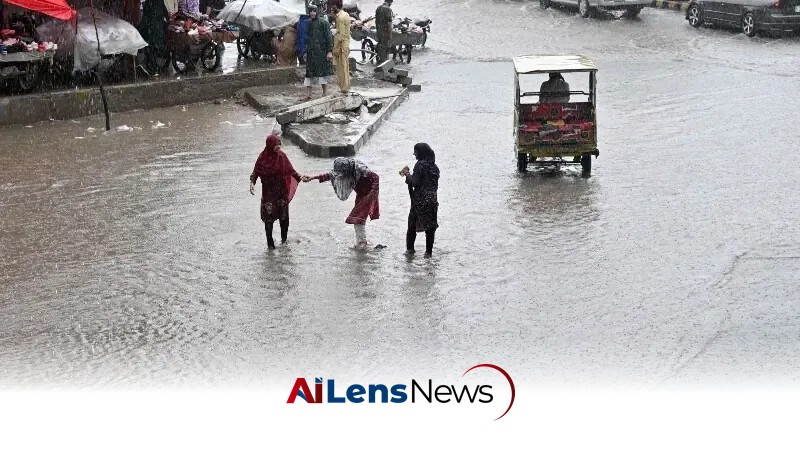


The Chenab River's flood level has eased from medium to low, while the Pakistan Meteorological Department predicts more rain in upper Punjab starting July 29.
Islamabad, Pakistan Jul 26, 2026 ALN: The Chenab River has been a focal point of concern as it continues to experience flooding, although recent reports indicate a reduction in flow levels from medium to low. This change has been welcomed by authorities and residents alike, as they brace for a new weather system that is expected to bring additional rainfall starting from July 29. The Pakistan Meteorological Department (PMD) has indicated that this rainfall may affect the upper catchments of all major rivers, including the Chenab, as well as regions such as Islamabad, upper Punjab, and northern parts of the country.
The Provincial Disaster Management Authority (PDMA) in Punjab has been actively monitoring the situation. In a statement released on Sunday morning, the PDMA noted that while flooding persists in various rivers, the flow levels have stabilized over the previous 24 hours. This stability is crucial as it allows both residents and emergency services to prepare and respond more effectively to the ongoing situation.
Specifically, the PDMA reported low-level flooding in the Indus River at key points including Kalabagh, Chashma, and Taunsa waterworks. The recorded flow rates were 334,000 cusecs at Kalabagh, 370,000 cusecs at Chashma, and 313,000 cusecs at Taunsa as of 6 a.m. on Sunday. These figures, while still significant, reflect a manageable level of flooding compared to more severe conditions that could pose greater risks to nearby communities.
In the Chenab River, the situation appears to be improving, with reported low-level flooding at several barrages including Marala, Khanki, Qadirabad, and Trimmu. The water flow was measured at 143,000 cusecs at Marala, 138,000 cusecs at Khanki, 135,000 cusecs at Qadirabad, and 184,000 cusecs at Trimmu, indicating a trend toward normalization in the river's water levels. This is a positive development for residents living in proximity to these waterways, who have been on high alert due to the risk of flooding.
Additionally, the Ravi River is also experiencing low-level flooding at the Balloki and Sidhnai headworks, with flow rates of 81,000 cusecs and 60,000 cusecs, respectively. In contrast, the water flow at Shahdara remains at normal levels, providing some relief to local communities. The Sutlej and Jhelum rivers are also reported to be at normal flow levels, which is encouraging news as it indicates that the broader river system may be stabilizing.
While the situation appears to be improving in some areas, there are still significant concerns regarding flooding in specific locations. The PDMA has reported a medium flood situation in Narowal’s Basantar Nullah and a high-level flood in Wazirabad’s Phalko Nullah, with a flow of 5,000 cusecs. The authority has urged citizens living in flood-prone areas to evacuate to safer locations immediately. The provincial government has assured that necessary arrangements have been made to assist those affected by the flooding.
The PDMA has also emphasized that all basic facilities and medical assistance will be provided in flood relief camps, ensuring that the needs of displaced residents are met during this critical time. This proactive approach is vital in mitigating the impact of the floods and providing support to those who have lost their homes or livelihoods.
In terms of rainfall, the PDMA reported significant precipitation across various regions over the past 24 hours. Noorpur Thal recorded 115mm of rainfall, Gujranwala 107mm, and Gujrat 94mm, among other notable amounts. Lahore itself received 37mm of rain, contributing to a total of 450mm over a five-day period. Such substantial rainfall can exacerbate flooding conditions, especially in low-lying areas that are more susceptible to water accumulation.
Furthermore, the PDMA has indicated that the control room and district emergency operation centers remain on high alert, ready to respond to any emergencies that may arise as a result of the ongoing weather conditions. The authority has also raised caution regarding the risk of flooding in rivers and canals in low-lying areas, as well as potential landslides in mountainous regions such as Murree. The heavy rain poses additional risks, including damage to mud-brick houses, which are common in many rural areas of Punjab.
In light of the recent weather events, the PDMA has reported that at least seven individuals, including two children, lost their lives in rain-related incidents across Punjab over the weekend. This tragic statistic underscores the dangers associated with heavy rainfall and flooding. Since the onset of the monsoon season from June 25 to July 25, a total of 29 lives have been claimed, with 203 people reported injured due to monsoon-related incidents. The scale of these impacts highlights the urgent need for continued vigilance and preparedness among local communities.
The DG of the PDMA has also announced that the provincial government will provide financial compensation to the families of those who have perished due to flooding, with amounts ranging from 1 to 5 million Pakistani Rupees. This financial assistance is crucial for families who have lost their primary breadwinners and may be struggling to cope with the aftermath of the disaster.
As the weather forecast indicates a fresh spell of rainfall beginning July 29, the PMD has cautioned that no flood-generating rainfall activity is expected until July 28. However, they anticipate scattered rain and thunderstorms in the upper catchments of all major rivers, including regions in Khyber-Pakhtunkhwa and Punjab. The forecast includes potential rainfall in cities such as Attock, Bahawalnagar, and Faisalabad, among others. This broad coverage of expected rainfall could lead to further complications, particularly in areas that are already saturated from previous rains.
In Sindh, areas such as Badin and Hyderabad are also expected to receive rain, while Balochistan is forecasted to see precipitation in places like Barkhan and Kalat. The PMD has indicated that the Indus River at Kalabagh, Chashma, Taunsa, and Guddu will likely remain in low-level flood for the next 48 hours, which will require ongoing monitoring and preparedness from local authorities.
For Karachi, the Met Office has forecast cloudy and humid weather with light rain and potential thunderstorms at the outskirts of the city. This weather pattern is expected to continue into Monday and Tuesday, further complicating the situation for residents in affected areas.
In conclusion, while the immediate situation regarding the Chenab and other rivers appears to be stabilizing, the impending rainfall poses a significant risk that requires ongoing attention and preparedness from both authorities and residents. The PDMA's proactive measures and the community's resilience will be critical in navigating the challenges posed by the monsoon season and ensuring the safety and well-being of all affected individuals.
To learn more about the latest developments in Weather & Emergency, stay updated with our exclusive reports and analyses on AiLensNews.

