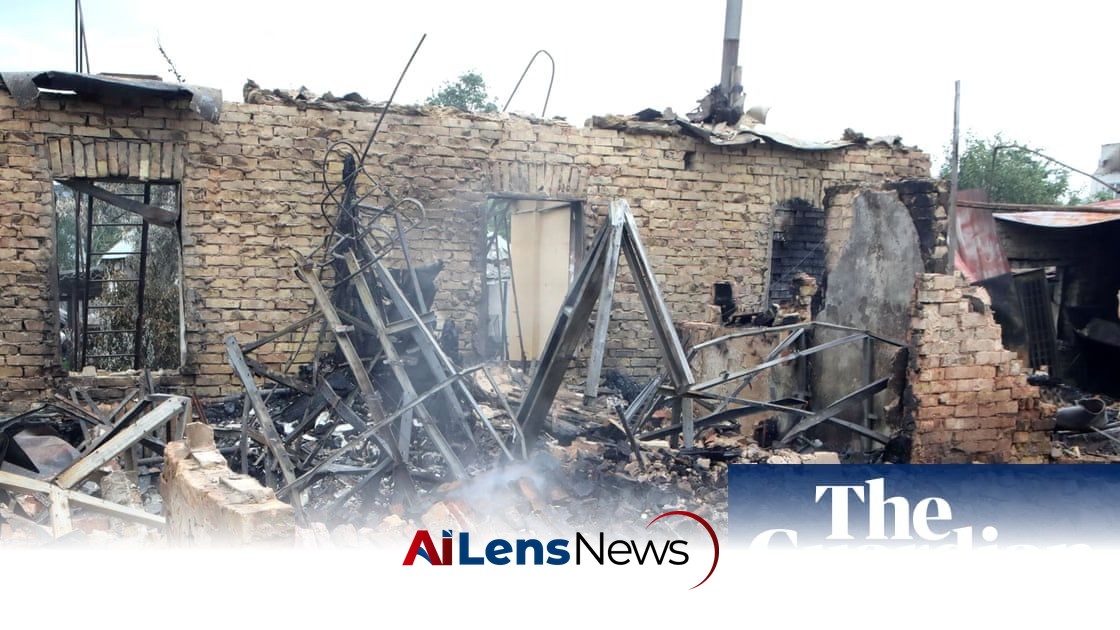


President Zelenskyy condemns the placement of weapons in residential areas following a devastating Russian strike that resulted in 10 fatalities. The incident raises urgent questions about accountability and safety.
London, United Kingdom Jul 12, 2026 ALN: Ukrainian President Volodymyr Zelenskyy has expressed outrage over the placement of weapons warehouses in civilian areas after a recent Russian strike killed ten people in the town of Vyshneve, located on the outskirts of Kyiv. The attack, which occurred earlier this week, triggered a series of secondary explosions that devastated the residential neighborhood, damaging hundreds of homes. Zelenskyy stated that an investigation by the Ukrainian Security Service has identified officials from the state weapons producer Ukroboronprom who authorized the use of the warehouse, emphasizing that those responsible will be held accountable.
“This was a direct violation of both the law and a decision of the supreme commander-in-chief’s staff,” Zelenskyy remarked. He underscored the necessity for every enterprise manager to ensure that such tragedies are never repeated, as public outcry over negligence and lack of information from officials continues to grow. The incident has sparked a debate about military logistics and the responsibilities of state-owned enterprises in conflict zones. The placement of military assets in populated areas raises significant ethical and safety concerns, particularly in a war where civilian casualties have been alarmingly high.
Zelenskyy’s announcement coincided with a series of Russian missile and drone attacks across Ukraine that resulted in additional fatalities. On Saturday, these strikes killed eight people, including a child, and left dozens injured. In the northern city of Sumy, two glide bombs struck a crowded area, killing five individuals and injuring around thirty others. Furthermore, a man was killed in a border district of the Sumy region after stepping on an explosive device, while two more fatalities were reported in the southern port city of Odesa due to a missile strike.
The injury toll from the strikes on Kyiv rose to twelve, including two children, according to the city’s mayor. Zelenskyy reported that Russia launched over 120 drones and 12 missiles during the night, with many hitting civilian infrastructure even before air raid alerts were issued. He shared videos showing emergency teams responding to the aftermath of the attacks, which damaged apartment buildings, offices, and a theological school. The increasing frequency and intensity of these attacks have raised alarms regarding the safety of civilians and the effectiveness of Ukraine's air defense systems.
Despite air defenses managing to intercept most aerial threats, Zelenskyy noted that ballistic missiles posed a significant challenge. He reiterated his appeal for increased military aid from allies to bolster Ukraine's defenses against the ongoing Russian invasion, which has now entered its fifth year. Recent weeks have seen a surge in attacks on Kyiv, with over sixty casualties reported in the region this month alone. The Ukrainian government has been stressing the urgent need for advanced missile defense systems to counter the evolving threats posed by Russian military capabilities.
In light of the escalating violence, Zelenskyy called for a renewed focus on diplomatic efforts aimed at expediting arms supply agreements with Ukraine’s allies. “I am preparing changes in Ukraine’s diplomatic efforts. We need a new level of cooperation with our partners to ensure that agreements on arms supplies are fulfilled,” he stated in his nightly video address, emphasizing the urgency of implementing agreements reached by national leaders. This call for enhanced cooperation underlines the complexities of international relations in the context of the war, where securing military support has become a paramount concern for Ukraine.
Ukraine's drone forces chief, Robert Brovdi, reported that Ukrainian units successfully targeted 21 fuel tanker vessels in the Sea of Azov overnight, alongside seven other cargo and support ships. This brings the total number of vessels struck this week to 76. Zelenskyy indicated that the objective of the drone campaign is to compel Russia to engage in negotiations, although President Vladimir Putin has yet to show any willingness to soften his stance. The use of drones in naval operations marks a significant evolution in warfare tactics, reflecting both sides' adaptation to the ongoing conflict's demands.
In a related incident, Russian authorities reported that one person was killed in a drone attack on four vessels, including a tanker carrying methanol, in Taganrog Bay. The governor of the southern Rostov region confirmed the casualty but noted that there was no risk of a methanol spill. This incident highlights the risks associated with maritime operations in conflict zones, where civilian lives and environmental safety are increasingly at stake.
On the battlefield, Russian troops have reportedly taken control of the settlement of Bachivsk in Ukraine’s Sumy region, according to the defense ministry. This claim has not yet been independently verified. The control of strategic locations is critical for both sides as they seek to consolidate their military positions and disrupt the opponent's logistics and supply lines. The battle for territory has become a focal point of the conflict, with each side aiming to gain the upper hand as the war drags on.
Amid the ongoing conflict, authorities in Russia’s Novosibirsk region have advised residents to work remotely and limit travel due to a deepening fuel crisis, exacerbated by Ukrainian strikes on oil refineries. This region, which houses nearly three million people, is a major economic hub in Siberia. The fuel crisis reflects the broader economic impacts of the war, as sanctions and military actions have disrupted supply chains and created shortages within Russia. The situation may lead to increased public dissatisfaction, which could have political implications for the Kremlin.
As the conflict continues, the humanitarian and strategic implications of these events remain profound, with both sides facing significant challenges and casualties. The ongoing violence has not only devastated infrastructure and communities but has also raised questions about the long-term viability of military strategies employed by both Ukraine and Russia. Diplomatic efforts to resolve the conflict appear stalled, and the cycle of violence shows little sign of abating, indicating a protracted struggle ahead.
To learn more about the latest developments in World News & International Affairs, stay updated with our exclusive reports and analyses on AiLensNews.

