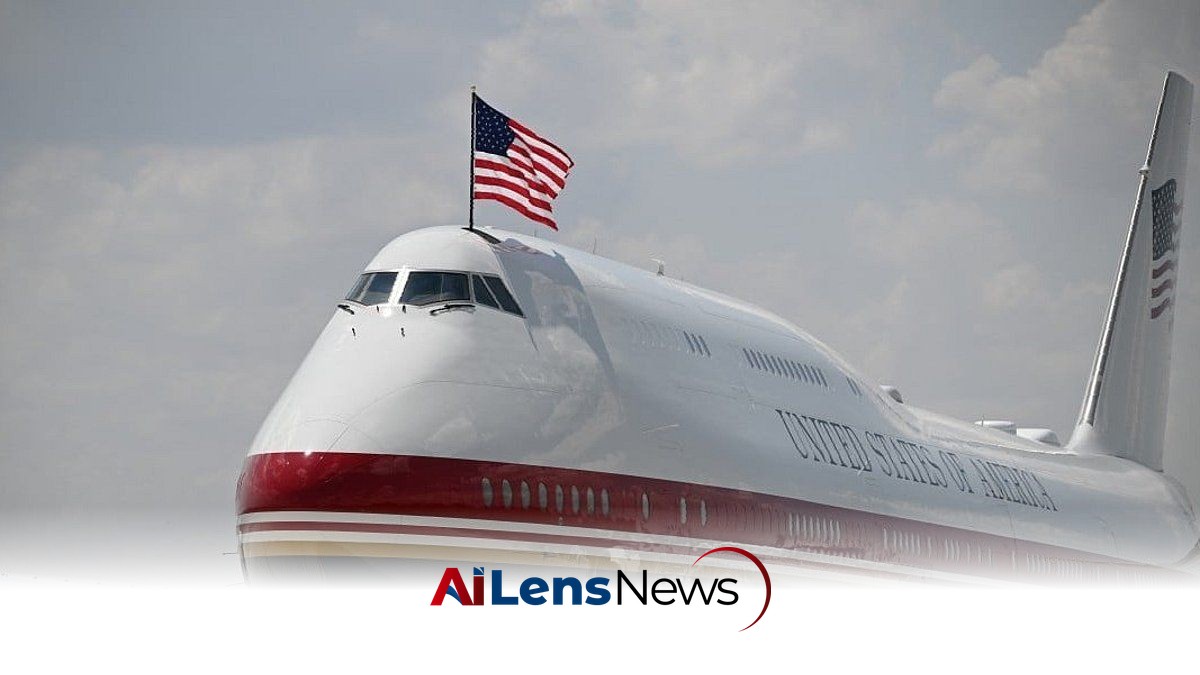


The Trump administration has subpoenaed New York Times journalists regarding security concerns over the new Air Force One, raising issues of press freedom.
Doha, Qatar Jul 11, 2026 ALN: Washington: The Trump administration has subpoenaed several New York Times journalists after their report on security concerns involving the new Air Force One, according to the paper. This development has raised significant alarm among press freedom advocates and legal experts, who view it as an aggressive move against independent journalism.
The new jet, which President Donald Trump received as a gift from Qatar, entered service last week. The aircraft, a Boeing 747, underwent extensive retrofitting, reportedly costing around $400 million, to meet the unique security and operational requirements of a presidential aircraft. The introduction of this new Air Force One comes at a time of heightened tensions in the Middle East, particularly with Iran, which has led to increased scrutiny of the aircraft's operational capabilities.
The subpoenas issued Friday seek to compel the reporters to testify before a federal grand jury in Manhattan on Wednesday, the paper said, adding that federal agents delivered some subpoenas to the reporters at their homes. This method of serving subpoenas has drawn criticism for its aggressive nature, particularly as it involves journalists who are simply doing their jobs in reporting on matters of public interest.
There was no immediate response from the White House or Department of Justice to requests for comment on Saturday. The lack of immediate clarification from these entities further fuels speculation about the motivations behind the subpoenas and the implications for press freedom in the United States.
Get updated faster and for FREE: Download the Gulf News app now - simply.
David McCraw, a lawyer for the Times, stated, "The appearance of federal law enforcement agents on the doorstep of news reporters should shock the conscience of any American who believes in the Constitution and the press freedom it protects." His comments reflect a broader concern among legal experts and civil liberties advocates about the erosion of press protections under the current administration.
Issuing subpoenas represents a major escalation in the Republican president's effort to threaten independent news organizations by leveraging the power of the federal government against them. This action is seen as part of a systematic pattern by Trump to attempt to undermine press freedom in order to shield him from negative coverage. The implications of such actions are profound, as they could deter journalists from investigating and reporting on matters of public interest due to fear of legal repercussions.
Earlier this year, the Justice Department issued subpoenas seeking to compel testimony from reporters at The Washington Post and The Wall Street Journal. In both cases, the department later withdrew the subpoenas after backlash from the media and civil rights organizations. However, the mere act of issuing such subpoenas raises serious questions about the administration's stance on press freedom and the chilling effect it may have on investigative journalism.
During his first term, Trump suggested that the press constituted an "enemy" of the American people. Since returning to the White House last year, he has waged an aggressive campaign against the media unlike any in modern US history. This ongoing hostility has included derogatory remarks about journalists and news organizations that publish critical coverage, as well as attempts to undermine their credibility.
Trump's pattern of attacks against news outlets and media figures he believes are overly critical of him has included filing lawsuits against outlets whose coverage he dislikes, threatening to revoke TV broadcast licenses, and seeking to bend news organizations and social media companies to his will. Such tactics raise concerns about the future of a free press in the United States, a cornerstone of democracy that relies on the ability of journalists to hold power to account.
The president flew the new Air Force One to a NATO summit in Turkey this week. However, he departed Wednesday on one of the older-model Air Force One jets for Mildenhall, a Royal Air Force base in Suffolk, England. This decision to switch aircraft has been the subject of intense scrutiny, particularly given the backdrop of escalating tensions with Iran.
The newer plane also flew to Mildenhall. Trump then switched to that plane for the flight home to Joint Base Andrews. The abrupt plane swap came as a shaky ceasefire with Iran had collapsed, with the US launching airstrikes on Iran and Tehran attacking Gulf Arab states. The timing of the switch has led to speculation about the security capabilities of the new Air Force One, particularly in light of its reported lack of advanced security features compared to older models.
The newspaper, citing anonymous sources, reported that the switch had come at the urging of the Secret Service and that the newer plane lacked some of the advanced security features of the older aircraft, including antimissile capabilities. This revelation has raised concerns about the adequacy of security measures in place for the president, especially during a period marked by regional instability and threats from adversarial nations.
Trump denied any security concerns, posting on social media that the stop in Mildenhall was so that service members there could view the new jet. During the flight, Trump denied to the reporters accompanying him that security concerns involving Iran were a factor in flying two planes home. When asked if he was aware of any credible threats against Air Force One by Iran, Trump brushed off the question, stating, "I have a threat all the time. I'm No. 1 on their list." This dismissal has been interpreted by some as an attempt to downplay legitimate security concerns.
The White House later denied any security shortcomings on the new plane. Spokesman Steven Cheung stated, "The new Air Force One is a state-of-the-art aircraft that has been fitted with high-level security protocols that ensure the safety of the President and his staff." He added, "As the President has said recently, there are many enemies of America who have their sights on him, and we use every tool at our disposal - including distraction and misdirection - to address those threats." This defense raises further questions about the transparency of the administration regarding security matters and the potential implications for public trust.
The Times journalists who received subpoenas included Julian E. Barnes, Eric Lipton, Tyler Pager, and Eric Schmitt, the paper reported. Their involvement underscores the broader implications of the administration's actions, as it highlights the potential risks faced by journalists who cover sensitive topics related to national security and government accountability. As the situation unfolds, it remains to be seen how this will affect the landscape of press freedom and the relationship between the government and the media in the United States.
To learn more about the latest developments in Crime & Law, stay updated with our exclusive reports and analyses on AiLensNews.

