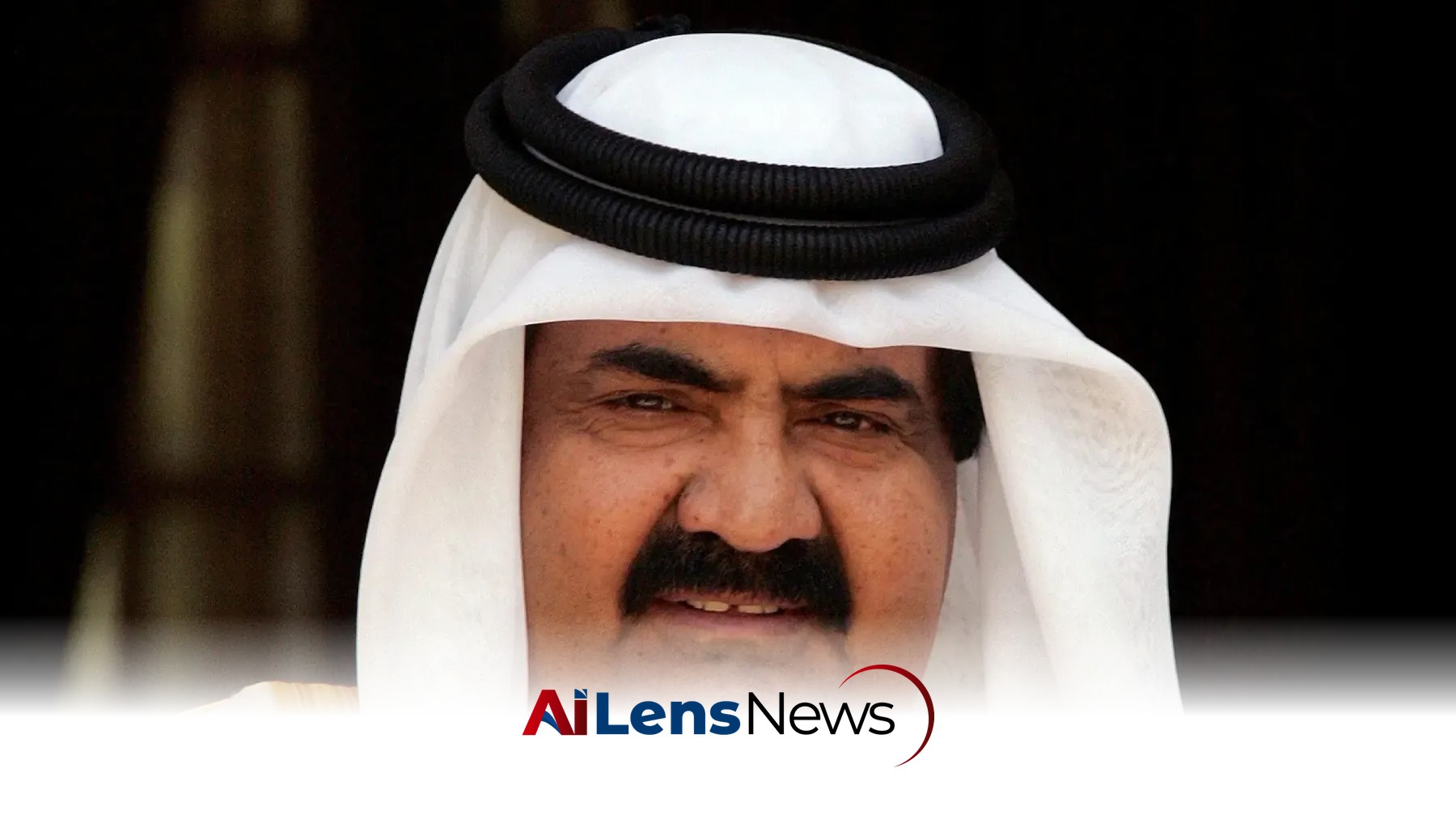


Sheikh Hamad bin Khalifa Al Thani, who led Qatar from 1995 to 2013, has passed away, marking a significant loss for the nation.
Islamabad, Pakistan Jul 12, 2026 ALN: Qatar’s government on Sunday announced the death of former leader Sheikh Hamad bin Khalifa Al Thani, who led the country from 1995 to 2013. His passing marks a significant moment in the history of Qatar, a nation that has undergone dramatic transformations during and after his tenure.
“With hearts steadfast in faith in God’s decree and destiny, the Bureau of the emir mourns the great loss to the nation of the late — may God have mercy on him — His Highness the Father Amir Sheikh Hamad bin Khalifa Al Thani,” read a statement published by the emir’s office on social media. This statement reflects the deep respect and affection held for Sheikh Hamad, who was a pivotal figure in shaping modern Qatar.
Sheikh Hamad took power in June 1995, overthrowing his father in a bloodless coup while the latter was abroad. This transition of power was significant not only for Qatar but also set a precedent in the region, where leadership changes often occur through more tumultuous means. Under Sheikh Hamad’s leadership, Qatar transformed from a small emirate with limited resources into a major player on the regional and international stage, marking a new era in its history.
Upon assuming power, Sheikh Hamad inherited a nation that was largely dependent on oil and gas revenues but had not yet capitalized on its wealth to develop infrastructure and social services. He embarked on a series of initiatives aimed at diversifying the economy, investing in education, and enhancing the country’s global standing. These efforts included significant investments in health care, education, and the establishment of a modern infrastructure that would support Qatar’s rapid growth.
During his time in office, the international broadcaster Al Jazeera was launched in 1996, following a decree issued by the emir. Al Jazeera quickly became known for its bold and independent journalism, providing a platform for diverse voices in the Arab world and beyond. The network played a crucial role in shaping public discourse and has been influential in various regional movements, including the Arab Spring. Sheikh Hamad’s support for Al Jazeera was part of a broader strategy to position Qatar as a center for media and cultural influence.
In June 2013, Sheikh Hamad surprised many by voluntarily abdicating in favor of his son, Sheikh Tamim bin Hamad Al Thani, a first in the recent history of the Arab world. This move was seen as a testament to his confidence in the next generation of leadership and a desire to ensure a smooth transition of power. Sheikh Tamim has continued many of his father’s policies, focusing on economic diversification, infrastructure development, and enhancing Qatar’s role in international diplomacy.
Sheikh Hamad’s legacy is one of modernization and development. He oversaw the establishment of numerous educational institutions, including branches of foreign universities, which have contributed to a higher standard of education in Qatar. Furthermore, he was instrumental in promoting Qatar as a host for international events, including the 2022 FIFA World Cup, which will be the first World Cup held in the Middle East. This event is expected to further elevate Qatar’s status on the global stage.
On behalf of the government and the people of Pakistan, Deputy Prime Minister and Foreign Minister Ishaq Dar extended condolences to the Al Thani family, the emir and the government and the people of Qatar. “Deeply saddened to learn of the passing of Sheikh Hamad bin Khalifa Al Thani,” he posted on X, adding that during his reign, Sheikh Hamad played a pivotal role in Qatar’s modern development and in strengthening the bonds of friendship with Pakistan. “His visionary leadership and contributions to regional peace will be long remembered,” he said. This sentiment reflects the broader regional impact that Sheikh Hamad had, fostering relationships with various countries and contributing to diplomatic efforts in the Gulf region.
Qatar is one of the smallest Arab states with a population of around three million people, most of whom are foreign workers. The demographic landscape of Qatar has been shaped significantly by its economic policies, which have attracted a large expatriate workforce to support its ambitious development goals. This has led to a unique cultural melting pot, with diverse communities coexisting in a relatively small geographic area.
The country was a British protectorate for 55 years until 1971, and its history of colonialism has influenced its national identity and political landscape. Since gaining independence, Qatar has been ruled by a monarchy, the Al Thani family, since the mid-19th century. The monarchy has adapted over the years, balancing traditional governance with modern statecraft. Sheikh Hamad's leadership was marked by a willingness to embrace change while maintaining the cultural and historical heritage of the nation.
In the wake of Sheikh Hamad’s death, there will likely be discussions regarding his legacy and the future direction of Qatar under Sheikh Tamim. As the nation navigates the complexities of regional geopolitics, energy markets, and social change, the foundational work laid by Sheikh Hamad will continue to influence policy decisions and national identity. His passing not only marks the end of an era but also serves as a reminder of the rapid transformations that have taken place in Qatar over the past few decades, positioning it as a significant player on the global stage.
Sheikh Hamad's rule was characterized by a commitment to modernization, which included the establishment of Qatar University in 1973, and the Qatar Foundation, founded in 1995. These institutions have played crucial roles in advancing education and research in the country. His vision also extended to healthcare, with the development of the Hamad Medical Corporation, which has become one of the leading healthcare providers in the region.
Additionally, Sheikh Hamad's leadership saw Qatar investing heavily in international ventures, including a diversified portfolio of investments in various sectors such as real estate, finance, and energy across the globe. This strategy not only strengthened Qatar’s economy but also positioned it as a key player in global markets, allowing the country to wield significant influence beyond its borders.
The foreign policy initiatives during Sheikh Hamad’s reign were equally noteworthy. He was known for his efforts to mediate conflicts in the region and beyond, often positioning Qatar as a neutral ground for dialogue. This diplomatic approach was evident in Qatar’s involvement in various peace processes, including those in Lebanon and Sudan. His ability to navigate complex geopolitical landscapes helped elevate Qatar's profile on the world stage.
In cultural terms, Sheikh Hamad was a patron of the arts and education, fostering a cultural renaissance in Qatar. His support for initiatives such as the Museum of Islamic Art and the National Museum of Qatar has helped preserve and promote the rich cultural heritage of the region. These institutions not only serve as a testament to Qatar's history but also as platforms for contemporary art and cultural exchange.
As Qatar moves forward following Sheikh Hamad’s death, the nation faces several challenges, including managing its rapid growth, addressing social issues related to its diverse population, and continuing to navigate the complexities of regional politics. The legacy of Sheikh Hamad will undoubtedly influence the path forward, as the country seeks to maintain its momentum while honoring the vision set forth during his transformative years in power.
In conclusion, Sheikh Hamad bin Khalifa Al Thani's death marks the end of a significant chapter in Qatar’s history. His contributions to the nation’s development, modernization, and international standing have left an indelible mark that will shape the future of Qatar for years to come. As the country reflects on his legacy, it will also look to build upon the foundations he laid, ensuring that Qatar continues to thrive in an ever-changing global landscape.
To learn more about the latest developments in World News & International Affairs, stay updated with our exclusive reports and analyses on AiLensNews.

