

Tensions escalate as the US and Iran engage in fighting coinciding with the burial of Supreme Leader Ali Khamenei, raising concerns over regional stability.
Kuwait City, Kuwait Jul 12, 2026 ALN: New fighting erupted between the United States and Iran just hours before the burial of longtime Supreme Leader Ali Khamenei on Thursday. Tehran targeted US allies in the region while American strikes hit the perimeter of an Iranian nuclear power plant. These attacks coincided with the burial of Khamenei, who was killed in a US airstrike on February 28, marking a significant escalation in hostilities.
Khamenei’s body was transported slowly through crowded streets towards the Shrine of Imam Reza, with mourners dressed in black waving Iranian flags and holding photographs of the late leader alongside revolutionary slogans. This display of public mourning underscored the deep-seated reverence that many in Iran held for Khamenei, who had been a dominant figure in Iranian politics for over three decades. His leadership was characterized by a strict interpretation of Islamic principles and a staunch opposition to Western influence, particularly from the United States.
Iran’s Revolutionary Guards Navy reported that US attacks and interventions in redirecting shipping through the Strait of Hormuz were disrupting the waterway’s gradual reopening. Iranian officials claimed that US strikes had resulted in 14 deaths and 78 injuries across five provinces on July 8 and 9. One strike reportedly targeted a rail bridge used for trade with Russia and China. This incident highlighted the strategic importance of the Strait of Hormuz, a vital maritime corridor through which a significant portion of the world’s oil passes. Iran has historically viewed control over this waterway as crucial to its national security and economic interests.
The Guards stated that the number of vessels transiting the strait under Iranian supervision had recovered to about 50 percent of pre-war levels over the past two weeks, with permission granted only to ships using routes designated by Tehran. They warned that any further US intervention would provoke a “crushing response.” This assertion reflects Iran's commitment to maintaining its influence in the region and its willingness to confront US military presence directly, signaling a potential escalation in hostilities should the US continue its current military strategy.
On Thursday, the United States targeted the perimeter of Iran’s only civilian nuclear plant, according to Iranian state media, citing the deputy governor of Bushehr province. The Iranian foreign ministry condemned the US attacks as targeting civilian infrastructure, including railway bridges, labeling them a “gross war crime.” US military officials reported that the strikes hit approximately 90 Iranian military targets, including air defense systems and missile storage sites. This military action raises significant concerns regarding the potential for a broader conflict, as attacks on nuclear facilities can escalate tensions rapidly and provoke international condemnation.
Iran’s Revolutionary Guards accused the United States of attempting to overshadow Khamenei’s funeral with its attacks on railway bridges, which led to the suspension of rail services. The timing of these strikes, coinciding with a significant national event, suggests a deliberate strategy by the US to assert its military dominance and send a message to the Iranian leadership. After funeral ceremonies in Tehran, the clerical hub of Qom, and Iraq’s holy cities of Najaf and Karbala, a plane carrying Khamenei’s coffin landed in Mashhad on Thursday morning, further emphasizing the importance of Khamenei’s legacy and the potential for a power struggle in the aftermath of his death.
The farewells to Khamenei, who ruled Iran for over three and a half decades, provided insights into the new leadership dynamics, which have sought to present a united front between political and military figures. However, there has been no sign of Mojtaba Khamenei, who has communicated only through written statements since being named and reportedly was wounded in the February 28 airstrikes. This lack of visibility from Mojtaba Khamenei raises questions about the future of Iranian leadership and the potential for internal power struggles as factions within the government vie for influence in the wake of his father’s passing.
In a sign of heightened security, at least one fighter jet escorted the plane carrying Khamenei’s coffin to its final resting place in Mashhad, as shown in footage from the supreme leader’s website. This military display highlights the tense atmosphere in Iran, where the government is acutely aware of both external threats and internal dissent. The presence of military escorts during such a significant event underscores the precarious nature of Iran’s political landscape and the potential for unrest amid ongoing military confrontations with the United States.
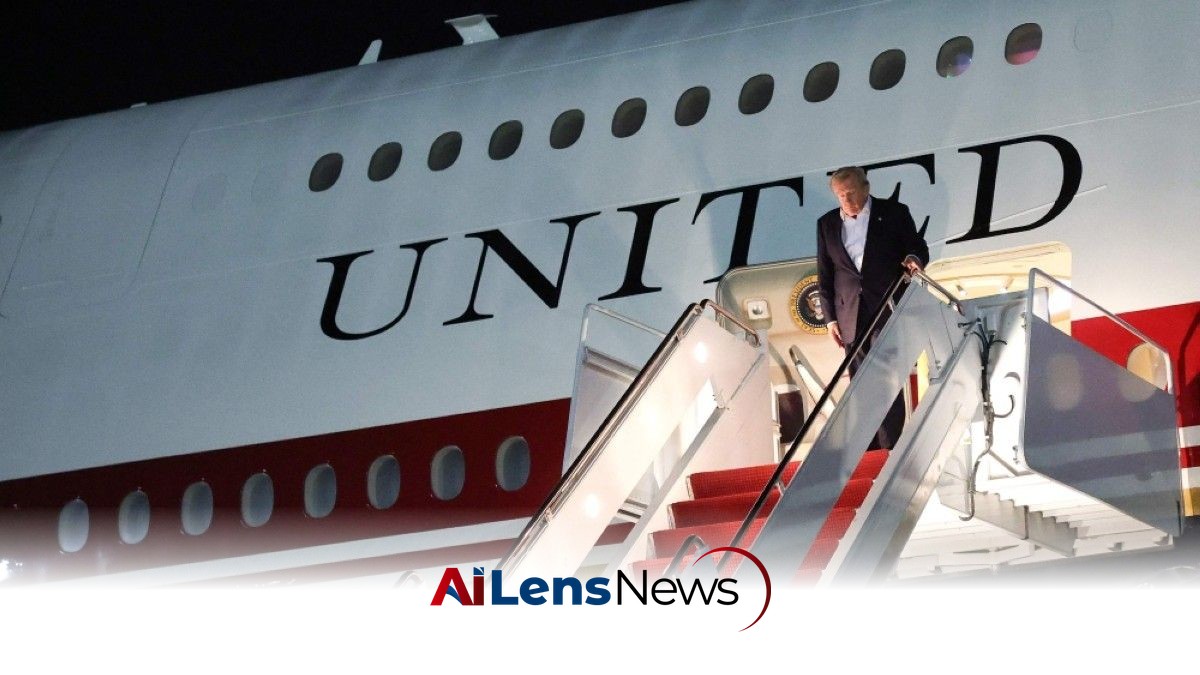
Meanwhile, US President Donald Trump utilized his old Air Force One plane to depart Turkey after a NATO summit instead of his new Qatari-gifted jet, a move described by the New York Times as a security precaution given the current tensions. The Strait of Hormuz, a crucial oil and gas corridor, remains a focal point of contention, with Tehran insisting on control over the waterway, which had been open for free passage before the war began. The strategic significance of this region cannot be overstated, as it serves as a critical juncture for global energy supplies and has historically been a flashpoint for military confrontations between Iran and the US.
Trump stated that the ceasefire with Iran was “over,” but left the door open for further negotiations, characterizing the Iranian side as “sort of crazy.” This characterization reflects a broader narrative within the US administration that views Iran as a destabilizing force in the region. Iran’s chief negotiator, Mohammad Bagher Ghalibaf, warned on X that “if you strike, you will be struck.” This exchange of threats illustrates the high stakes involved in the ongoing conflict, as both nations grapple with the implications of military action on regional stability and international relations.
In recent days, the Iranian military struck at least three ships, prompting extensive US strikes against Iranian targets on Tuesday. These military engagements highlight the escalating cycle of retaliation that has characterized US-Iran relations in recent years. The recent accord to end the war appears “incredibly fragile,” yet neither Tehran nor Washington seem to have better options than pursuing a diplomatic track, according to Ellie Geranmayeh of the European Council on Foreign Relations. This statement underscores the complexities of the situation, as both sides navigate a landscape fraught with historical grievances, geopolitical interests, and the ever-present threat of military confrontation.
To learn more about the latest developments in World News & International Affairs, stay updated with our exclusive reports and analyses on AiLensNews.

