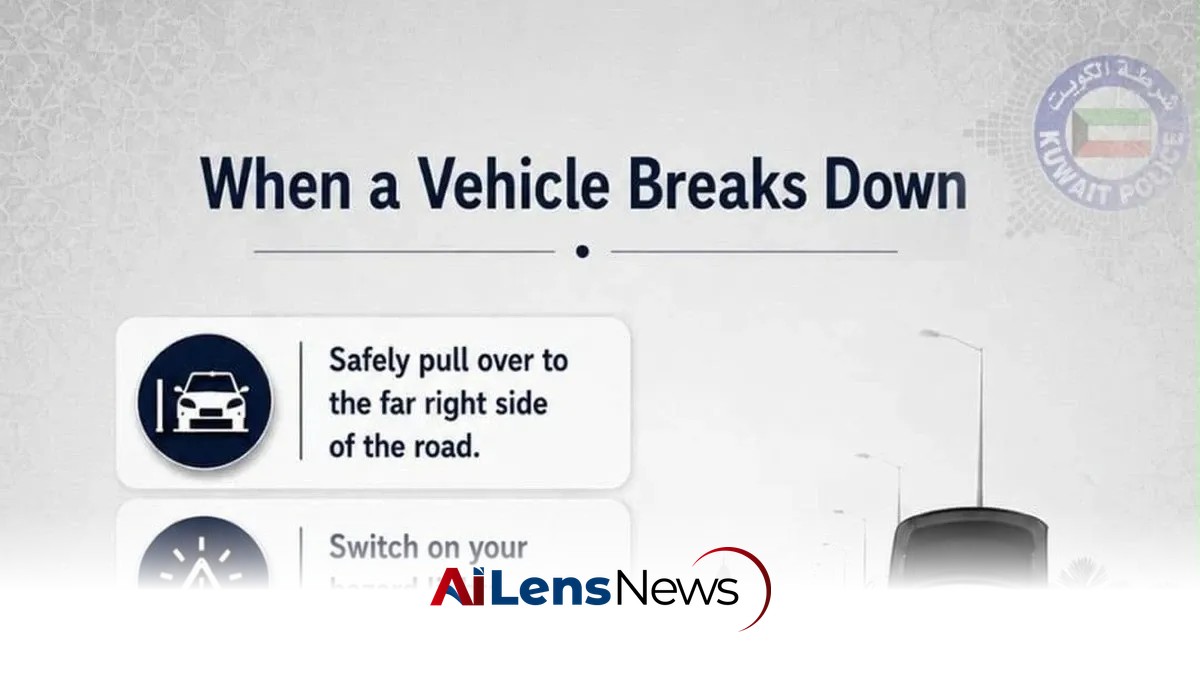


The General Traffic Department in Kuwait has released essential safety guidelines for motorists to follow during vehicle breakdowns, emphasizing road user protection.
Kuwait City, Kuwait Jul 12, 2026 ALN: The General Traffic Department has issued a set of safety guidelines for motorists to follow in the event of a vehicle breakdown, emphasizing that protecting road users remains one of its top priorities. In a country where road travel is a primary mode of transportation, these guidelines are particularly significant given the increasing number of vehicles on the road and the potential hazards posed by breakdowns. The rise in vehicle ownership in Kuwait has been notable, with statistics indicating a steady increase year on year, further underscoring the need for effective safety measures.
Motorists are advised to move their vehicles to the farthest right side of the road whenever possible. This precaution is crucial as it minimizes the risk of collision with other vehicles. In high-traffic areas, a breakdown can lead to significant congestion and may even result in secondary accidents if other drivers are not alerted to the situation. By moving to the side, drivers can help maintain a smoother flow of traffic and reduce the likelihood of further incidents. The importance of this guideline is magnified during peak hours when the volume of cars on the road is at its highest, making it critical for drivers to act swiftly and safely.
Once the vehicle is safely positioned, drivers are instructed to immediately switch on their hazard lights. This action serves as a visual warning to other road users that there is a problem ahead. Hazard lights are an essential tool for communication on the road, indicating to other drivers that they should exercise caution. It is particularly important during low visibility conditions, such as nighttime or in inclement weather, where the risk of an accident is heightened. The use of hazard lights not only alerts other drivers but also acts as a reminder of the need for vigilance when navigating through potentially dangerous situations.
Additionally, motorists are advised to place a warning triangle at least 100 meters behind the vehicle. This triangle acts as an additional warning signal for oncoming traffic, providing ample time for other drivers to react and change lanes if necessary. The placement of the triangle is a key aspect of roadside safety, as it alerts approaching vehicles to the presence of a stationary vehicle ahead, thereby reducing the risk of collisions. The effectiveness of warning triangles has been documented in various road safety studies, which indicate that their visibility can significantly lower the chances of accidents.
The General Traffic Department also emphasizes the importance of contacting the emergency hotline (112) and providing the exact location of the breakdown. Quick communication with emergency services is vital, as it ensures that help can arrive as swiftly as possible. In many cases, stranded motorists may require assistance beyond just a tow, including medical help or a safe way to transport them and their vehicle to a secure location. The establishment of an efficient emergency response system is crucial in ensuring that such incidents are managed effectively, and the department's guidelines aim to streamline this process for the benefit of all road users.
In addition to these immediate actions, the department urges drivers to carry out regular vehicle maintenance and check tire condition and air pressure, particularly during the summer months. Kuwait experiences extremely high temperatures, which can exacerbate wear and tear on vehicles, especially tires. High temperatures increase the risk of tire damage and blowouts, which can lead to dangerous situations on the road. Regular checks can include inspections of tire tread depth, ensuring proper inflation levels, and looking for any visible signs of wear that may require attention. The correlation between vehicle maintenance and road safety is well-established, and the department's emphasis on this aspect is a proactive approach to preventing breakdowns and accidents.
Officials have noted that following these precautions not only helps reduce traffic accidents but also improves overall road safety. A proactive approach to vehicle maintenance and awareness of safety protocols can significantly decrease the likelihood of breakdowns. This is particularly relevant in Kuwait, where the volume of traffic has increased dramatically in recent years, leading to more congested roads and a higher incidence of accidents. As the population grows and urban areas expand, the strain on existing road infrastructure becomes more pronounced, making the adherence to safety guidelines more critical than ever.
The implications of these guidelines extend beyond individual safety; they contribute to the broader goal of enhancing road safety for all users. By reducing the number of accidents caused by vehicle breakdowns, the General Traffic Department aims to create a safer driving environment. This is particularly important in urban areas where the density of vehicles can lead to complicated traffic situations. The department's efforts align with global trends in traffic safety, where the focus has shifted towards preventive measures and public awareness campaigns as effective strategies for reducing road incidents.
Moreover, the guidelines serve as a reminder of the responsibility that comes with vehicle ownership. Drivers are encouraged to be vigilant and proactive in their vehicle care, which can prevent breakdowns and enhance safety on the roads. This includes not only regular maintenance but also being aware of the vehicle's performance and addressing any unusual sounds or behaviors promptly. The role of education in promoting responsible driving habits cannot be overstated, as informed drivers are more likely to take the necessary precautions to ensure their safety and that of others.
In conclusion, the General Traffic Department's issuance of these safety guidelines reflects a commitment to road safety and the well-being of motorists in Kuwait. By following these recommendations, drivers can contribute to a safer driving experience for themselves and others. The emphasis on preparedness, communication, and proactive maintenance underscores the collaborative effort needed to maintain safety on the roads, especially in a country where vehicle travel is integral to daily life. The guidelines not only serve as practical advice but also foster a culture of safety awareness among motorists.
As Kuwait continues to develop its infrastructure and accommodate a growing population, the importance of such safety measures will only increase. The General Traffic Department's efforts to educate and inform the public are crucial steps in fostering a culture of safety and responsibility among all road users. By adhering to these guidelines, motorists can play a significant role in enhancing traffic safety and reducing the risk of accidents on Kuwait's roads. The ongoing collaboration between the government, traffic authorities, and the public is essential in building a safer transportation environment that meets the needs of all its users.
To learn more about the latest developments in Health & Public Safety, stay updated with our exclusive reports and analyses on AiLensNews.

