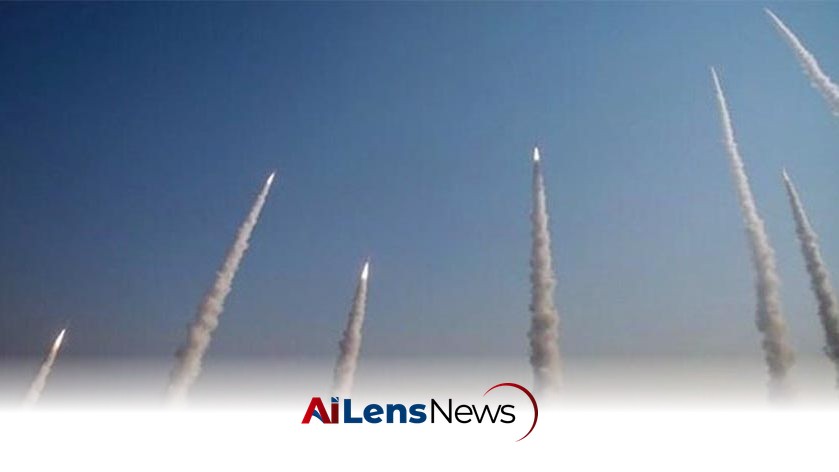


The US has launched significant strikes on Iran following Tehran's closure of the Strait of Hormuz, leading to missile attacks on US bases in the region.
New Delhi, India Jul 12, 2026 ALN: The Middle East is currently witnessing a significant escalation in tensions, particularly between the United States and Iran, following a series of military actions and provocative statements. On July 12, the US launched a new round of strikes on Iran, targeting approximately 140 sites, marking a notable increase in military engagement compared to previous operations. This latest round of strikes comes in the wake of Iran's announcement that it is closing the Strait of Hormuz, a vital maritime corridor through which a substantial portion of the world's oil trade passes. The closure was announced by Iran's Revolutionary Guards, who cited the need to protect national security following an incident involving a vessel they claimed was navigating on an unauthorized route.
The Strait of Hormuz is a strategic chokepoint in global energy supply, with estimates suggesting that about 20% of the world's oil passes through this narrow waterway. The geopolitical importance of this strait has made it a focal point of US-Iranian tensions, especially in the context of military and economic sanctions imposed on Iran by the US. The Revolutionary Guards' declaration to close the strait until further notice raises alarms about potential disruptions in global oil markets and heightened military confrontations in the region.
In a recent incident, Iranian forces reportedly fired upon a vessel in the strait, which they claimed was ignoring navigation instructions. This action was described as a warning shot, indicating Iran's readiness to enforce its claims over the strategic waterway. The Revolutionary Guards have made it clear that they will not allow any vessels to pass through the strait until they deem it safe, linking the closure directly to what they perceive as American interventions in the region.
In response to these developments, the US initiated its third wave of strikes on Iranian targets within a week. The US Central Command (CENTCOM) reported that these strikes were a direct retaliation for Iran's alleged attack on a Cyprus-flagged container ship that was traversing the strait at the time. The US has indicated that a civilian crew member is missing, and the ship has sustained significant damage, including an onboard fire that has rendered it unable to continue its journey. The US government has framed its military actions as necessary to uphold freedom of navigation and ensure the safety of commercial vessels in the region.
The strikes were authorized by President Donald Trump and began at approximately 7:15 PM local time. CENTCOM released a statement emphasizing that Iran had previously been given opportunities to adhere to international agreements regarding maritime safety, yet failed to do so. The US military's objective, as stated, is to degrade Iran's capabilities to threaten civilian mariners and commercial shipping activities in the Strait of Hormuz.
Following the US strikes, explosions were reported in various locations along Iran's southern coast, including key energy and petrochemical hubs such as Bushehr and Asalouyeh. Reports of blasts also emerged from the port cities of Bandar Abbas and Bandar-e Dayyer, as well as the Sirik area, which is situated near the strategic strait. These explosions have raised concerns about the potential for further military escalation in the region.
The situation has prompted immediate reactions from neighboring countries, particularly those in the Gulf region. The United Arab Emirates' defense ministry confirmed that air defense systems were actively engaging missile and drone threats, indicating a high level of alertness and military readiness. Bahrain's interior ministry also issued advisories to residents to remain calm and seek shelter, as air raid sirens were activated in response to the escalating hostilities.
In Qatar, missile warnings were issued, further underscoring the widespread concern about potential retaliatory strikes or spillover effects from the ongoing conflict. Kuwait's military reported intercepting incoming fire, highlighting the region's precarious security situation and the potential for a broader conflict that could draw in multiple nations.
This series of military actions and warnings marks a significant escalation in the ongoing tensions between the US and Iran. The implications of these developments extend beyond immediate military confrontations; they could have profound effects on regional stability, energy markets, and international diplomatic relations. The closure of the Strait of Hormuz, if prolonged, could lead to increased oil prices and economic repercussions felt globally.
Historically, the Strait of Hormuz has been a flashpoint for US-Iranian tensions. Previous incidents, including the seizure of oil tankers and military confrontations, have underscored the volatility of the region. The current situation is compounded by the backdrop of ongoing sanctions against Iran, aimed at curbing its nuclear program and regional influence. These sanctions have strained Iran's economy and heightened its security posture, leading to a cycle of provocations and retaliations.
The international community is closely monitoring the situation, with calls for de-escalation and dialogue becoming increasingly urgent. The potential for miscalculation or unintended consequences remains high, as both the US and Iran navigate a complex web of military, economic, and political factors. As tensions continue to rise, the prospect of a broader conflict in the Middle East looms, with far-reaching implications for global security and stability.
In conclusion, the recent escalation in US-Iranian tensions, marked by military strikes and provocative actions in the Strait of Hormuz, highlights the fragile security landscape of the Middle East. The ongoing conflict has the potential to disrupt not only regional stability but also the global economy, particularly in the energy sector. As both sides brace for potential further confrontations, the need for diplomatic solutions and conflict resolution becomes increasingly critical in averting a larger crisis.
To learn more about the latest developments in World News & International Affairs, stay updated with our exclusive reports and analyses on AiLensNews.

