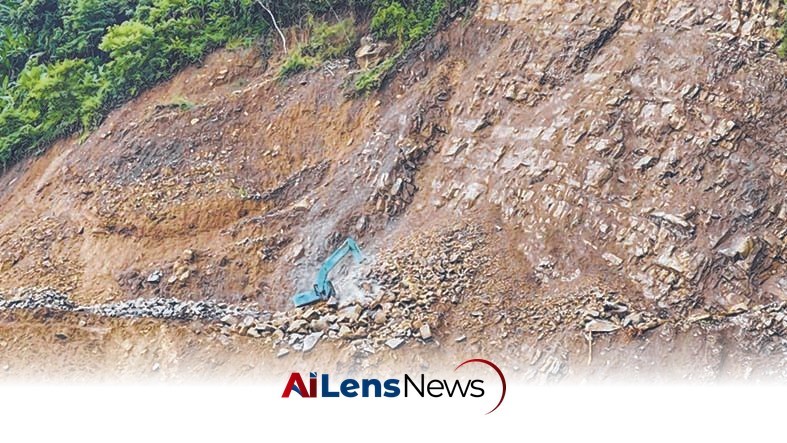


Recent mudslides have further delayed the reopening of the Tadubi-Ukhrul stretch of National Highway 102A, which has been closed since June 27.
Imphal, India Jul 12, 2026 ALN: The restoration of the Tadubi-Ukhrul stretch of National Highway 102A has faced significant setbacks due to fresh mudslides at Vaorei. This crucial highway has remained closed since June 27, impacting transportation and accessibility in the region. The Tadubi-Ukhrul road serves as a vital link connecting various towns and villages in the Ukhrul district to the rest of the state, making its closure a pressing issue for local residents and businesses alike.
The recent mudslides have compounded the challenges faced by the restoration team, which has been working tirelessly to clear the debris and reopen the highway. The persistent rainfall in the area has made the situation even more precarious, leading to ongoing risks of additional landslides. The region is known for its hilly terrain and heavy monsoon rains, which can trigger landslides, especially in areas where the soil has been destabilized.
The closure of the Tadubi-Ukhrul road has severely affected local communities, disrupting the supply of essential goods and services. Residents have expressed their concerns over the prolonged closure, as it hampers their daily activities and access to markets. The road is not only crucial for transportation but also plays a significant role in the economic activities of the region. Farmers, for instance, rely on this route to transport their produce to markets, and the inability to do so can lead to financial losses.
Moreover, the lack of access to healthcare facilities has become a significant concern for the local population. In emergencies, the closure of the highway can delay medical assistance, posing serious risks to those in need of urgent care. Community leaders have voiced their frustrations, emphasizing that the government's response to the situation needs to be more proactive to ensure the safety and well-being of residents.
The economic implications of the road's closure extend beyond individual farmers. Small businesses that depend on the movement of goods and services are also feeling the pinch. Local markets are experiencing shortages of essential items, leading to increased prices and limited availability for consumers. The ripple effect of the closure can lead to a broader economic downturn in the area, as businesses struggle to survive without the necessary flow of goods.
A team from the Senapati District has been deployed to assess the damage and initiate restoration efforts. However, the continuous rainfall poses a significant challenge to their work. Local authorities are urging residents to remain patient as they navigate the complexities of restoring the highway. The restoration team has been equipped with heavy machinery and tools to clear the road, but the unstable conditions have made it difficult to operate safely.
In addition to clearing debris, the restoration efforts will require a comprehensive evaluation of the road's structural integrity. Engineers and geologists may need to assess the potential for future landslides and recommend measures to strengthen the roadbed and surrounding areas. This could involve the installation of retaining walls, drainage systems, or other engineering solutions designed to mitigate the risk of landslides in the future.
Furthermore, the restoration process is not simply about clearing the road but also about ensuring that such incidents do not recur. This may require a multi-faceted approach that includes environmental assessments, community engagement, and long-term planning. Local authorities are considering the integration of technology, such as early warning systems that can alert residents to potential landslides, which could be crucial in saving lives and minimizing damage in the future.
While the restoration team is optimistic about reopening the highway soon, the unpredictable weather conditions remain a critical factor. Authorities are closely monitoring the situation and will provide updates as they become available. Forecasts indicate that the monsoon season may continue for several weeks, raising concerns about additional landslides and further delays in restoration efforts.
In the long term, the situation underscores the need for robust infrastructure and disaster management strategies in the region. Local government officials have indicated that they will be reviewing existing policies and considering new measures to enhance the resilience of transportation networks against natural disasters. This may include investing in better drainage systems, improving road materials, and conducting regular maintenance to prevent future closures.
The challenges faced in restoring the Tadubi-Ukhrul road also highlight the broader issues of climate change and its impact on infrastructure. As extreme weather events become more frequent, regions like Senapati will need to adapt their infrastructure to withstand such events. This could involve not only physical improvements to roads but also community education on disaster preparedness and response.
In conclusion, the recent mudslides have further complicated the restoration of the Tadubi-Ukhrul road, highlighting the need for robust infrastructure and disaster management strategies in the region. The ongoing efforts to reopen the highway are critical not only for restoring connectivity but also for ensuring the economic stability and safety of the communities that depend on this vital route. As restoration efforts continue, the cooperation between local authorities, residents, and engineers will be essential in overcoming the challenges posed by the natural environment. The situation serves as a reminder of the vulnerability of mountainous regions to natural disasters and the importance of proactive measures in safeguarding communities against such events.
To learn more about the latest developments in Science & Environment, stay updated with our exclusive reports and analyses on AiLensNews.

