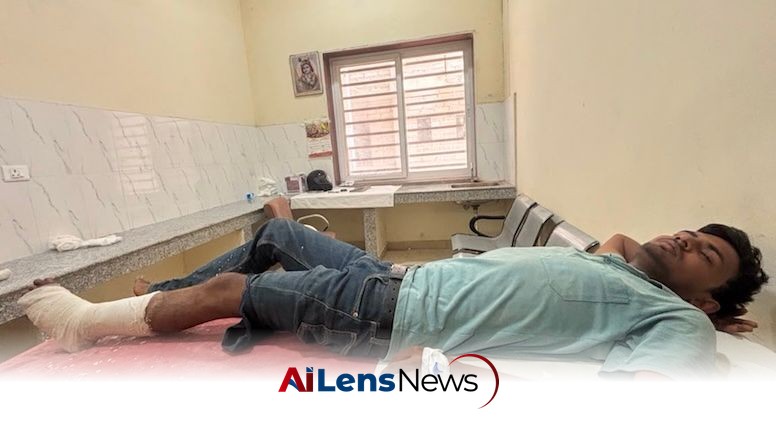


Two suspects arrested in Rajakhera firing incident; third gunman remains at large. Each had a reward of Rs 25,000.
New Delhi, India Jul 10, 2026 ALN: Rajakhera: Two of three motorcycle-borne assailants who allegedly opened fire at three separate locations in Rajakhera town, Dholpur district, on July 6 were arrested within 72 hours, police said, after a search backed by CCTV footage and technical and human evidence.
According to Superintendent of Police, Dholpur, Vikas Sangwan, the accused first opened fire around 4:30 pm at a car belonging to businessman Praveen Jain, believing him to be inside, shattering the vehicle’s rear windscreen. Around the same time, they allegedly fired at shopkeeper Kaushal Jain alias Rinku Jain, owner of Shantilal Garments near the Bank of India branch in Rajakhera’s Main Bazar, after asking him to confirm the shop’s identity; Kaushal Jain escaped unhurt. In a third incident around 4:23 pm, the assailants allegedly fired at shop owners Rajmohammad and his brother Raju while they sat at their shop, an incident police said was captured on CCTV.
The two men arrested have been identified as Abhishek, son of Ramkumar, a resident of Ghadi Jaunawad under Rajakheda police station in Dholpur district, and Sachin, son of Kamla, a resident of Mansukhpura in Agra district, Uttar Pradesh. The office of the Superintendent of Police, Dholpur, had announced a reward of Rs 25,000 each for their arrest.
Police said a District Special Team (DST) constable received information that the two were hiding behind a mound in the Andhiyari forest area, about 200 metres off the road, along with a white motorcycle and a weapon. Rajakheda police, along with the Special Team, DST Team and Cyber Cell, surrounded the spot. The accused abandoned the motorcycle and tried to flee by climbing a mud mound around 15 to 20 feet high before jumping down, police said, and were caught by DST constables Bhagirath and Devendra Singh.
Both accused sustained serious injuries to their legs after jumping from the mound, police said. They were first taken to the Rajakhera Community Health Centre and later referred to Dholpur district hospital for further treatment, which is continuing under police custody. Police said they recovered an illegal country-made pistol of .315 bore along with five live cartridges, and the motorcycle allegedly used in the firing.
A third accused, identified as Lucca alias Mannu alias Pradhumna, a resident of Makkakhadi under Rajakheda police station, remains at large. Police said teams raided around 100 suspected hideouts across Dholpur, Agra and Morena in Madhya Pradesh over three days and scanned footage from dozens of CCTV cameras while searching for the accused.
The operation was carried out under the direction of Inspector General of Police, Bharatpur Range, Kailash Chandra Vishnoi, and Superintendent of Police, Dholpur, Vikas Sangwan, and supervised by Additional SP Vaibhav Sharma and Circle Officer Manohar Meena, with Rajakheda police station house officer Gambhir Singh leading the team on the ground. Police said the investigation into the motive behind the firing and the possible involvement of others is continuing.
The incidents in Rajakhera reflect a concerning trend of violence in certain regions of India, where disputes, often rooted in local rivalries or business competition, can escalate into criminal acts. The use of firearms in these incidents raises significant concerns about public safety and the effectiveness of law enforcement in curbing such violence. The rapid response by the Dholpur police and the successful apprehension of two suspects within a short time frame demonstrates a proactive approach to crime prevention and the importance of community cooperation in reporting suspicious activities.
Rajakhera, a small town in the Dholpur district, is not unfamiliar with such incidents, as local law enforcement has had to contend with issues ranging from petty crime to more serious offenses. The police's use of technology, such as CCTV footage, has become increasingly vital in modern investigations, allowing for quicker identification and apprehension of suspects. This case underscores the significance of integrating technology into policing strategies to enhance community safety.
Moreover, the police's commitment to pursuing the third suspect, Lucca, indicates an ongoing effort to dismantle networks that may facilitate such violence. The fact that authorities are actively raiding suspected hideouts and working across state lines to apprehend fugitives highlights the collaborative nature of law enforcement in India, which often requires coordination among various jurisdictions.
As investigations continue, authorities will likely delve deeper into the motives behind the shooting. Understanding the underlying causes of such violent incidents is crucial for preventing future occurrences. Whether the motivations stem from personal grievances, business rivalries, or organized crime, addressing these root causes will be essential for fostering a safer environment in Rajakhera and similar towns.
In the broader context, this incident raises questions about gun control and the illegal arms trade in India. The recovery of a country-made pistol and ammunition from the suspects highlights the challenges law enforcement faces in regulating firearms, particularly in rural areas where access to illegal weapons may be more prevalent. Efforts to combat illegal arms trafficking and enhance the legal framework surrounding firearm possession are ongoing discussions within Indian society, as the government seeks to balance the rights of citizens with the need for public safety.
The aftermath of such incidents often leads to heightened police presence and increased scrutiny of local businesses and individuals, which can have both positive and negative implications for community relations. While the immediate response may provide a sense of security, it can also lead to feelings of mistrust among residents if they perceive law enforcement as overly aggressive or intrusive.
Ultimately, the Rajakhera firing case is a stark reminder of the complexities surrounding crime and safety in contemporary India. It highlights the need for a multifaceted approach to crime prevention that includes community engagement, effective law enforcement, and addressing the socio-economic factors that contribute to violence. As authorities continue their investigation, the community will be watching closely to see how this case unfolds and what measures will be implemented to ensure their safety in the future.
To learn more about the latest developments in Crime & Law, stay updated with our exclusive reports and analyses on AiLensNews.

