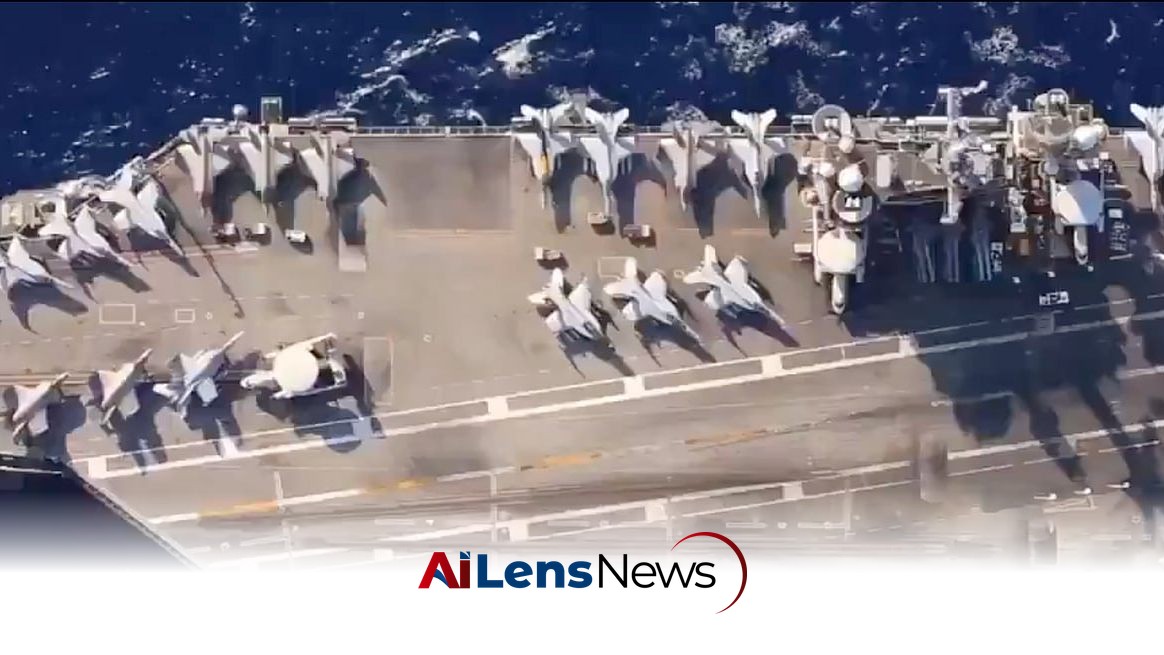



The USS George Washington is set to replace the USS Lincoln, which has faced an extended deployment raising significant crew welfare concerns.
Kuwait City, Kuwait Aug 14, 2026 ALN: The US Navy is preparing to send the aircraft carrier USS George Washington to the Middle East to relieve the USS Abraham Lincoln, whose deployment has stretched to more than eight months as the Iran war continues. This decision comes amidst growing concerns over the welfare of the crew aboard the Lincoln, raising questions about the sustainability of extended deployments in modern naval operations.
The rotation, reported by the Wall Street Journal, was planned before the latest concerns about conditions aboard the Lincoln, but its timing has put a spotlight on the extraordinary strain of keeping a carrier and its crew at sea for so long. The Lincoln has gone roughly 200 days without a port call, far longer than the typical 30-to-45-day interval often expected between port visits. Such extended periods without a break can lead to significant physical and mental strain on sailors, which has been increasingly recognized as a critical factor in operational readiness.
The USS George Washington has been operating in the Western Pacific and was recently in Vietnam. It has since moved west through the Strait of Malacca toward the Indian Ocean and Middle East, according to US Navy tracking and reporting. The deployment of the George Washington underscores the Navy's ongoing commitment to maintaining a robust naval presence in both the Pacific and Middle Eastern theaters, reflecting the complex geopolitical landscape that the US military navigates.
The Abraham Lincoln deployed in November and was subsequently sent to the Middle East as the US-Israeli war with Iran intensified. The carrier has been pivotal in supporting US combat operations and the broader campaign against Iran, including operations connected to the blockade of Iranian ports. What was originally a long deployment has now become an exceptionally prolonged one, raising concerns about the implications of such extended operations on crew welfare and operational effectiveness.
The carrier has reportedly spent more than 200 consecutive days without a port visit. For sailors, a port call is not simply recreation; it provides opportunities to rest, obtain supplies, receive medical and administrative support, maintain equipment, and reconnect with the outside world. The absence of those breaks is at the heart of the current controversy, as sailors face the physical and psychological toll of continuous deployment.
Reports from sailors, relatives, and lawmakers describe deteriorating living conditions aboard the carrier, including claims of shortages involving fresh food, milk, toiletries, and other personal supplies, as well as plumbing and sanitation problems. Family members have also reported messages from sailors describing exhaustion and deteriorating morale. These allegations have prompted congressional scrutiny, with lawmakers expressing concern over the adequacy of support provided to the crew during such an extended deployment.
Senator Richard Blumenthal has demanded answers from the Pentagon about the conditions aboard the carrier, while other lawmakers have called for greater oversight of the deployment and the welfare of its crew. The Navy and Pentagon have pushed back against the characterization that the ship has been abandoned or deprived of essential supplies. Officials have defended the military's support for the sailors, emphasizing that the Navy continues to prioritize crew welfare and operational readiness.
While there is growing evidence of serious concern among sailors, families, and lawmakers, the full extent of the reported shortages and mental health problems remains disputed by military leadership. The complexity of the situation is compounded by the operational demands placed on the crew, which can lead to a dangerous cycle of stress and fatigue.
The most serious reports concern sailors allegedly attempting to go overboard. Military publications have reported multiple incidents in which sailors aboard the Lincoln attempted to jump overboard or were stopped by fellow crew members. These alarming incidents have intensified calls for an investigation into whether the unprecedented length of the deployment is contributing to a mental health crisis. The Navy has disputed some of the characterization surrounding the incidents, making a comprehensive independent assessment particularly important.
For a carrier carrying thousands of sailors and Marines, the issue goes beyond individual welfare. Crew exhaustion can eventually become a readiness issue. A carrier operating continuously in a combat zone needs sailors capable of maintaining aircraft, weapons, propulsion, communications, navigation, and flight-deck operations under extreme pressure. The implications of failing to address these concerns could be significant, not only for the crew but also for the operational capabilities of the carrier itself.
The arrival of the George Washington would provide Washington with a fresh carrier strike group without immediately reducing its military presence in the Middle East. The carrier is a Nimitz-class nuclear-powered aircraft carrier and is already forward-deployed with the U.S. 7th Fleet in the Indo-Pacific. Its movement west therefore demonstrates the enormous demands the Iran conflict is placing on America's global naval fleet.
The US wants to maintain enough naval power in the Middle East to support combat operations, protect shipping, and deter Iran—while also retaining sufficient forces in the Pacific to deter China. This dual focus on maintaining a strong military presence in both regions highlights the strategic challenges faced by the US military as it navigates complex geopolitical tensions. The balancing act required to manage these deployments effectively is critical for ensuring that the Navy can respond to any potential threats while also safeguarding the well-being of its personnel.
As the situation continues to evolve, the Navy's ability to adapt to the realities of modern warfare and the psychological demands placed on its sailors will be crucial. The challenges posed by prolonged deployments, particularly in high-stress environments, necessitate a reevaluation of policies and practices surrounding crew welfare, operational readiness, and mental health support. Failure to address these issues could have far-reaching implications for the Navy's effectiveness and the safety of its personnel.
In conclusion, the deployment of the USS George Washington to relieve the USS Abraham Lincoln amid reports of crew welfare crisis highlights the pressing need for the US Navy to address the challenges of extended deployments. The implications of these challenges extend beyond individual sailors, impacting the overall readiness and effectiveness of naval operations in a complex and evolving global landscape.
To learn more about the latest developments in Crime & Law, stay updated with our exclusive reports and analyses on AILensNews.

