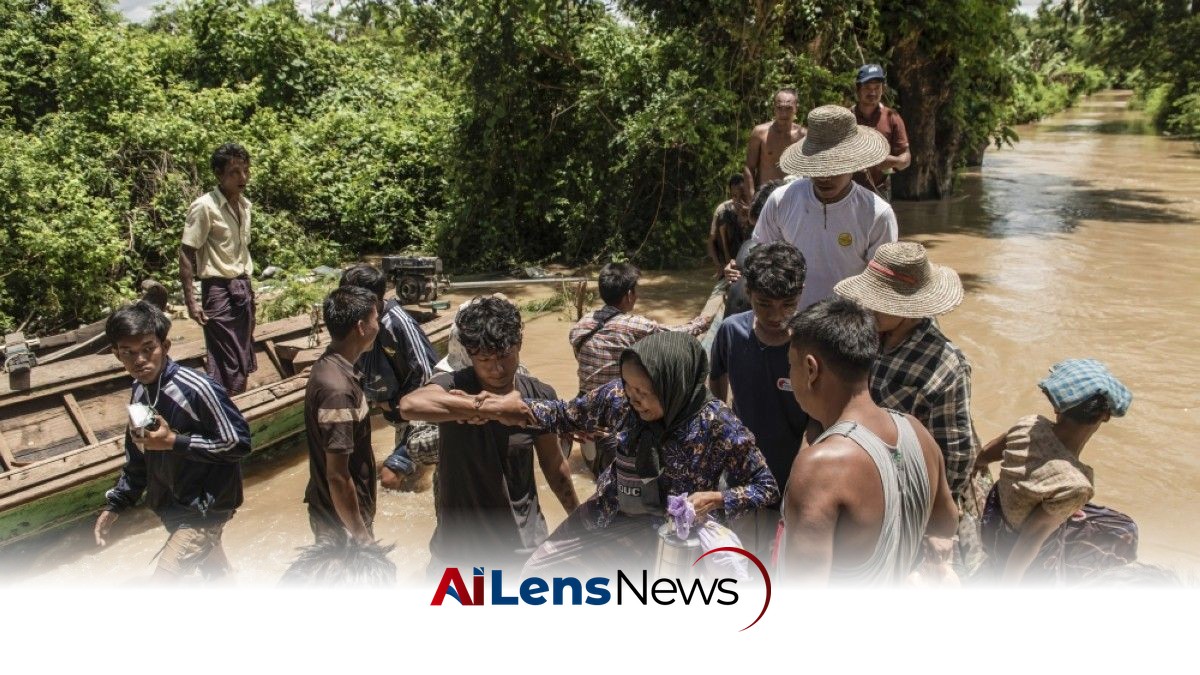


Central Myanmar faces devastating monsoon flooding, displacing thousands and exacerbating humanitarian needs amid ongoing conflict.
Kuwait City, Kuwait Aug 16, 2026 ALN: Severe monsoon flooding has swamped villages and paddy fields in central Myanmar, forcing people out of their homes, including those already displaced by war, an AFP reporter and the UN said. The situation has escalated dramatically, with entire communities facing devastation as relentless rains have inundated vast areas, exacerbating an already dire humanitarian crisis in the region.
The suffering we are facing, I can’t even put into words how painful it is,” said Cho Myint, a 53-year-old villager from Wetlet township in the central Sagaing region. Standing by an upturned boat, she told AFP on Friday that her family had been forced to flee rising floodwaters and was “left with nothing.” This sentiment echoes throughout the affected areas, where families are grappling with the loss of their homes and livelihoods, compounding the emotional and psychological toll of displacement.
The UN on Friday reported that since July, severe monsoon flooding in Sagaing, Rakhine, Irrawaddy, and Kachin states has affected an estimated 390,000 people—230,000 in Sagaing alone. The UN Office for the Coordination of Humanitarian Affairs (OCHA) noted that these numbers included individuals affected by the civil war triggered by Myanmar’s 2021 military coup. The conflict has already displaced hundreds of thousands, and the floods have further complicated their plight. U Sint, another villager from Wetlet township, stated that some war refugees in the area lived in small, temporary shelters that were “completely submerged.” “They couldn’t save anything. It is really terrible,” he said. The intersection of natural disasters and armed conflict has created an unprecedented humanitarian crisis in the region.
The floods had also “ruined” many people’s livelihoods, he added. “The rice seedlings have already been swept away... In this area, it’s simply impossible to plant paddy anymore,” he told AFP. “Even if we were to sow seeds again, the land hasn’t emerged yet.” Agriculture, the backbone of Myanmar's economy and a primary source of sustenance for many families, has been severely impacted. The loss of crops not only threatens food security but also the economic stability of families who rely on farming for their income.
Myanmar’s Ministry of Social Welfare, Relief and Resettlement reported that as of August 11, heavy rainfall and river flooding in Sagaing had forced more than 11,400 people from 3,220 households to relocate to flood relief centers. These centers, however, are often overcrowded and under-resourced, struggling to provide adequate shelter, food, and medical assistance. In Wetlet, Aung Ko stayed behind with his brother-in-law to look after their cow, saying only about 10 or 14 people remained. The decision to stay behind in such perilous conditions highlights the difficult choices families are forced to make when faced with losing their livestock, which are often their only means of survival.
They have been living on an upper floor of their home under tarpaulins and surviving on instant noodles and bottled water provided by local rescuers visiting by boat. “Before the donors came, we had no choice but to take floodwater and boil it to drink,” he said, standing in knee-high muddy waters. Access to clean drinking water is a critical issue in flood-affected areas, as contamination can lead to outbreaks of waterborne diseases, further straining the already overwhelmed healthcare system.
OCHA spokesman Pierre Peron told AFP on Friday that the organization had no figures yet for the number of people displaced by the heavy rains. However, “with ongoing monsoon rainfall and several major rivers at or above danger levels, we unfortunately estimate that the impact of the flooding will continue in coming days and weeks.” UN partners were mobilizing to help the most vulnerable, he said, yet the “flood damage to homes, shelters, infrastructure, and farmland has exacerbated humanitarian needs, particularly for food, health services, safe water, and livelihood support.” The long-term implications of the floods are concerning, as they threaten to reverse years of development progress in the region, pushing more families into poverty and increasing reliance on humanitarian aid.
While the seasonal monsoon brings rainfall that farmers depend on, climate change is making the phenomenon more erratic, unpredictable, and deadly across the region. The increase in the frequency and intensity of extreme weather events is a growing concern for Myanmar, where many communities are ill-prepared to cope with such disasters. The intersection of climate change and socio-political instability complicates efforts to build resilience in affected communities. As the international community responds to the immediate needs of those affected, there is also a pressing need for long-term strategies to address the underlying vulnerabilities exacerbated by both climate change and ongoing conflict.
The plight of the people in central Myanmar serves as a stark reminder of the challenges faced by communities living in conflict zones, particularly as they navigate the complexities introduced by climate change. The road to recovery will be long and fraught with challenges, but with concerted efforts from local and international actors, there is hope for rebuilding lives and restoring livelihoods in the wake of this devastating disaster.
Myanmar, a country rich in natural resources and cultural diversity, has been grappling with internal strife for decades. The military coup in February 2021 exacerbated existing tensions, leading to widespread civil unrest and a humanitarian crisis. The ongoing conflict has displaced millions, with many people seeking refuge in makeshift camps or in neighboring countries. The interplay between the civil war and natural disasters like the current flooding highlights the vulnerabilities faced by the population, as they are often caught between violence and environmental calamities.
In the wake of the floods, humanitarian organizations are mobilizing to provide immediate relief, but the challenge is immense. With infrastructure already weakened by conflict, the delivery of aid is hampered by damaged roads and communication networks. Moreover, the ongoing political instability complicates the distribution of aid, as local authorities may not be cooperative or may prioritize their interests over the needs of displaced populations.
The international community's response is critical in this context. Humanitarian aid must be coupled with efforts to address the root causes of both the conflict and the climate crisis. This involves not only immediate relief efforts but also long-term investment in resilience-building initiatives that empower communities to better withstand future shocks, whether from natural disasters or political upheaval.
As the monsoon season continues, the urgency for action grows. The interconnectedness of climate change, conflict, and humanitarian crises in Myanmar requires a holistic approach. This includes enhancing disaster preparedness, improving infrastructure, and providing education on climate resilience. Community engagement is vital, as local populations are often best positioned to identify their needs and solutions.
In conclusion, the severe monsoon flooding in central Myanmar is not just a natural disaster; it is a complex humanitarian issue intertwined with the ongoing conflict and the impacts of climate change. The path forward must prioritize the needs of those affected while also addressing the systemic vulnerabilities that have led to such crises. Only through comprehensive and collaborative efforts can there be hope for a sustainable recovery and a brighter future for the people of Myanmar.
To learn more about the latest developments in World News & International Affairs, stay updated with our exclusive reports and analyses on AiLensNews.

