

More
Checking your session
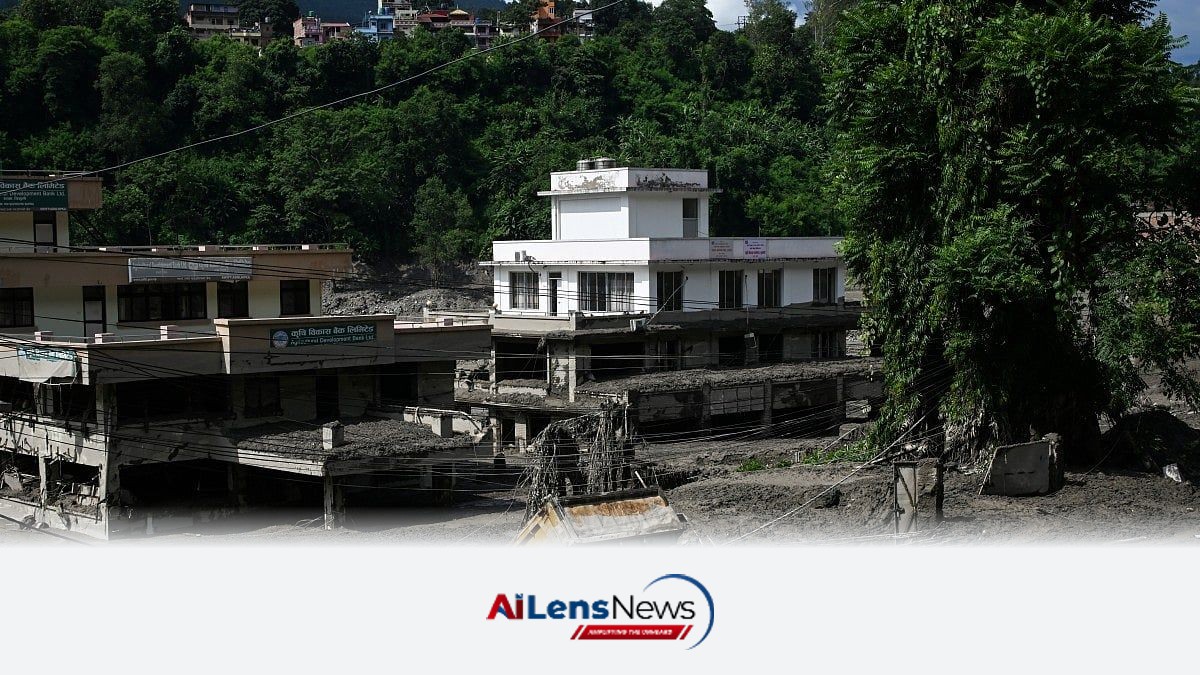



A catastrophic flash flood along the Nepal-China border has left at least 160 dead and hundreds missing, including foreign tourists. Rescue operations are ongoing.
Kuwait City, Kuwait Aug 27, 2026 ALN: A catastrophic flash flood tore through the Nepal-China border region on Wednesday, sending a massive wall of water, mud, rock, and debris down Himalayan valleys, destroying villages, roads, and bridges, and leaving at least 160 people dead and hundreds missing.
Nepal Police reported that 157 bodies had been recovered on the Nepali side, while Chinese state media confirmed three deaths in Tibet, bringing the combined toll to at least 160. Authorities in Nepal stated that 403 people are missing, including 341 foreign nationals.
The missing individuals include 133 Indians, 47 Americans, 33 Britons, 34 Australians, and 24 Canadians. Additionally, eight South Korean workers at a hydropower project are also reported missing.
The disaster struck around 8:40 a.m. Wednesday in the Rasuwa district, near the border with Tibet, after an enormous mass of ice and rock crashed into the river system. The resulting surge raced downstream along the Bhote Koshi and Trishuli rivers, overwhelming settlements and infrastructure with little apparent warning.
Dramatic surveillance footage shows people running as an enormous torrent of muddy water and debris sweeps through the Gyirong border area on the Chinese side and into downstream areas of Nepal.
Other footage captures bridges and buildings being overwhelmed almost instantly as the flood wave tears through communities.
The destruction has been particularly severe around Rasuwa, Nuwakot, and Dhading, with roads, bridges, homes, and hydropower facilities damaged or washed away. Rescue operations have been hampered by destroyed transport links and difficult Himalayan terrain.
One of the most striking developments came from the U.S. Geological Survey, which initially recorded what appeared to be a magnitude-4.4 earthquake near the Nepal-Tibet border.
However, the USGS subsequently revised its assessment, stating that there was no earthquake. The seismic signal was generated by the enormous landslide itself, producing shaking equivalent to about a magnitude-5.2 seismic event, which initially caused monitoring systems to interpret the signal as an earthquake.
This distinction matters, as the disaster appears to have begun with a massive ice-and-rock collapse or avalanche, rather than tectonic activity.
Preliminary assessments indicate that a huge mass of ice and rock broke loose on the Tibetan side of the border and plunged into the Lhende River, known downstream in Nepal as the Bhote Koshi.
The sudden displacement of water and the enormous amount of debris created a destructive flow that surged downstream, overflowing the river and carrying boulders, mud, trees, and buildings with it.
Scientists are still investigating the exact amount of water involved and whether a glacial lake, glacier collapse, or another form of ice-rock cascade was responsible.
The region is one of the world's most geologically unstable environments: extremely steep Himalayan slopes, glaciers, rivers confined to narrow valleys, and rapidly changing temperatures combine to create an exceptionally dangerous setting.
Climate scientists have increasingly warned that glacier retreat and destabilization can increase the risk of sudden floods and landslides. Warmer temperatures can weaken ice and rock structures and contribute to the formation or expansion of glacial lakes, creating conditions in which enormous quantities of water and debris can be released suddenly.
The latest disaster also highlights another danger: the lack of time available for communities downstream to react when a high-altitude collapse occurs.
The catastrophe struck an area frequented by tourists, trekkers, and religious pilgrims traveling between Nepal and Tibet.
Nepalese officials stated that 341 foreign nationals are among the 403 people reported missing. The list includes large groups of Indian pilgrims, as well as Americans, Britons, Australians, and Canadians.
The affected region also contains routes connected to major Hindu and Buddhist pilgrimage destinations, meaning the final toll could remain uncertain until authorities can establish contact with travelers and workers cut off by the disaster.
Nepal has mobilized the army, police, and armed police for search-and-rescue operations. Helicopters have been deployed, but damaged roads, destroyed bridges, unstable slopes, and continuing flood hazards complicate efforts to reach isolated areas.
China has also launched rescue operations on the Tibetan side. Chinese President Xi Jinping ordered authorities to prioritize the search for missing people, evacuation, and medical treatment.
India and other countries have also offered assistance as authorities try to locate their nationals.
The 160 confirmed deaths are unlikely to represent the final toll.
Hundreds remain unaccounted for, and large portions of the affected border region have yet to be fully assessed. Some missing individuals may have escaped to isolated areas without communications, while others could be trapped beneath mud and debris.
The immediate challenge is therefore not only recovering bodies but determining who survived, who remains stranded, and how many people were actually in the flood's path.
What began as a sudden collapse high in the Himalayas has become a cross-border humanitarian disaster — and a stark warning of how quickly a glacier- and landslide-related event can transform a mountain river into a wall of destruction.
To learn more about the latest developments in World News & International Affairs, stay updated with our exclusive reports and analyses on AILensNews.

World leaders express condolences and offer assistance as flash floods in Nepal …
In response to devastating floods in Nepal, India has dispatched a second flight…
Qatar has condemned Israel's raid on a UNRWA centre in East Jerusalem, calling i…

A recent analysis by the US Geological Survey reveals that the devastating flash…

India has dispatched a second flight with 37.5 tonnes of humanitarian supplies t…