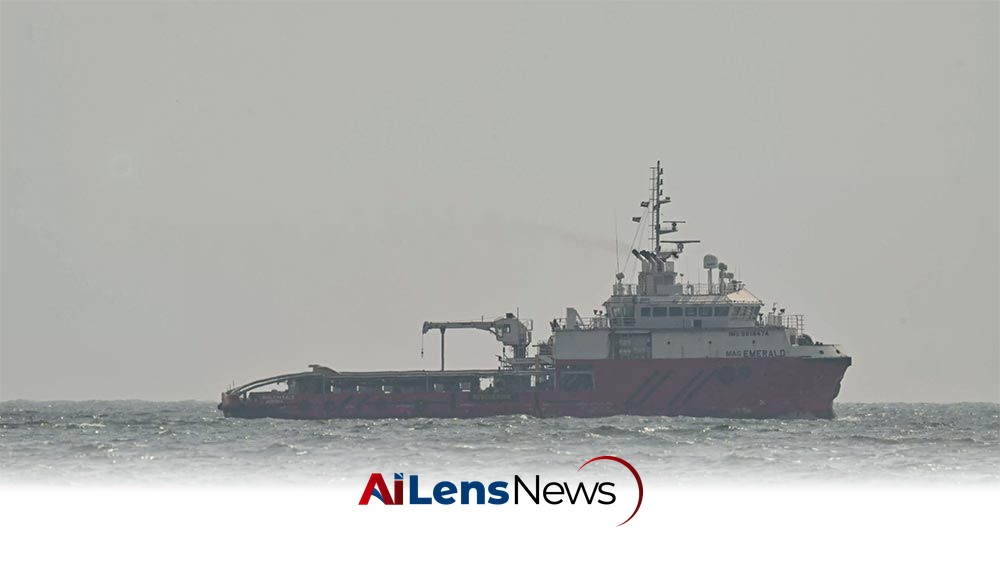


Iran reports multiple projectiles targeting Qeshm Island, raising fears of broader conflict as U.S. forces remain on alert in the Strait of Hormuz.
Kuwait City, Kuwait Jul 13, 2026 ALN: Regional tensions surged sharply after Iran reported that 10 to 11 “enemy projectiles” targeted Qeshm Island in the strategic Strait of Hormuz, while explosions were also reported in the nearby port city of Bandar Abbas, raising fears of a broader regional conflict. The Strait of Hormuz is a vital maritime corridor through which approximately 20% of the world’s oil supply is transported, making any disruption in this area a significant concern for global energy markets and international security. The narrow strait, which connects the Persian Gulf to the Gulf of Oman, is not only crucial for oil shipments but also for the overall stability of energy prices worldwide. Any threat to navigation in these waters is likely to have immediate repercussions across global markets.
The developments came as the U.S. Central Command (CENTCOM) announced that American forces remain “positioned and prepared” to safeguard freedom of navigation through the Strait of Hormuz in response to what it described as Iranian aggression. This statement underscores the ongoing U.S. military presence in the region, which has been a point of contention between Washington and Tehran for years. The U.S. has accused Iran of threatening maritime security and has conducted numerous naval operations aimed at ensuring the free flow of commerce in the Strait. The U.S. Navy's presence is intended to deter Iranian provocations, and its operations are often framed within the context of protecting international shipping lanes crucial to global trade.
Iranian authorities claimed that missile and suicide drone attacks had targeted Jordan, Bahrain, Kuwait, Qatar, and Oman, further fueling concerns that the Middle East could be sliding back into full-scale conflict. These allegations, if true, would signify a dramatic escalation in hostilities, as Iran has previously refrained from direct attacks on its regional neighbors. The claims have not been independently verified, and there has been no immediate confirmation from the governments of the countries mentioned. This lack of corroborating evidence raises questions about the veracity of Iran’s statements and the potential motivations behind them. Analysts suggest that such claims could be part of a broader narrative aimed at consolidating domestic support amid increasing economic difficulties and international isolation.
In a further escalation, Iran’s Revolutionary Guard Corps (IRGC) declared that the Strait of Hormuz was “closed until further notice,” alleging that it had opened fire on a vessel attempting to transit the waterway through what it described as an unauthorized route. This declaration is particularly alarming as it suggests that Iran may be willing to take more aggressive actions to assert its control over this critical maritime passage. The IRGC's announcement could lead to heightened military tensions in the region, prompting concerns about potential clashes between Iranian forces and those of other nations operating in the area. The closure of the Strait of Hormuz, even if temporary, could have dire implications for oil supply chains and global energy security, as shipping companies would be forced to reroute, increasing costs and delivery times.
The recent events cannot be viewed in isolation but rather as part of a broader context of escalating tensions between Iran and various regional and international actors. The U.S. has imposed a series of sanctions on Iran, particularly following its withdrawal from the Joint Comprehensive Plan of Action (JCPOA) in 2018, which has significantly strained relations. These sanctions have targeted key sectors of the Iranian economy, including oil exports, which are vital for the country's revenue. Iran's economy has suffered as a result of these sanctions, leading to increased domestic unrest and a more aggressive foreign policy stance as the Iranian government seeks to assert its influence amid perceived threats. This situation has contributed to a cycle of retaliation, where both sides engage in provocative actions to demonstrate their resolve.
In addition to U.S.-Iran tensions, the geopolitical landscape of the Middle East is characterized by complex rivalries, including those between Iran and its regional adversaries such as Saudi Arabia and Israel. The Sunni-Shia divide plays a significant role in these tensions, with Iran, a predominantly Shia nation, often positioned against Sunni-majority countries. This sectarian divide has fueled proxy conflicts across the region, including in Syria, Yemen, and Iraq, where Iranian influence is often countered by Saudi and U.S. interests. The ongoing conflict in Yemen, for example, has seen Iran backing the Houthi rebels, while Saudi Arabia leads a coalition supporting the Yemeni government, exemplifying the broader struggle for regional dominance.
Moreover, the potential for miscalculation in the Strait of Hormuz is exacerbated by the presence of various military forces from different countries, including the U.S., U.K., and Gulf states, all of which have interests in maintaining the security of this vital shipping lane. The risk of an unintended confrontation is high, as military vessels from different nations operate in close proximity to one another, and any incident could quickly escalate into a wider conflict. The presence of naval forces from multiple countries adds layers of complexity to the situation, as each nation has its own strategic objectives and alliances, which may not always align.
The international community is closely monitoring the situation, with calls for de-escalation from various quarters. Diplomats and analysts are urging both Iran and the U.S. to engage in dialogue to address their differences and avoid a military confrontation that could have devastating consequences not only for the region but for global stability as well. The potential implications of a conflict in the Strait of Hormuz extend beyond regional actors, affecting global oil prices and international trade routes. A significant disruption in this area could lead to skyrocketing oil prices, impacting economies worldwide, especially those heavily reliant on oil imports.
As the situation develops, the responses from the affected nations will be crucial. Countries like Jordan, Bahrain, Kuwait, Qatar, and Oman may need to reassess their security strategies and diplomatic approaches to mitigate the risks posed by Iranian actions. Additionally, the role of international organizations such as the United Nations may become increasingly important in facilitating dialogue and promoting stability in the region. The involvement of neutral parties in mediating tensions could provide a pathway for conflict resolution, although the effectiveness of such efforts remains uncertain given the deep-rooted animosities and historical grievances.
In conclusion, the recent attacks on Qeshm Island and the reported missile and drone strikes have heightened fears of a broader conflict in the Middle East. With the Strait of Hormuz being a critical artery for global trade, any escalation of hostilities could have far-reaching consequences. The international community must remain vigilant as tensions continue to rise, and efforts toward diplomatic resolution are essential to prevent a potential military confrontation that could destabilize the region further. The situation calls for a concerted effort by regional and global powers to engage in constructive dialogue, emphasizing the need for diplomacy over military options to ensure peace and stability in this volatile region.
To learn more about the latest developments in World News & International Affairs, stay updated with our exclusive reports and analyses on AiLensNews.

