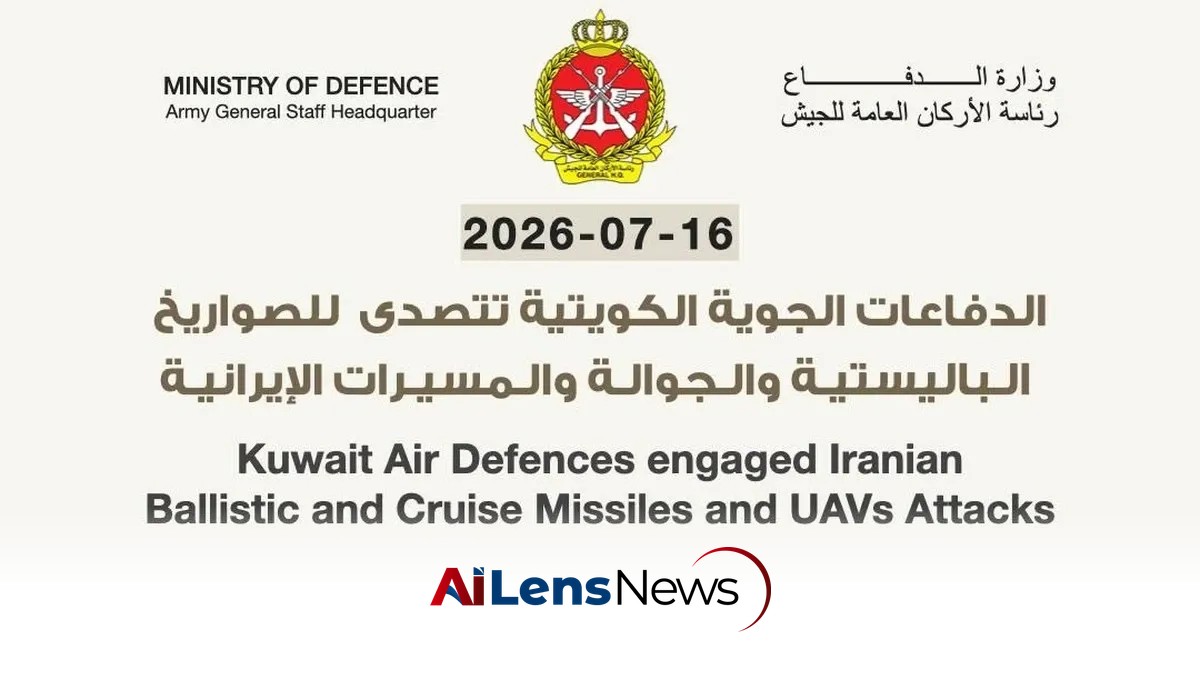


Kuwait's Armed Forces successfully intercepted 32 hostile drones targeting vital installations, with no reported injuries.
Kuwait City, Kuwait Jul 17, 2026 ALN: Kuwait's Armed Forces intercepted and destroyed 32 hostile drones that entered the country's airspace since dawn on Thursday, the Ministry of Defense announced. The ministry stated that the drones were detected and successfully dealt with after what it described as Iranian aggression targeting a number of the country's vital installations. This incident marks a significant escalation in the ongoing tensions between Iran and its neighbors, particularly in the context of drone warfare, which has become increasingly prevalent in modern military conflicts.
The recent incident has raised concerns about the increasing tensions in the region, particularly regarding the ongoing conflicts and rivalries involving Iran and its neighboring countries. In recent years, drone technology has become a significant tool for both military and non-state actors, allowing for remote attacks and surveillance with increased precision and reduced risk to personnel. The use of drones in military confrontations has been on the rise, and this latest incident in Kuwait underscores the potential threats that such technologies pose to national security. Drones can be launched from various platforms, making them difficult to detect and intercept, which complicates defense strategies for nations like Kuwait.
Kuwait, a small but strategically located country in the Gulf, has historically maintained a delicate balance in its foreign relations, particularly with Iran. The geopolitical landscape of the region has been shaped by various factors, including sectarian divides, territorial disputes, and the influence of global powers. The Gulf Cooperation Council (GCC), which includes Kuwait, has often expressed concerns over Iranian activities in the region, viewing them as a potential destabilizing force. This incident serves as a stark reminder of the vulnerabilities that smaller states face amidst the broader regional tensions, as they navigate complex relationships with larger, more powerful neighbors.
The ministry added that debris from the intercepted drones fell in several residential areas, causing material damage to property. However, no injuries or fatalities were reported. The fact that debris from the drones landed in populated areas could have resulted in significant civilian casualties, highlighting the risks associated with aerial confrontations. The Kuwaiti authorities are likely to conduct investigations into the incident to assess the extent of the damage and to ensure that necessary measures are taken to protect civilians in the future. This incident raises important questions about the safety protocols in place to protect civilian populations from the fallout of military engagements.
In response to this incident, the Kuwaiti Armed Forces affirmed that they remain on high alert and continue to carry out their duties with efficiency and professionalism under a state of continuous readiness. This statement reflects the military's commitment to safeguarding the nation's security and ensuring the safety of citizens and residents. The heightened state of readiness indicates that Kuwait is taking proactive measures to prevent future incursions, and it underscores the importance of maintaining robust defense capabilities in a volatile region. Such readiness may also involve collaboration with international partners to enhance surveillance and interception capabilities.
The implications of this drone interception extend beyond immediate security concerns. It raises questions about the effectiveness of current defense systems and strategies employed by Kuwait and its allies. As drone technology continues to evolve, countries in the region may need to invest in advanced detection and interception systems to counter potential threats. This incident may prompt discussions among GCC member states regarding collective security measures and the need for enhanced cooperation in addressing shared security challenges. The GCC has often focused on strengthening military cooperation among member states, and incidents like this could catalyze further integration of defense strategies.
Moreover, the incident could influence diplomatic relations within the region. Kuwait has historically sought to maintain a neutral stance and has often acted as a mediator in regional disputes. However, as tensions escalate, particularly with Iran, Kuwait may find it increasingly challenging to balance its diplomatic efforts with the need to protect its national interests. The potential for retaliatory actions or further provocations from Iran could complicate Kuwait's foreign policy approach. Kuwait's diplomatic efforts may also be scrutinized by both allies and adversaries in light of its military responses to perceived threats.
International observers may also view this incident as a reflection of the broader geopolitical dynamics in the Middle East. The United States and its allies have been closely monitoring Iranian activities, particularly in relation to their missile and drone capabilities. The U.S. has previously expressed concerns about Iran's use of drones to project power and influence across the region. This incident in Kuwait could prompt a reassessment of security strategies by external powers involved in the region, particularly in light of the ongoing tensions surrounding Iran's nuclear program and its influence in Iraq, Syria, and Yemen. The U.S. and its allies have often engaged in military operations and intelligence-sharing initiatives to counter Iranian influence, and this incident may lead to renewed discussions on military support for Gulf states.
In conclusion, the interception of 32 hostile drones by Kuwait's Armed Forces highlights the increasing threats posed by drone technology in the context of regional tensions. It underscores the need for enhanced defense measures and cooperation among Gulf states to address shared security challenges. As Kuwait navigates its diplomatic relationships and seeks to maintain stability within its borders, the incident serves as a reminder of the complex interplay between military readiness, regional politics, and the evolving nature of warfare in the 21st century. The incident not only reflects the immediate security threats but also the broader implications for regional stability, international relations, and the future of military engagements in the Middle East.
To learn more about the latest developments in World News & International Affairs, stay updated with our exclusive reports and analyses on AiLensNews.

