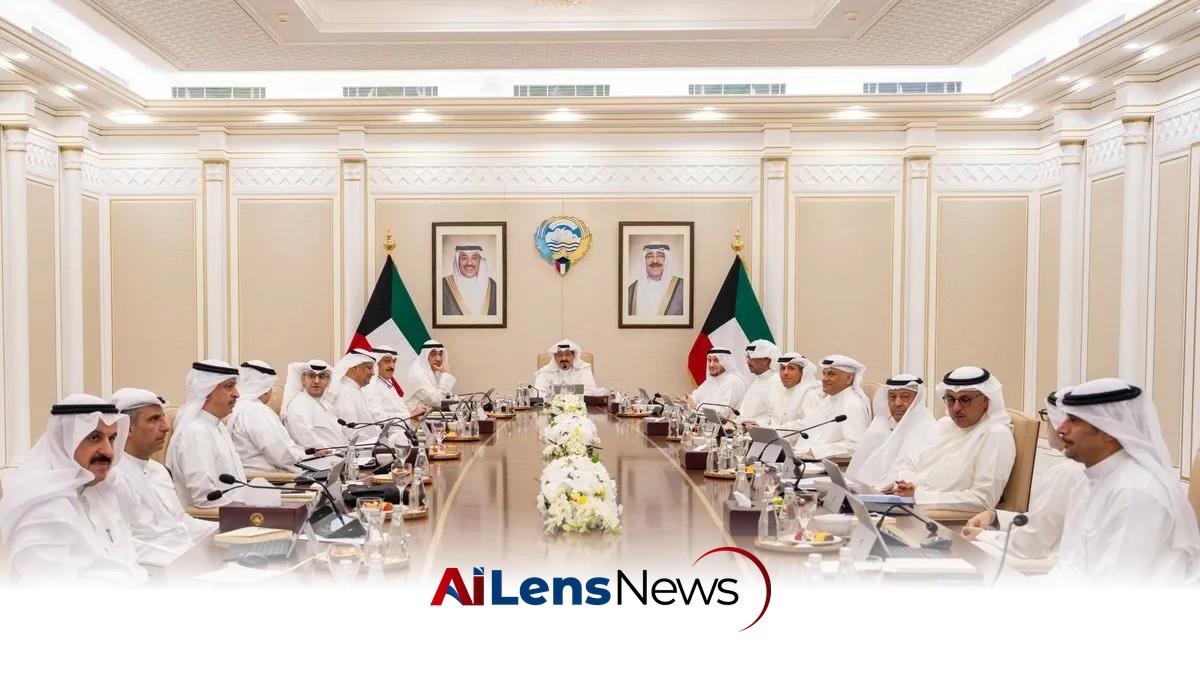


Kuwait's Cabinet has approved a draft law regulating drone use and declared August 27 a public holiday to mark the Prophet Muhammad's birthday.
Kuwait City, Kuwait Aug 12, 2026 ALN: In a significant move aimed at regulating the rapidly evolving field of unmanned aerial vehicles (UAVs), commonly known as drones, Kuwait's Cabinet has approved a draft decree-law that seeks to establish a comprehensive legal framework for the use of drones, light sport aircraft, and related activities. This decision was made during the Cabinet’s weekly meeting, chaired by His Highness the Prime Minister Sheikh Ahmad Abdullah Al-Ahmad Al-Sabah, and the draft law has been referred to His Highness the Amir Sheikh Meshal Al-Ahmad Al-Jaber Al-Sabah for final approval.
The newly proposed legislation aims to address several key areas concerning the operation of drones in Kuwait. It outlines the processes for registration, licensing, and obtaining permits for drone use, which are essential for ensuring that operators comply with national regulations and safety standards. The Cabinet's initiative comes amid growing concerns regarding the safe and responsible use of UAV technology, particularly in urban areas where the potential for accidents and privacy violations is heightened.
The draft decree-law is structured into 44 articles divided into six chapters. These chapters cover general provisions, the role of the Directorate General of Civil Aviation, the processes for registration and licensing, obligations and prohibitions for drone operators, penalties for violations, and final provisions. By creating a clear regulatory framework, the government aims to mitigate risks associated with drone operations, including safety hazards and unauthorized surveillance.
In light of the increasing popularity of drones for recreational and commercial purposes, this legislation is expected to facilitate the growth of the drone industry in Kuwait while ensuring public safety and compliance with international standards. The global drone market has witnessed exponential growth over the past decade, with applications ranging from aerial photography and agriculture to delivery services and infrastructure inspections. As such, establishing a regulatory framework is crucial for fostering innovation while protecting citizens and maintaining security.
During the Cabinet meeting, Deputy Prime Minister and Minister of State for Cabinet Affairs Shereida Al-Maousherji provided insights into the proceedings, emphasizing the importance of this legislation in addressing the challenges posed by the increasing use of drones. The Cabinet's decision reflects a proactive approach to governance, recognizing the need to adapt to technological advancements and their implications for society.
In addition to the drone regulations, the Cabinet also addressed regional security issues, condemning the recent attacks by the Houthi militia targeting the Najran region in Saudi Arabia. These attacks, which resulted in damage to civilian infrastructure and injuries to innocent civilians, were described by the Cabinet as a blatant violation of Saudi sovereignty and a breach of international law. Kuwait reiterated its solidarity with Saudi Arabia and expressed support for all measures taken to ensure the country's security and stability.
This condemnation of Houthi attacks underscores Kuwait's commitment to regional stability and its role as a mediator in Middle Eastern conflicts. The ongoing conflict in Yemen has drawn in multiple regional actors and has significant implications for security in the Gulf region. By supporting Saudi Arabia, Kuwait aims to reinforce its position as a key player in the Gulf Cooperation Council (GCC) and bolster collective security arrangements among member states.
Furthermore, the Cabinet condemned an Iranian attack on a tanker belonging to the Abu Dhabi National Oil Company (ADNOC) while it was transiting the strategically important Strait of Hormuz. This incident highlights the vulnerability of maritime routes in the region, which are crucial for global energy supplies. The Cabinet's strong stance against such acts of aggression reflects Kuwait's commitment to upholding international law and ensuring the safety of maritime navigation.
In the realm of foreign affairs, the Cabinet was briefed by Foreign Minister Sheikh Jarrah Jaber Al-Ahmad Al-Sabah on the political and diplomatic efforts undertaken by the Foreign Ministry and Kuwait’s diplomatic missions to stay informed about regional and international developments. The minister reported on recent communications with foreign counterparts, emphasizing Kuwait's active engagement in diplomatic dialogues aimed at addressing pressing regional challenges.
In a related development, the Cabinet announced the suspension of work at all ministries, government bodies, public authorities, and institutions on Thursday, August 27, 2026, in observance of the Prophet Muhammad’s (PBUH) birthday, marking the year 1448 AH in the Islamic calendar. This official holiday underscores the significance of Islamic traditions in Kuwait and reflects the government's respect for cultural and religious observances. Official working hours will resume on Sunday, August 30, allowing citizens to celebrate this important occasion.
Agencies with special working arrangements have been instructed to determine their own holiday schedules in coordination with relevant authorities, ensuring that public interests are taken into account. This flexibility allows for the continuation of essential services while accommodating the observance of religious holidays.
Additionally, during the Cabinet meeting, Finance Minister Dr. Yacoub Al-Refaei briefed the Cabinet on Fitch Ratings’ recent report regarding Kuwait’s sovereign credit rating. The report affirmed Kuwait’s long-term sovereign rating at AA- with a stable outlook, indicating a robust economic position despite global economic uncertainties. This rating is significant as it reflects the country’s fiscal health and ability to meet its financial obligations, which in turn influences investor confidence and economic stability.
In conclusion, Kuwait's Cabinet has taken decisive steps to regulate drone operations while simultaneously addressing pressing regional security issues and reaffirming its commitment to cultural observances. The approval of the draft decree-law on drone regulations is a forward-thinking initiative that aims to balance technological advancement with public safety. At the same time, Kuwait's diplomatic efforts and strong stance on regional security issues underscore its role as a stabilizing force in the Gulf region. As the country navigates these complex challenges, the implications of these decisions will resonate well beyond its borders, impacting regional dynamics and international relations.
To learn more about the latest developments in Politics, stay updated with our exclusive reports and analyses on AiLensNews.

