

A US immigration officer fatally shot a man in Biddeford, Maine, raising concerns over ICE's tactics and the handling of immigration enforcement.
Kuwait City, Kuwait Jul 14, 2026 ALN: A US immigration officer fatally shot a man identified by rights groups as a 26-year-old Colombian, marking the second such incident involving federal agents in less than a week. The shooting occurred in Biddeford, a town of 22,000 in northern Maine, and is likely to intensify criticism of President Donald Trump’s deportation policies and the actions of Immigration and Customs Enforcement (ICE).
Initially, Senator Angus King of Maine informed reporters that, based on a conversation with Secretary of Homeland Security Markwayne Mullin, the victim was the subject of an ICE arrest warrant due to his immigration status. However, a subsequent statement from King’s office clarified that the victim was not the intended target of the warrant. This discrepancy has raised significant questions about the protocols and decision-making processes within ICE during such operations.
“The person that was killed was not the person they were seeking,” King told CNN. He called for a “full, transparent and open investigation” into the incident, noting that the agents involved were apparently not wearing body cameras. The absence of body cameras has become a focal point for advocates calling for greater accountability in law enforcement, particularly in sensitive situations involving immigration enforcement.
ICE stated that the agent involved would be placed on leave in accordance with protocol following police-involved shootings. The FBI has also initiated an investigation. This incident follows another shooting last week in Texas, where a Mexican man was killed by an ICE agent during an attempted vehicle stop. Such incidents have raised alarms about the use of force by federal agents, especially in communities with significant immigrant populations.
Witness Account
Daniel Boucher, 71, who was nearby during the incident, recounted hearing multiple gunshots before witnessing ICE agents pull a bloodied individual from a white car. “At that point, I clearly heard the victim say, ‘I tried to stop,’” he recalled. “Then he was on the ground. I could only see the legs and the stomach, and at one point, I could see that his stomach stopped going, and I knew that he had expired.” Boucher mentioned that when he confronted one of the agents, the agent had attempted to run him over, a claim that raises further concerns about the conduct of the officers involved.
An ICE spokesperson explained that officers had attempted to stop a vehicle around 7:00 am (1100 GMT) after conducting surveillance on the last known address of an individual with a deportation order. “The vehicle attempted to flee the scene, and fearing for public safety, an officer discharged his weapon. The driver was struck, and emergency services were immediately contacted. He passed away from his injuries,” they stated. This rationale for the use of deadly force has been met with skepticism by community members and activists, who argue that non-lethal alternatives should have been employed.
Community Reaction
The Maine Immigrants’ Rights Coalition and Presente Maine, which jointly identified the victim but did not disclose his name, asserted that the man was authorized to work in the United States. “We will not let this death be reduced to a footnote in this administration’s enforcement statistics,” stated Crystal Cron, executive director of Presente Maine. This sentiment reflects a broader frustration among immigrant rights advocates who feel that the human cost of aggressive immigration enforcement is often overlooked in political discourse.
Governor Janet Mills expressed horror over the incident, especially given reports that the victim was not the intended target of the ICE operation. “This development makes this tragedy even more disturbing and infuriating, and it underscores the reckless and haphazard manner in which immigration enforcement operations are being conducted in Maine and across the country,” she wrote on social media. Her comments highlight the growing concern among state leaders regarding the impact of federal immigration policies on local communities.
Images from the scene depicted a police cordon on a residential street, with a forensics unit present next to a red tent. Community members placed candles and flowers nearby in remembrance of the victim, indicating a communal mourning process that often accompanies such tragedies. Vigils and memorials have become common responses in the wake of police-related fatalities, serving as a means for communities to express grief and demand justice.
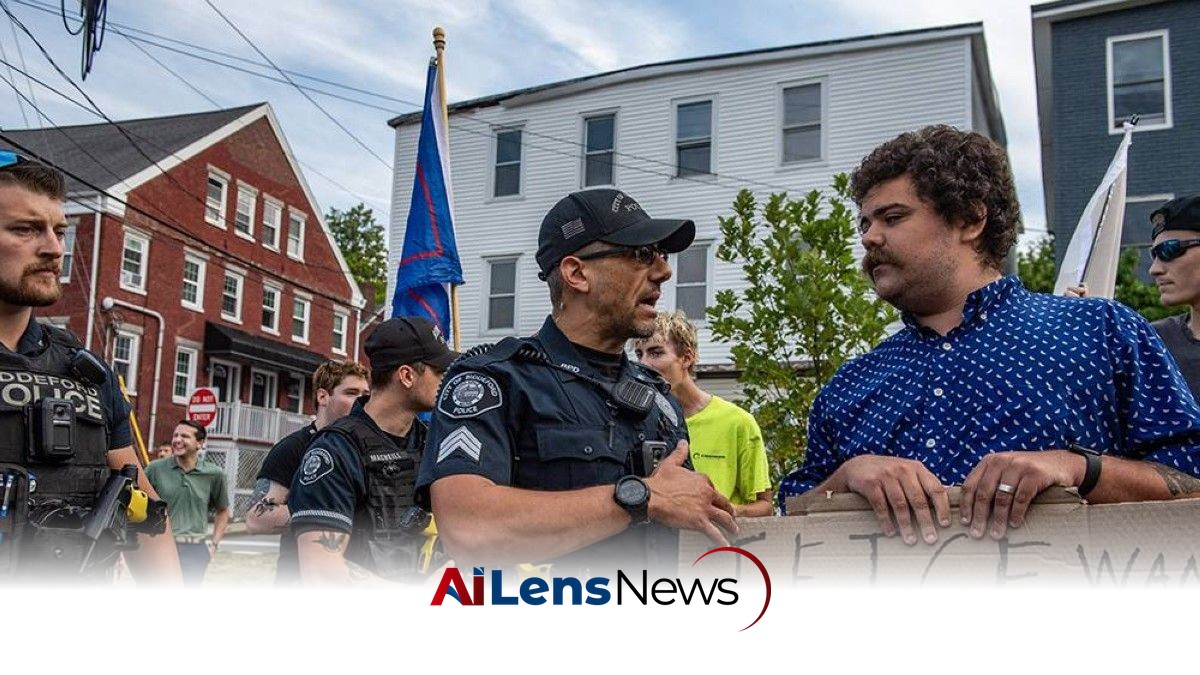
Protesters gathered in the area, holding signs reading “ICE Out!” and convened at the office of Maine’s other senator, Susan Collins, a member of Trump’s Republican party. “A person has died, and their loved ones and the people of our community deserve clear answers about what happened,” Biddeford Mayor Liam LaFountain stated. This call for transparency underscores the desire for accountability in law enforcement actions, particularly those involving immigration enforcement, which has become a contentious issue in American politics.
As ICE continues to enforce Trump’s immigration crackdown, its heavily armed agents have faced nationwide backlash for aggressive tactics, including the shooting deaths of two US citizens earlier this year in Minneapolis. The frequency of such incidents has prompted calls for comprehensive reforms within ICE and a reevaluation of the strategies employed in immigration enforcement. Advocates argue that the current approach not only endangers lives but also undermines trust between immigrant communities and law enforcement agencies.
This incident in Biddeford serves as a stark reminder of the complexities surrounding immigration enforcement in the United States. The intersection of federal policies, local community dynamics, and individual rights raises critical questions about the effectiveness and morality of current immigration practices. As investigations into this shooting unfold, the implications for policy reform and community relations will likely be significant, with many hoping for a shift towards more humane and responsible approaches to immigration enforcement.
To learn more about the latest developments in Crime & Law, stay updated with our exclusive reports and analyses on AiLensNews.

