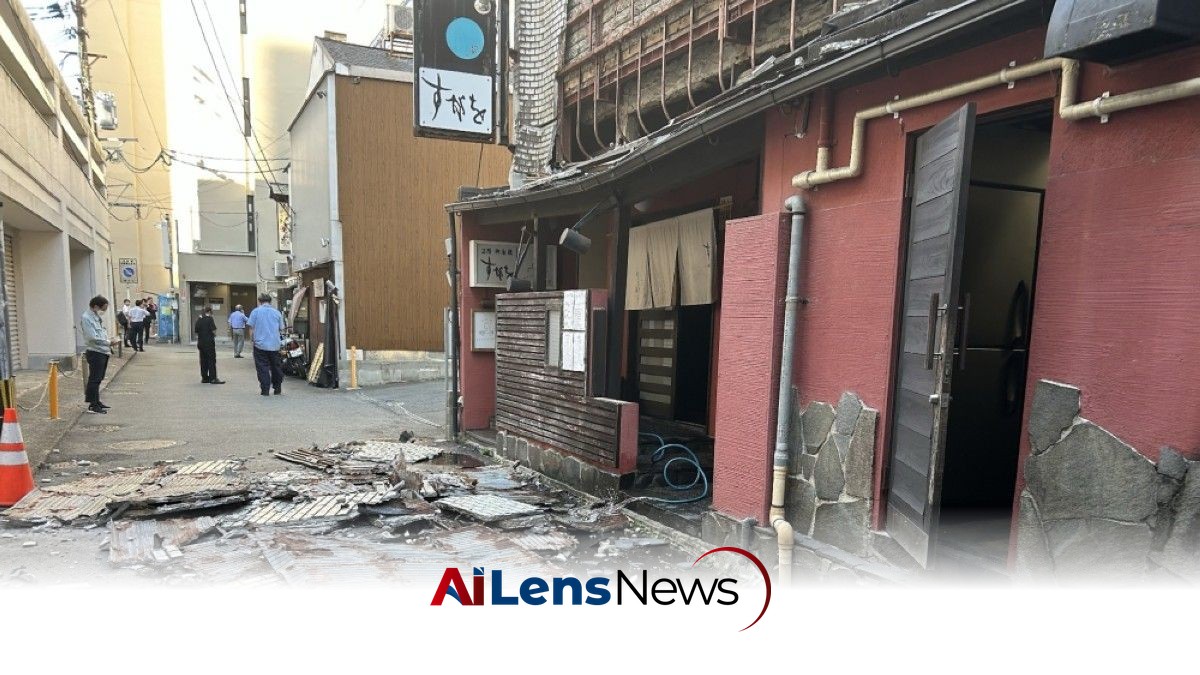


A powerful earthquake in Kumamoto, Japan, has resulted in casualties, power outages, and significant structural damage, prompting rescue operations.
Kuwait City, Kuwait Jul 29, 2026 ALN: A 7.1-magnitude earthquake struck Japan’s southern Kumamoto prefecture on Tuesday, resulting in significant casualties and extensive destruction. The quake knocked out power to thousands of homes, ruptured roads, and left individuals trapped, with some presumed dead inside a partially collapsed shopping mall. In a press conference from her office in Tokyo, Japanese Prime Minister Sanae Takaichi stated that authorities were still in the process of assessing the full extent of the damage in the affected area, which had previously endured a catastrophic earthquake a decade ago.
Prime Minister Takaichi reported, “We have already been informed that people have been injured. Power outages and fires have occurred in some areas, and there has also been damage to roads and bridges and the collapse of buildings. I ask everyone to take action to protect themselves, including evacuating to a safe location.” In response to the disaster, around 300,000 residents have been instructed to seek refuge in evacuation centers, while hundreds of soldiers have been deployed to assist in rescue operations. This comes as aftershocks continue to rumble in the area, located on Japan’s southwestern island of Kyushu.
‘Like volcanic ash was falling’
Reports indicate that approximately 20 to 30 workers at the prefecture’s largest shopping mall were unaccounted for after the facility was rocked by an explosion in the aftermath of the quake, as reported by NHK. Fire services had earlier indicated that multiple individuals were trapped inside the mall. Local news outlets cited police reports suggesting that several individuals had died or were presumed deceased in the incident, although Reuters could not immediately confirm these accounts. Footage from the scene showed one side of the mall, which houses around 200 stores, torn away, exposing steel beams and scattering debris across a vast parking lot. As rescue teams searched for survivors, ambulances and fire engines were stationed outside the mall.
A spokesperson for the mall operator, Aeon, stated that customers and employees were evacuated immediately following the initial quake, and the precise cause of the subsequent explosion remains unclear. Investigations are ongoing, with broadcaster NTV reporting a possible gas explosion as a potential cause. Witness Kazuya Tsurunaga recounted his experience to TBS, describing the moment of the blast while he was cleaning up dishes broken by the earthquake inside a pub located about 300 meters from the Aeon mall. “It was a huge impact,” he said. “A large cloud of smoke billowed up, and because the wind happened to be blowing and the wind direction was towards the shop, the area around us was in a state like volcanic ash was falling.”
In addition to the mall incident, multiple individuals were also reported unaccounted for following the collapse of a chimney at a Nippon Paper Industries factory, as noted by broadcaster NHK. Two hospitals in the region were reported to be treating more than 50 patients each, with some in serious condition. Furthermore, several passengers aboard high-speed trains at the time of the quake sustained injuries, according to operators.
Buildings on fire
Authorities reported that they were responding to numerous incidents where buildings had partially collapsed or caught fire. One person was confirmed dead in a collapse occurring in a town near the quake's epicenter, as reported by TV Asahi. The quake caused significant damage to infrastructure, with major highways suffering large cracks that snarled traffic. Rail services were suspended, and flights were grounded as a precaution. Major companies, including TSMC, the world’s largest contract chipmaker, Sony, and Fujifilm, evacuated workers from their facilities following the quake. TSMC later stated that its site was unaffected and that operations were gradually resuming. However, Tokyo Electron, a semiconductor equipment manufacturer, announced the suspension of operations at its two factories in Kumamoto through Wednesday, while Honda indicated it would temporarily idle its motorcycle factory located in the area.
The epicenter of the quake was approximately 20 kilometers (12 miles) south of Kumamoto city, which is the largest city in central Kyushu with a population of around 700,000. Residents in areas that experienced the most intense tremors have been advised to remain vigilant for further strong quakes over the next week, as well as to be cautious of potential landslides. An official from the Japan Meteorological Agency (JMA) reported that about 100 small aftershocks had already been recorded in Kumamoto since the initial quake.
Tsunami warning lifted
Japan is located along the “Ring of Fire,” a region characterized by high volcanic and seismic activity that partly encircles the Pacific Basin. The country accounts for approximately 20% of the world’s earthquakes with a magnitude of 6.0 or higher. Following Tuesday’s quake, a tsunami warning was issued but was subsequently lifted. Kyushu Electric Power reported that 48,000 homes lost power as a result of the earthquake, while railway company JR Kyushu announced the suspension of services, including its high-speed bullet trains. Kumamoto Airport also closed its runway, leading to the diversion and cancellation of numerous flights.
Telecommunications operators KDDI and Docomo reported disruptions to their mobile phone services due to power shortages and transmission line failures. Fortunately, no irregularities were reported at the nuclear power stations in the area, as confirmed by Japan’s nuclear regulation authority. The impact of the earthquake was reminiscent of a massive tremor that struck Kumamoto a decade ago, which resulted in the deaths of 275 individuals and injured 2,739 others, according to official counts. That quake also caused extensive damage to thousands of buildings, including the city’s historic castle, a major tourist attraction.
In a troubling turn of events, some portions of the stone walls at Kumamoto Castle also collapsed as a result of Tuesday’s quake, as reported by an official at the castle’s office. As night fell, thousands of homes remained without power, and authorities issued warnings to residents about the risk of heatstroke, as temperatures were predicted to reach 34 degrees Celsius (93 degrees Fahrenheit) on Wednesday. The combination of the earthquake's immediate aftermath and the potential for heat-related health issues underscores the urgent need for continued support and assistance to the affected communities.
The implications of this earthquake are profound, not only for the immediate response and recovery efforts but also for the long-term resilience of the region. As Japan continues to face the realities of living in a seismically active area, the need for robust infrastructure, emergency preparedness, and community resilience becomes increasingly critical. The government and local authorities will need to work together to ensure that the affected areas are rebuilt stronger and more resilient to future earthquakes, while also providing support to those who have lost loved ones and homes in this devastating event.
To learn more about the latest developments in Crime & Law, stay updated with our exclusive reports and analyses on AiLensNews.

