

More
Checking your session
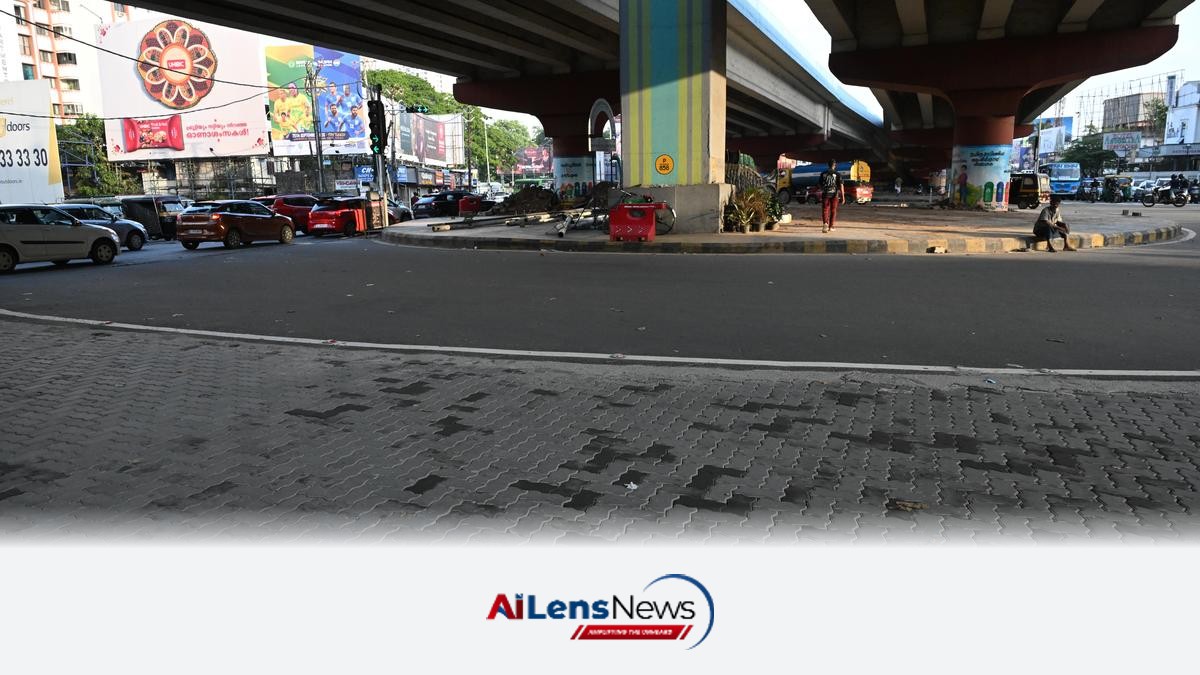



The ₹1.5 crore redevelopment project at Vyttila Junction is nearing completion, with significant progress made on traffic management and infrastructure.
Thiruvananthapuram, India Aug 29, 2026 ALN: The redevelopment of Vyttila Junction in Kochi, a critical transportation hub in , is nearing completion with a project budget of ₹1.5 crore allocated by the Road Safety Authority (KRSA). This project is significant not only for its immediate impact on traffic flow but also for its long-term implications for urban mobility in the region. The junction, known for its heavy traffic congestion, serves as a pivotal point for commuters traveling to and from various parts of the city, including the Vyttila Mobility Hub, which is a major transit facility.
As part of the redevelopment effort, substantial portions of the medians and the roundabout previously constructed by the Public Works Department (NH wing) beneath the flyover have been dismantled. This strategic alteration aims to enhance the flow of traffic and reduce bottlenecks that have historically plagued the area. The phased opening of the widened and redeveloped sections beneath the Vyttila flyover is a critical step in this process, allowing for gradual integration of the new traffic patterns.
A senior traffic police official has reported that approximately 80% of the redevelopment work is complete. However, the remaining tasks, particularly the laying of paver blocks on the southeastern side of Kaniampuzha Road, have faced delays due to adverse weather conditions. The completion of this paving work is essential, as it connects directly to the Vyttila Mobility Hub, further emphasizing the project's importance to regional transit efficiency.
In addition to the paving work, the project includes plans for the relocation of traffic signal posts to the extreme ends of the newly developed carriageways. This relocation is necessary to ensure that the signals function effectively within the new layout and do not obstruct traffic flow. The coordination between various departments, including Keltron, which is responsible for the traffic signals, highlights the complexities involved in urban infrastructure projects.
Further modifications to the junction are planned, including the dismantling of additional medians to facilitate smoother traffic movements. Once the redevelopment work is fully completed, formal traffic diversions will be implemented to guide vehicles through the newly constructed parts of the junction. A dedicated bus bay is also set to be established on the southwestern side of the junction, allowing for the parking of four buses simultaneously. This initiative aims to streamline public transport operations and prevent congestion caused by buses stopping in non-designated areas.
The involvement of the National Highways Authority of India (NHAI) is crucial, as their completion of drainage works is a prerequisite for finalizing the bus bay. Proper drainage is essential in preventing waterlogging during monsoon seasons, which can significantly disrupt traffic and pose safety hazards. Additionally, the Kochi Corporation has been tasked with clearing encroachments from the bellmouth of S.A. Road, which will further enhance the junction's capacity to accommodate vehicles making free-left turns from the Aroor side.
Uma Thomas, the MLA for Thrikkakara, has expressed her commitment to transforming Vyttila Junction into a signal-free intersection post-redevelopment. This ambition reflects a broader vision to improve traffic management in Kochi, as signal-free junctions are known to facilitate smoother traffic flow and reduce wait times for drivers. To achieve this goal, the assistance of the National Transportation Planning and Research Centre (NATPAC) may be sought, indicating a collaborative approach to urban planning and traffic management.
Social activist Shamier Abdulla has highlighted the critical need for a signal-free junction, emphasizing that Vyttila is recognized as the largest and busiest junction in Kochi. The successful implementation of a signal-free design would not only alleviate current traffic congestion but also enhance the overall functionality of the Vyttila Mobility Hub. The hub is intended to serve as a central point for inter-State buses, and Abdulla advocates for measures to ensure that these buses are parked at the hub rather than along the western side of the junction, where they can obstruct traffic and exacerbate congestion.
The implications of the Vyttila Junction redevelopment extend beyond immediate traffic improvements. As urban centers like Kochi continue to grow, the need for efficient transportation infrastructure becomes increasingly critical. Projects like this not only aim to address current traffic challenges but also set the foundation for future urban mobility solutions. As the city evolves, the integration of public transportation, pedestrian pathways, and traffic management systems will be essential for fostering a sustainable urban environment.
In conclusion, the redevelopment of Vyttila Junction represents a vital investment in Kochi's infrastructure, with the potential to significantly enhance traffic flow and improve the overall commuting experience for residents and visitors alike. As the project approaches completion, stakeholders will be closely monitoring its impact on the region's transportation dynamics and exploring additional measures to ensure the long-term success of this crucial junction.
To learn more about the latest developments in Local & Regional, stay updated with our exclusive reports and analyses on AILensNews.

With the Onam holiday rush in full swing, Kochi has deployed 1,500 police person…

A significant fire at a godown in Angamaly has resulted in injuries to the owner…

The distribution of Onam kits by Thiruvananthapuram's Mayor has sparked allegati…

The High Court has reprimanded state authorities for not collecting fines on una…

A flag-hoisting ceremony in Kozhikode turned chaotic as councillors from opposin…