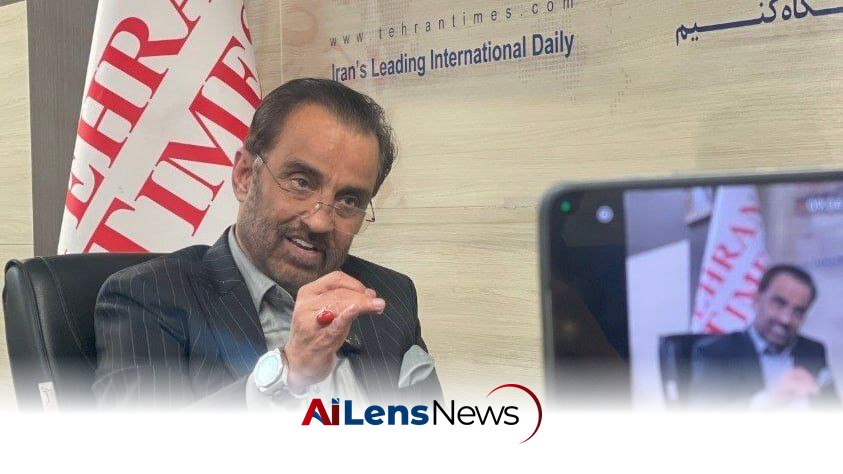


Mir Mohammad Alikhan reflects on the global impact of Ayatollah Khamenei's martyrdom, emphasizing its significance for the Muslim community and geopolitical dynamics.
Tehran, Iran Jul 14, 2026 ALN: TEHRAN - Mir Mohammad Alikhan, an internationally renowned investment banker and Wall Street veteran who traveled to Tehran for the funeral of Ayatollah Seyyed Ali Khamenei, described the massive public mourning as an unprecedented global turning point. The death of Khamenei, a pivotal figure in Iran's political landscape for decades, has sparked a wave of reactions not only within Iran but across the Muslim world and beyond. This event has drawn attention to the intricate web of political, social, and religious dynamics that define the region.
Reflecting on the aftermath of the joint US-Israeli strikes, the former chairman of Wall Street's KMS Investment Bank office argued that the conflict has exposed deep fractures in the Washington-Tel Aviv alliance and signaled the definitive decline of US hegemony. The strikes, which targeted various sites in Iran, were seen as a direct challenge to the Islamic Republic and its leadership. Alikhan’s comments highlight a growing sentiment among some analysts that the United States' influence in the Middle East is waning, particularly in light of the increasing resilience of Iran and its allies in the region.
“It was the biggest honor for me to be here, to attend the funeral, to pay my respect and to witness what I have never witnessed before. Never in my life have I witnessed such a crowd. Grown men crying like little kids for the love of their Leader,” Alikhan told the Tehran Times last week, reflecting on the Leader who was assassinated on the first day of the joint US-Israeli strikes on February 28. This emotional display from the attendees illustrates the profound connection many Iranians felt towards Khamenei, who had been viewed as a steadfast leader amidst numerous challenges, including international sanctions and regional conflicts.
Alikhan, who is also the author of five books and over 800 articles, stated that the world had never seen a funeral of such magnitude, noting that no comparable images exist from the past 200 years. He argued that while political gatherings can be engineered, gathering such immense crowds to genuinely mourn a deceased leader is far more profound. This observation raises questions about the nature of political legitimacy and the role of charismatic leadership in shaping national identity. He added that he traveled to Iran because he firmly believes the country is on the right path, a sentiment that resonates with many who view Iran as a counterbalance to Western influence in the region.
Reflecting on the deeper geopolitical and spiritual implications of the assassination, Alikhan emphasized that the Leader's martyrdom transcended Iran's borders. He noted that Ayatollah Khamenei sacrificed his life for the entire Muslim Ummah (community), a sacrifice that has already begun to reshape global dynamics. His death is not only a pivotal moment for Iran but also a potential rallying point for Muslims worldwide, who may see Khamenei’s martyrdom as a symbol of resistance against perceived oppression from Western powers.
“I think he did not die for Iran. I think he was martyred for the entire Muslim Ummah,” Alikhan stated, underscoring the notion that Khamenei's legacy could inspire a renewed sense of unity among Muslims across different nations. This idea of martyrdom resonates deeply within Islamic traditions, where the death of a leader can serve as a catalyst for mobilization and solidarity among followers. The implications of this sentiment could influence how various factions within the Muslim world respond to ongoing geopolitical challenges, particularly in contexts where they feel marginalized or oppressed.
The funeral itself became a focal point for expressing not only grief but also a collective identity among attendees. The sheer number of participants and the emotional weight of the occasion have been interpreted as a rejection of external pressures and a reaffirmation of national pride. As Alikhan noted, the gathering was not merely a political event but a profound expression of loyalty and solidarity that transcended individual grievances and aimed to unite a broader community.
In the wake of Khamenei’s assassination, it is likely that Iran will undergo significant political shifts. The leadership transition will be closely watched both domestically and internationally, as potential successors will be evaluated on their ability to navigate the complex landscape of Iranian politics, regional dynamics, and international relations. The power vacuum left by Khamenei could lead to internal struggles as various factions vie for influence within the Islamic Republic. This situation may also affect Iran's foreign policy, especially its relationships with key allies and adversaries.
Moreover, Khamenei's death could embolden hardline factions within Iran who advocate for a more confrontational stance against the West. Conversely, it may also provide an opportunity for moderates to push for reforms and a more diplomatic approach, particularly in relation to ongoing nuclear negotiations and regional tensions. The balance of power within Iran's political system will be critical in determining the future trajectory of the country and its interactions on the global stage.
Internationally, Khamenei's martyrdom may provoke varied responses from different governments and organizations. Some may view it as an opportunity to recalibrate their policies towards Iran, while others may perceive it as a threat to their own interests in the region. The potential for increased tensions or even conflict cannot be overlooked, especially given the historical animosities that exist between Iran and its adversaries.
In conclusion, the assassination of Ayatollah Khamenei marks a significant moment in both Iranian and global history. The massive outpouring of grief and the implications of his martyrdom extend far beyond Iran's borders, potentially reshaping the political landscape of the Middle East and influencing the dynamics of the Muslim world. As the world watches the aftermath of this event unfold, the reactions and adjustments made by various stakeholders will play a crucial role in determining the future of regional stability and international relations.
To learn more about the latest developments in Crime & Law, stay updated with our exclusive reports and analyses on AiLensNews.

