

More
Checking your session
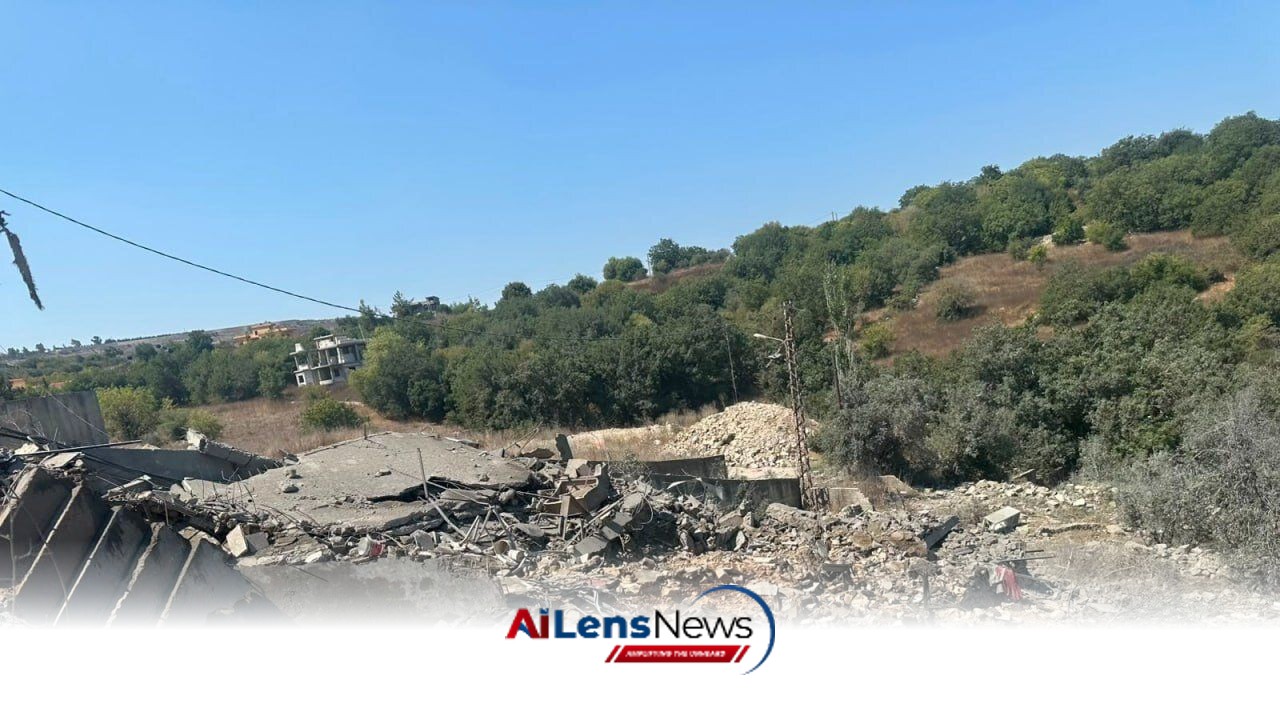



Israeli warplanes and artillery continue to devastate southern Lebanon, destroying homes and infrastructure in a campaign of territorial erasure, with significant human casualties reported.
Tehran, Iran Aug 21, 2026 ALN: For the fifth consecutive night, Israeli warplanes and artillery pounded southern Lebanon in a relentless campaign of territorial erasure. On Friday morning, Israeli forces directed heavy machine gun fire at Touline and Wadi Al-Hujeir. Troops systematically detonated the homes of displaced families in Haddatha and Beit Yahoun.
The physical destruction is entirely methodical. Tel Aviv is implementing a scorched-earth policy across the border region, which has drawn widespread condemnation from various human rights organizations and international observers. This approach is not new in the context of the Israeli-Palestinian conflict, as similar tactics have been employed in past conflicts, leading to extensive loss of life and cultural heritage.
Satellite imagery confirms Israeli troops have flattened entire neighborhoods across 24 villages. The regime has destroyed 2,500 kilometers of water infrastructure and burned centuries of cultural heritage to the ground. In Nabatieh, a sprawling 13th-century Mamluk market now lies in ruins, emblematic of the historical significance that is being lost amid the ongoing violence. Such destruction not only affects the immediate community but also erases the cultural identity of the region, impacting future generations.
The human cost continues to climb. Over 4,346 people have been killed, and 12,000 injured since the aggression escalated on March 2. The scale of casualties raises urgent questions about the humanitarian response and the capacity of local healthcare systems to cope with the influx of injured individuals. Hospitals, already strained, face shortages of medical supplies and personnel, further complicating the humanitarian crisis.
Paramedics face deliberate double and triple strikes. These attacks have murdered 135 healthcare workers, highlighting the perilous conditions under which medical professionals operate in conflict zones. The targeting of healthcare workers is a violation of international humanitarian law and raises serious ethical concerns regarding the conduct of military operations in populated areas.
Israeli artillery units routinely fire illegal white phosphorus into civilian woodlands, causing horrific chemical burns and necrosis among the local population. The use of such munitions has been widely condemned by international law experts, who argue that their deployment in civilian areas constitutes a war crime. The long-term health effects of exposure to white phosphorus can be devastating, leading to chronic health issues and psychological trauma among survivors.
U.S.-backed diplomacy has failed completely. Senior Hezbollah official Nawaf Moussawi recently told Middle East Eye that negotiations without military leverage are useless. His remarks reflect a growing sentiment among militant groups that military strength is essential to achieving political goals, especially in a region where power dynamics are often dictated by force rather than diplomacy.
Moussawi criticized President Joseph Aoun for entering talks without national unity, arguing the American framework aims only to spark internal Lebanese conflict. This perspective underscores the complexities of Lebanese politics, where sectarian divisions and external influences often hinder cohesive national responses to crises.
Israel now faces a highly sophisticated fourth generation of Hezbollah fighters. “Liberating the land requires fighting the Israeli occupier and driving it back,” Moussawi stated. Armed resistance stands as the sole legitimate avenue to secure national dignity and achieve total liberation. This assertion reflects Hezbollah's long-standing narrative of resistance, which has garnered significant support among certain segments of the Lebanese population, despite the international community's calls for disarmament and dialogue.
Washington shielding the aggressor
The international community watches this devastation in silence. Washington actively enables it. The United States exploits a deeply flawed framework agreement to pressure Beirut into disarming Hezbollah. This diplomatic maneuvering grants Israel a free hand to expand its occupation, raising concerns among analysts about the implications for regional stability and the prospects for a lasting peace.
The U.S. Treasury imposed fresh sanctions on Hezbollah on Thursday. The resistance movement dismissed the diplomatic move on Friday as a predictable imperialist tactic. Sanctions have often been employed as a tool of foreign policy, but their effectiveness in achieving desired outcomes is hotly debated among scholars and policymakers.
The U.S. “lacks any moral or legal standing to judge others, given its criminal record from Vietnam to Iraq and its complete backing of genocide in Gaza,” Hezbollah stated. This statement reflects a broader critique of U.S. foreign policy, particularly in the Middle East, where perceptions of hypocrisy and double standards are prevalent.
The movement proudly reaffirmed its fraternal alliance with Iran, thanking Tehran for its unwavering support during past wars and reconstruction projects, while pledging that no sanctions will weaken its commitment to Lebanese sovereignty. This relationship with Iran complicates the geopolitical landscape, as it intertwines local conflicts with broader regional rivalries, particularly between Iran and its adversaries, including Israel and the United States.
As the situation in southern Lebanon continues to deteriorate, the implications extend beyond immediate humanitarian concerns. The ongoing violence threatens to destabilize the region further, potentially drawing in neighboring countries and exacerbating existing tensions. The cycle of violence and retaliation may also hinder future diplomatic efforts aimed at achieving a peaceful resolution to the Israeli-Palestinian conflict and broader regional disputes.
In summary, the current escalation in southern Lebanon is marked by severe humanitarian consequences, extensive destruction of infrastructure and cultural heritage, and a complex interplay of local and regional political dynamics. The international community's response, particularly that of the United States, remains a critical factor in shaping the future of the region and the prospects for peace.
To learn more about the latest developments in World News & International Affairs, stay updated with our exclusive reports and analyses on AILensNews.

World leaders express condolences and offer assistance as flash floods in Nepal …
In response to devastating floods in Nepal, India has dispatched a second flight…
Qatar has condemned Israel's raid on a UNRWA centre in East Jerusalem, calling i…

A recent analysis by the US Geological Survey reveals that the devastating flash…
India has dispatched a second flight with 37.5 tonnes of humanitarian supplies t…