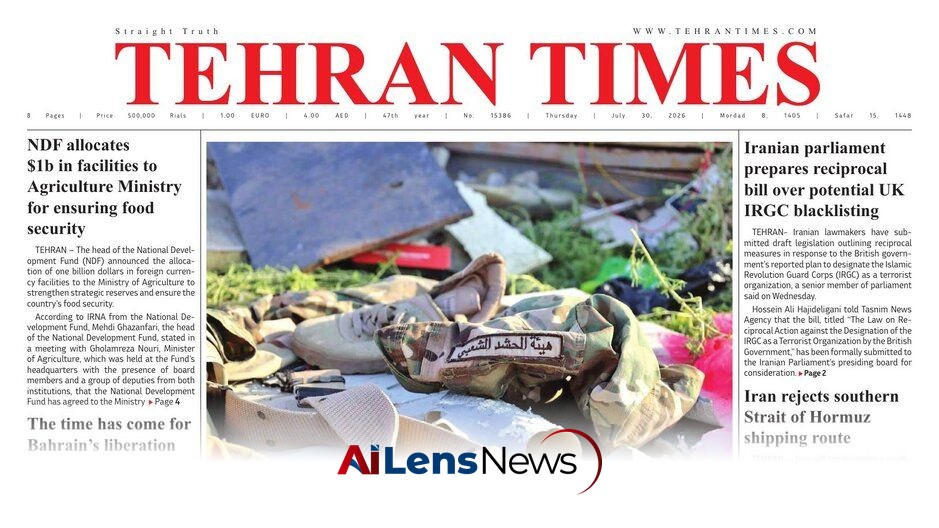


The Iraqi Popular Mobilization Forces respond to U.S. aggression, highlighting their commitment to defend Iraq's sovereignty and regional stability.
Tehran, Iran Jul 30, 2026 ALN: The Iraqi Popular Mobilization Forces (PMF) have issued a strong statement in response to the recent U.S. military actions in Saudi Arabia. This comes amid escalating tensions in the region, particularly concerning U.S. involvement in Iraq and its implications for regional security.
In a joint statement, members of the PMF emphasized their readiness to defend Iraq's sovereignty against any foreign aggression. They condemned the U.S. for its military presence in the region, viewing it as a direct threat to both Iraq and its neighbors.
The U.S. has maintained a military presence in the Middle East under the pretext of combating terrorism and ensuring regional stability. This presence dates back to the early 2000s when the U.S. invaded Iraq, leading to a prolonged military engagement that has evolved over the years. Initially framed as an effort to dismantle weapons of mass destruction and combat terrorism, the U.S. military's role has since shifted towards training local forces and conducting operations against extremist groups like ISIS.
However, many local factions, including the PMF, argue that this presence exacerbates tensions and undermines local governance. The PMF, a coalition of various militia groups, was formed in 2014 to combat the rise of ISIS and has since become a significant player in Iraq’s political and military landscape. They view the U.S. military presence as an infringement on Iraq's sovereignty and a source of instability that fuels anti-American sentiments among the population.
The PMF's formation was largely a response to the dire security situation in Iraq following the resurgence of ISIS, which was able to capture significant territory in 2014. The group is comprised of various factions, including Shiite militias, and has received backing from Iran, which has further complicated the dynamics of U.S. involvement in the region. Critics of the U.S. presence argue that it not only fails to address the root causes of extremism but also perpetuates cycles of violence and resentment among local populations.
The PMF's response reflects broader concerns among Iraqi and regional leaders regarding U.S. foreign policy. Analysts suggest that continued U.S. military actions could lead to increased instability in Iraq and the surrounding areas. The presence of U.S. troops is often cited as a catalyst for violence and resistance, as various factions within Iraq and neighboring countries perceive it as an occupation.
Moreover, the geopolitical landscape of the Middle East is complex, with various state and non-state actors vying for influence. The U.S. military's actions can have ripple effects, potentially drawing in regional powers such as Iran, which has historically supported groups like the PMF. This dynamic raises concerns about a potential escalation of conflict, as Iran may respond to perceived threats to its allies in Iraq and the broader region.
The strategic importance of the Middle East, particularly its oil reserves and trade routes, has made it a focal point for U.S. foreign policy. The ongoing tensions between the U.S. and Iran, especially following the U.S. withdrawal from the Iran nuclear deal in 2018, have further complicated the security situation. Iran's influence in Iraq through the PMF and other groups is viewed with suspicion by the U.S., which perceives it as a challenge to its own interests in the region.
In light of these developments, the PMF has called for unity among Iraqi factions to resist foreign intervention. They stress the importance of a coordinated response to safeguard national interests. The PMF's leadership has urged Iraqi political parties to set aside their differences and rally around a common goal of preserving Iraq's sovereignty.
This call for unity is particularly significant given the fragmented nature of Iraqi politics, where various factions often have competing interests. The PMF's message resonates with nationalistic sentiments among many Iraqis who feel that foreign military presence undermines their autonomy and dignity as a nation. The historical context of foreign interventions in Iraq, including the legacy of the 2003 invasion, continues to shape public opinion and political discourse.
Furthermore, the PMF's appeal for unity is indicative of the challenges faced by Iraq's government, which must navigate a delicate balance between appeasing powerful militia groups and maintaining relations with the U.S. and other international partners. The Iraqi government has often been criticized for its inability to assert full control over armed groups operating within its borders, leading to questions about its sovereignty and legitimacy.
The PMF has indicated that they will take necessary measures to protect Iraq's sovereignty. This includes potential military actions if U.S. aggression continues. They urge the Iraqi government to take a firmer stance against foreign military presence, emphasizing that the government must prioritize the will of the Iraqi people in its foreign policy decisions.
The PMF's leadership has also hinted at the possibility of mobilizing their forces in response to specific U.S. military actions. This could lead to a significant escalation of hostilities in the region, as the PMF has a history of engaging in armed conflict with U.S. forces. Such actions could further complicate an already volatile situation, leading to a cycle of retaliation that could destabilize Iraq and its neighbors.
The implications of such escalation are profound. A renewed conflict between the PMF and U.S. forces could not only affect Iraq but also have repercussions for U.S. military strategy in the region. It could embolden other militant groups and factions within Iraq and neighboring countries, leading to a broader regional conflict that might involve other actors, including Iran, Syria, and various extremist groups.
As tensions rise, the situation remains fluid, with many watching closely to see how both the Iraqi government and the PMF will respond to ongoing U.S. actions in the region. The Iraqi government faces a challenging balancing act: it must navigate the pressures from both the PMF and the U.S. while maintaining stability and security within its borders.
In conclusion, the PMF's response to U.S. military actions in Saudi Arabia underscores the complexities of Iraq's political landscape and the broader implications for regional security. As factions within Iraq rally against foreign intervention, the potential for conflict remains high, raising questions about the future of U.S.-Iraq relations and the stability of the Middle East as a whole. The ongoing struggle for sovereignty and national identity in Iraq reflects broader regional tensions and the challenges of establishing a stable, independent governance structure in a post-conflict society.
To learn more about the latest developments in Politics, stay updated with our exclusive reports and analyses on AiLensNews.

