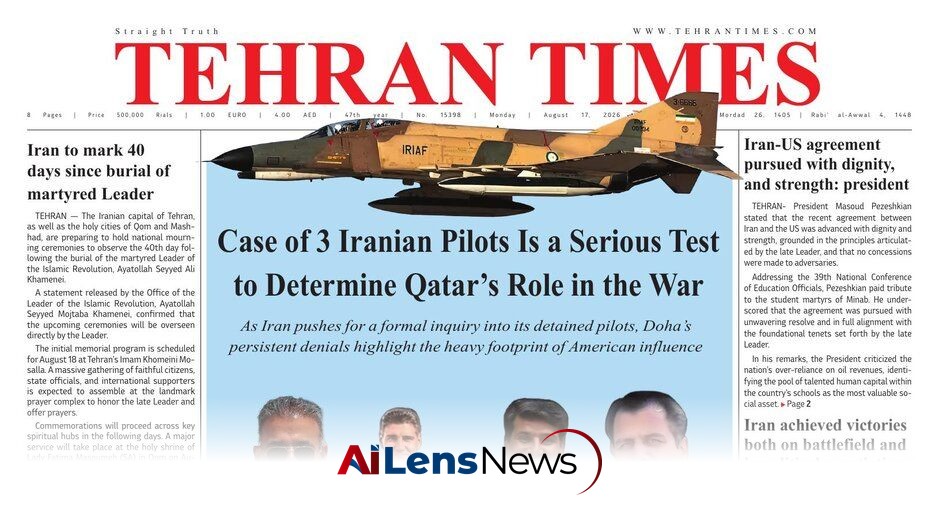


Iran commemorates 40 days since the burial of its martyr leader, reflecting on regional tensions and the implications of the ongoing conflict.
Tehran, Iran Aug 17, 2026 ALN: Iran is poised to commemorate 40 days since the burial of its martyr leader, an event that holds significant weight in the context of the country's ongoing geopolitical tensions. This commemoration not only serves as a moment of reflection on the leader's contributions but also acts as a rallying point for supporters of the current regime. As Iran finds itself at a crossroads, grappling with various challenges, this event is expected to attract large crowds, highlighting the enduring influence of the martyr leader's legacy on the nation's identity and politics.
The ceremony is anticipated to feature speeches from prominent officials, including government leaders and military figures, who will articulate the implications of the martyr leader's legacy on Iran's foreign policy and military strategies. This gathering is more than just a memorial; it is a strategic opportunity for the Iranian government to reinforce its narrative, galvanizing public support amidst the challenges posed by external pressures.
As Iran reflects on its past, the nation is also facing increased scrutiny concerning its role in various regional conflicts. The Middle East has been a hotbed of geopolitical tension, with Iran's influence often at the center of these disputes. Analysts suggest that this commemoration may serve as a platform for the Iranian government to reaffirm its stance against perceived external threats, particularly from the United States and its allies. The timing of this event is critical, as it coincides with ongoing discussions about Iran's nuclear program, military engagements in Syria, and its support for proxy groups throughout the region.
In recent years, the geopolitical landscape of the Middle East has undergone significant transformation. Iran's involvement in conflicts in Iraq, Syria, and Yemen has drawn the ire of several nations, particularly those in the Gulf Cooperation Council (GCC). The commemoration may be leveraged by Iranian officials to articulate a narrative of resilience and strength in the face of adversity, emphasizing the need for national unity against foreign intervention.
In light of recent developments, the case of three Iranian pilots has emerged as a serious test of Qatar's role in the ongoing regional conflicts. The pilots' situation has sparked discussions about Qatar's relationships with both Iran and the United States, as well as its position within the broader context of Middle Eastern politics. This inquiry reflects the intricate web of alliances and rivalries that characterize the region, complicating diplomatic efforts and regional stability.
The upcoming commemoration not only marks a pivotal moment in Iran's recent history but also serves as a reminder of the ongoing challenges the nation faces. As Iran navigates its path forward amid mounting international scrutiny and regional instability, the legacy of its martyr leader will undoubtedly influence its strategies and policies in the turbulent landscape of the Middle East. The event is likely to resonate beyond Iran's borders, as it reflects broader themes of resistance, national identity, and the complexities of diplomacy in a region marked by conflict and competition.
In conclusion, as the commemoration unfolds, it will be essential to observe how the Iranian leadership utilizes this occasion to project strength and unity. The implications of this event will extend into Iran's foreign policy decisions and its approach to regional security challenges, shaping not only the nation's trajectory but also the broader dynamics of power in the Middle East.
To learn more about the latest developments in World News & International Affairs, stay updated with our exclusive reports and analyses on AiLensNews.

