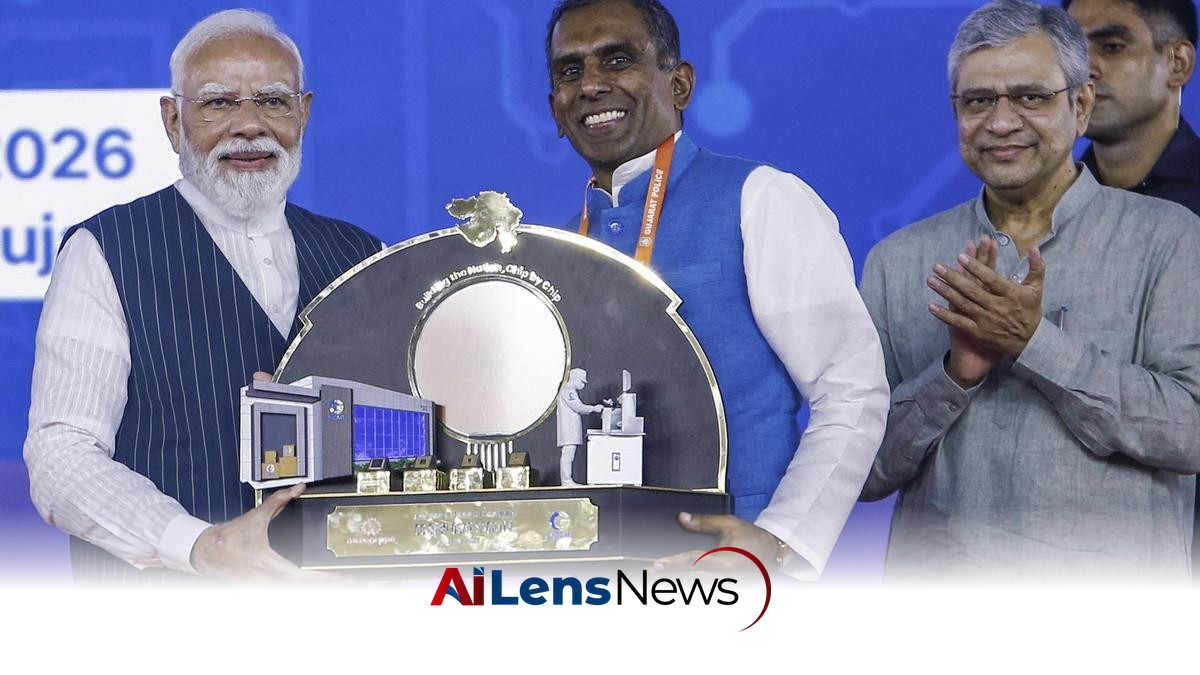


PM Modi inaugurates a semiconductor facility in Gujarat, emphasizing job creation and economic transformation in India's tech landscape.
New Delhi, India Jul 5, 2026 ALN: Prime Minister Narendra Modi on Saturday (June 4, 2026) stated that India is establishing semiconductor clusters across the country, marking the beginning of large-scale employment and economic transformation. He emphasized that the nation is developing the entire electronics value chain, from products and components to semiconductors, which will serve as the roadmap for Viksit Bharat, a vision for a developed India by the year 2047, coinciding with the centenary of India's independence. This ambition reflects a broader strategy to position India as a global manufacturing hub, particularly in high-tech sectors like semiconductors, which are crucial for modern electronics.
Modi noted that semiconductor clusters are emerging not only in Sanand but at multiple locations nationwide. This initiative is part of a concerted effort by the Indian government to reduce reliance on foreign semiconductor imports and to foster domestic production capabilities. The semiconductor industry is pivotal as it underpins a wide array of technologies, from consumer electronics to advanced computing systems, and even critical infrastructure.
During the inauguration of the CG Semi Outsourced Semiconductor Assembly and Test (OSAT) facility in Gujarat’s Sanand, he mentioned that India’s youth would drive the artificial intelligence, robotics, and next-generation technology revolution with Made-in-India chips. The emphasis on youth is significant, as the government seeks to harness the potential of a young population, which constitutes a large percentage of India's demographic. By encouraging young innovators and engineers, the government aims to build a skilled workforce that can compete in the global semiconductor market.
The Prime Minister highlighted that the plant reflects the government’s vision of “Design in India” and “Make in India.” He recalled laying the foundation stone for the project in 2024, with chip testing commencing in August 2025, and commercial production now underway. This timeline illustrates the rapid development of the semiconductor industry in India, which has historically lagged behind other countries in this critical sector.
Mr. Modi urged the youth of India to seize the opportunities presented by the upcoming era of artificial intelligence. “The youth of India should not lose this opportunity. I want to tell the youngsters of the country: ‘Your ideas, my support,’” he stated. This call to action is aimed at inspiring a generation to engage in technological innovation and entrepreneurship, which are essential for driving economic growth and competitiveness.
He explained that the expansion of the semiconductor industry in India has not happened overnight. “It is the next step in the electronics revolution that has taken place in India over the past decade,” he said, as he was presented with the first semiconductor chips made at the facility, which are set to be exported to Japan. The mention of exports is particularly noteworthy as it highlights India's aspirations to not only meet domestic demand but also to become a player in the global semiconductor supply chain.
He reflected on the IT revolution that created opportunities for millions of Indians to showcase their talents, followed by the smartphone and electronics manufacturing boom, which opened new avenues for employment and innovation. “Now, the world is entering the era of semiconductors and artificial intelligence revolution that will create opportunities for countless people,” he added. The Prime Minister's remarks underscore the interconnectedness of these technological advancements and their cumulative impact on the economy.
The CG facility is part of the India Semiconductor Mission and will focus on the assembly, packaging, and testing of semiconductor chips. The company plans to supply chips to customers both in India and abroad. Modi noted that the project was developed in partnership with companies from Thailand and Japan, describing it as a model of technology, trust, and collaboration that would bolster India’s semiconductor sector. This collaboration with inter partners is crucial for technology transfer and skill development, which can enhance India's capabilities in semiconductor manufacturing.
He reiterated the government’s goal to establish a complete semiconductor ecosystem in India, encompassing chip design, fabrication, and packaging. “I’m informed that this unit has the capacity to manufacture 20 crore chips annually and that the company aims to scale up production to more than 500 crore chips a year, which means 1.5 crore chips per day,” he stated, expressing confidence that the company would achieve its target progressively “step-by-step, brick-by-brick, and chip-by-chip.” This ambitious production target reflects the government's commitment to making India a significant player in the semiconductor market, which is currently dominated by countries like Taiwan and South Korea.
Modi characterized the project as a “success story” and a “revolution.” He highlighted the involvement of many women employees from rural areas who completed their ITI training and are now working at the plant. Many of these women had never visited major cities like Delhi or Mumbai and had never held a passport before traveling to Malaysia for training. “They learnt advanced semiconductor manufacturing techniques there and are now part of India’s chip manufacturing sector,” he noted. This aspect of the project emphasizes not only the economic impact but also the social implications of empowering women through skill development and employment opportunities in high-tech industries.
Referring to the recent manufacture and flight of the C-295 aircraft from Vadodara, the Prime Minister remarked that India has progressed from celebrating the arrival of bicycle manufacturers to manufacturing aircraft, although this development has not received much media attention. This comparison serves to illustrate the significant advancements in India's manufacturing capabilities across various sectors, showcasing the transformation from a primarily import-dependent economy to one that is increasingly self-reliant.
Stressing the country’s manufacturing growth, Modi pointed out that India has transformed from an importer of mobile phones to one of the world’s leading manufacturers and exporters. He emphasized that India is now the second-largest mobile phone manufacturer and exporter globally. “I do not keep my vision small. My aspirations are always big. Even when I dream of a statue, I dream of creating the world’s tallest statue,” he said, referring to the Statue of Unity in Gujarat. This statement reflects Modi's broader vision for India's growth trajectory, which encompasses not only technological advancements but also cultural and pride.
He concluded by stating that the government’s focus on ease of doing business is fostering an environment for industrial growth. He encouraged the industry to set ambitious goals, asserting that even if targets are missed, the country should continue striving to progress. This emphasis on ambition and resilience is crucial for navigating the challenges that come with rapid industrialization and technological change.
“The work being carried out in the sector will speak for itself and contribute to the goal of Viksit Bharat-2047,” Mr. Modi added. The Prime Minister's vision for a developed India by 2047 hinges on the successful implementation of initiatives like the semiconductor mission, which is expected to create jobs, stimulate economic growth, and enhance India's position in the global technology landscape. As the government continues to invest in infrastructure, education, and innovation, the semiconductor industry is poised to play a critical role in shaping the future of India's economy and its global standing.
To learn more about the latest developments in Technology in News, stay updated with our exclusive reports and analyses on AiLensNews.

