

India emphasizes a comprehensive approach to the Teesta issue, considering developments after Bangladesh PM's visit to China.
New Delhi, India Jul 4, 2026 ALN: Days after Bangladesh Prime Minister Tarique Rahman visited China, where the two sides discussed the Teesta River Comprehensive Management and Restoration Project (TRCMRP), India on Friday (July 3, 2026) stated that its development assistance to projects in Bangladesh operates on a basis of a mutually agreed roadmap. India will consider all related developments in formulating an overall approach to the Teesta river-related project.
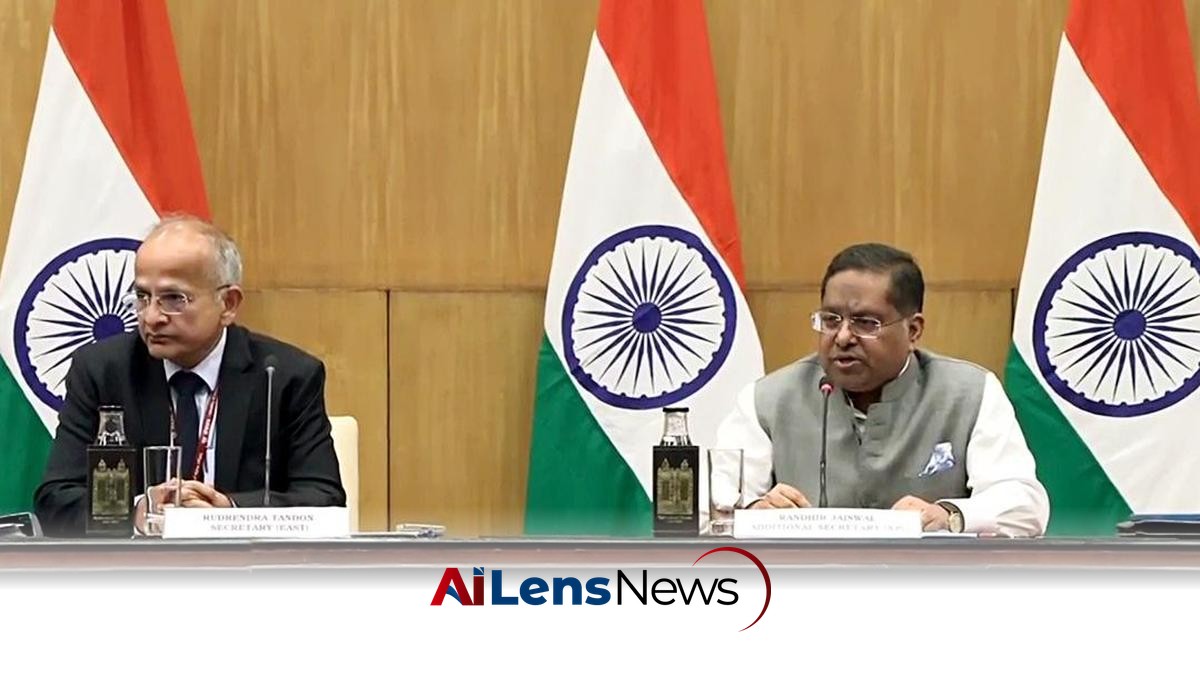
The issue arose during a press briefing by Ministry of External Affairs (MEA) official spokesperson Randhir Jaiswal, who responded to a question regarding whether the Bangladesh-China decision to pursue a feasibility report on TRCMRP would affect India’s projects in Bangladesh. Mr. Jaiswal acknowledged the importance of the Teesta River in the context of bilateral relations and emphasized that India remains committed to its development partnership with Bangladesh.
“India’s development assistance for projects in Bangladesh is based on a mutually agreed roadmap, which is regularly reviewed. Our views on the Teesta river project have been previously conveyed to the Bangladesh side. We will factor all related developments in our overall approach to the Teesta issue,” stated Mr. Jaiswal. This statement underscores India’s intent to maintain a collaborative approach while being cognizant of changing geopolitical dynamics.
Officials later clarified that India’s statement did not express any displeasure regarding Bangladesh’s decision to engage in discussions about the Teesta project with China. They emphasized that India-Bangladesh ties are based on their own merits. The sharing of Teesta river water has been a topic of discussion between India and Bangladesh for decades, but since 2011, the two nations have been at a stalemate regarding an agreement. The historical context of this stalemate is rooted in the differing priorities and development needs of both countries, which have made finding common ground challenging.
The Teesta River, which flows through India and Bangladesh, is crucial for the livelihoods of millions of people in both countries. It is particularly significant for Bangladesh, where agriculture relies heavily on the river's water. The river is vital for irrigation, drinking water, and fisheries, making it a key resource for the Bangladeshi economy. However, the river also faces challenges such as climate change, pollution, and over-extraction, which have exacerbated tensions over water sharing between the two nations. These environmental concerns have been compounded by the increasing frequency of extreme weather events, which have raised questions about the sustainability of current water management practices.
Bangladesh initiated discussions with China on constructing a restoration and management project along the river during Sheikh Hasina’s tenure as Prime Minister. The TRCMRP aims to address various aspects of the river’s management, including flood control, irrigation, and sustainable development, which are critical for Bangladesh's ongoing efforts to manage its water resources effectively. This move has been interpreted as a strategic pivot by Bangladesh towards diversifying its inter partnerships, particularly in the face of perceived inaction from India regarding the Teesta issue.
In 2024, India shared its plans concerning the river with Ms. Hasina during a visit by then-Foreign Secretary Vinay Kwatra to Dhaka. This was part of India’s broader strategy to engage with Bangladesh on water-sharing issues, and it reflected India's commitment to regional cooperation. In June of that year, Ms. Hasina visited India, during which a joint statement indicated that India would provide assistance for the conservation and management of the Teesta river within Bangladesh. This cooperation was seen as a positive step towards resolving long-standing disputes over water sharing, yet the political landscape in Bangladesh shifted dramatically thereafter.
However, following a public uprising in August 2024 that led to Ms. Hasina’s government being toppled, discussions ceased during the subsequent 15-month-long interim government. The political instability in Bangladesh raised concerns about the continuity of water management projects and the overall bilateral relationship with India. During this interim period, the focus shifted from collaborative projects to domestic political issues, which further complicated the dialogue on the Teesta river. The interim government's lack of a clear mandate and its focus on internal governance issues made it difficult to engage in meaningful discussions with India on water-sharing agreements.
While the Teesta issue has garnered attention during Tarique Rahman’s recent visit to China, there are other significant matters in India-Bangladesh relations that require urgent consideration. Diplomats have pointed out that the renewal of the Ganga water treaty is one such issue that needs immediate attention, as the agreement must be renewed by December 31 of this year. The Ganga water treaty, which governs the sharing of water from the Ganges River, is crucial not only for India and Bangladesh but also for the ecological health of the river basin. The treaty has been instrumental in fostering cooperation and understanding between the two nations, and its renewal is seen as a critical step in maintaining the momentum of bilateral relations.
The Ganges River, like the Teesta, is a lifeline for millions of people in both countries, providing water for drinking, irrigation, and industry. The treaty, initially signed in 1996, has been a cornerstone of water-sharing arrangements between India and Bangladesh. Its renewal is vital to ensure continued cooperation on water management, especially in the face of climate change, which poses significant risks to water availability and quality in both nations. The potential impacts of climate change on river flows and water quality highlight the need for adaptive management strategies that can respond to changing environmental conditions.
Moreover, the geopolitical landscape surrounding water resources in South Asia is becoming increasingly complex. With China’s growing influence in the region, particularly through its investments and infrastructure projects in Bangladesh, India is keen to maintain its historical ties and influence over its neighbor. The Teesta River issue, therefore, is not just about water sharing; it is also about regional power dynamics and the broader implications for India-Bangladesh relations. India's concerns about China's involvement in Bangladesh are amplified by the strategic importance of water resources, which are increasingly viewed as tools of geopolitical leverage.
India's approach to the Teesta situation reflects its broader foreign policy strategy, which emphasizes cooperation and mutual benefit. By reiterating its commitment to a mutually agreed roadmap, India aims to reassure Bangladesh of its intentions while also signaling its awareness of other players, such as China, in the region. The diplomatic balancing act is crucial as both countries navigate their interests and challenges in an increasingly interconnected world. India's strategy also involves engaging with regional organizations and multilateral forums to address transboundary water issues collectively.
In conclusion, the Teesta River issue remains a significant and sensitive topic in India-Bangladesh relations. As both nations move forward, the need for dialogue and cooperation will be essential to address the challenges posed by water scarcity, climate change, and political shifts. The outcome of this situation will not only impact bilateral relations but also have broader implications for regional stability and cooperation in South Asia. The future of water-sharing agreements in the region will depend on the ability of both countries to navigate their respective interests while fostering a spirit of collaboration that prioritizes sustainable water management and ecological preservation.
To learn more about the latest developments in World News & International Affairs, stay updated with our exclusive reports and analyses on AiLensNews.

