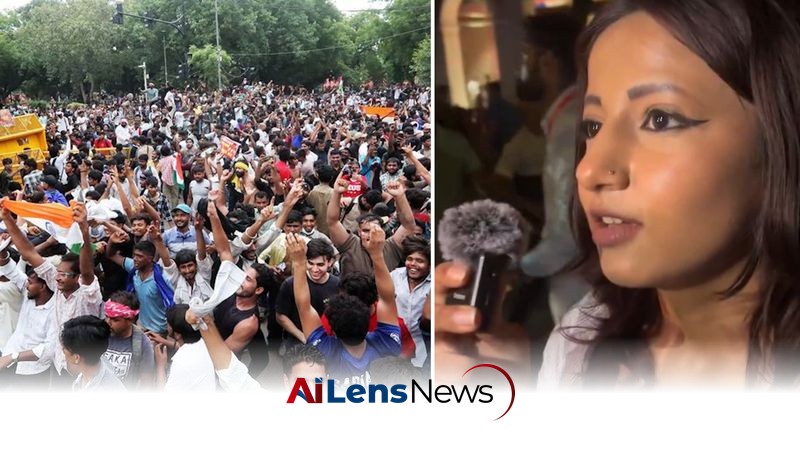


Ruchika Singh faces legal action for remarks made during a protest organized by the Citizens for Justice and Peace, where she criticized PM Modi and Italian PM Giorgia Meloni.
New Delhi, India Jul 31, 2026 ALN: A 25-year-old woman, Ruchika Singh, has been booked for making derogatory remarks against Prime Minister Narendra Modi during a protest organized by the Citizens for Justice and Peace (CJP) on July 23. The protest, which drew significant attention, was aimed at addressing various social issues affecting marginalized communities in India, including concerns over governmental policies, social justice, and human rights. The CJP has been known for its advocacy work, focusing on issues such as communal harmony, justice for victims of violence, and the protection of civil liberties.
Singh's comments, which included criticisms of Modi's policies, were captured in a video that has since gone viral on social media platforms. In the footage, she also mentioned Italian Prime Minister Giorgia Meloni, drawing parallels between their leadership styles. This comparison has sparked discussions about the nature of political leadership in contemporary democracies, particularly in relation to populism and governance strategies employed by leaders in different countries. The mention of Meloni, who has been associated with right-wing politics in Italy, raises questions about the global trend of populism, where leaders often appeal to nationalist sentiments and prioritize their political agendas, sometimes at the expense of democratic norms and civil liberties.
The police have stated that Singh's remarks could incite public unrest, leading to her being charged under various sections of the Indian Penal Code. Authorities are investigating the context of her statements to determine the extent of legal action required. This situation raises significant questions about the balance between maintaining public order and safeguarding the right to free speech, a fundamental aspect of democratic societies. The Indian Penal Code includes provisions that address hate speech and incitement to violence, which the authorities may invoke in this case. However, the application of these laws often leads to debates about their interpretation and the potential for misuse against dissenters.
The protest itself was part of a larger movement advocating for justice and equality, with participants voicing concerns over governmental policies and their impact on marginalized communities. This movement, which has gained traction in recent years, reflects a growing discontent among various segments of the population regarding issues such as economic inequality, caste discrimination, and the treatment of religious minorities. The CJP and similar organizations have mobilized citizens to raise awareness and push for policy changes that address systemic injustices and ensure equal rights for all individuals, regardless of their background.
Singh's comments, while controversial, have sparked discussions about freedom of speech and the limits of political criticism in India. The legal framework surrounding freedom of expression in India is complex, with the Constitution guaranteeing the right to free speech under Article 19. However, this right is subject to certain restrictions, particularly in cases where speech is deemed to threaten public order, incite violence, or defame individuals. The challenge lies in navigating these restrictions while ensuring that legitimate political discourse is not stifled. Activists argue that the government must recognize the importance of dissent as a critical component of democracy, where citizens should feel empowered to voice their opinions without fear of reprisal.
Supporters of Singh argue that her right to express dissent should be protected, emphasizing that criticism of political leaders is a vital component of a healthy democracy. They contend that the ability to voice dissenting opinions is essential for holding leaders accountable and fostering an environment where diverse viewpoints can be expressed without fear of retribution. This sentiment is echoed by many civil society organizations that advocate for human rights and democratic freedoms, asserting that a robust democracy thrives on open dialogue and the exchange of ideas, even when they are critical of those in power.
On the other hand, critics believe that such remarks can undermine public order, especially in a politically charged environment where tensions are high. They argue that inflammatory comments can exacerbate divisions within society and lead to potential violence or unrest, particularly in a country as diverse and populous as India. The fear of escalating tensions is not unfounded, as India has a history of communal violence and social unrest that can be triggered by provocative statements or actions. This concern often leads to calls for a more cautious approach to political discourse, particularly in public forums.
The incident highlights the ongoing tensions surrounding political discourse in the country. In recent years, there have been numerous instances where individuals have faced legal repercussions for their comments about government officials or policies. This trend has raised concerns among activists and civil society organizations about the shrinking space for dissent and the potential chilling effect on free speech in India. The rise of social media has further complicated this landscape, as platforms have become battlegrounds for political expression, but also for censorship and surveillance by authorities.
As the situation develops, many are watching closely to see how authorities will handle the case and what implications it may have for future protests and expressions of dissent. The outcome could set a precedent for how similar cases are treated in the future, potentially influencing public perceptions of the government's stance on free speech and political criticism. Legal experts and civil rights advocates are particularly interested in whether the judiciary will uphold the principles of free expression or yield to pressures for maintaining public order.
Moreover, this incident comes at a time when India is experiencing heightened scrutiny over its democratic processes and human rights practices. International observers have noted a concerning trend regarding the treatment of dissenters and the increasing use of laws to stifle free expression. As such, how the government responds to Singh's case may not only affect domestic political dynamics but could also impact India's standing on the global stage, particularly in relation to its commitments to uphold democratic values and human rights. The international community often looks to India as the world's largest democracy, and any perceived erosion of democratic norms can lead to diplomatic repercussions and calls for accountability.
In conclusion, the case against Ruchika Singh is emblematic of broader societal debates in India regarding the limits of free speech, the role of dissent in democracy, and the responsibilities of citizens in expressing their political views. As discussions continue, it is crucial for all stakeholders to engage in a constructive dialogue that respects the rights of individuals while also considering the implications for social cohesion and public order. The balance between protecting free speech and ensuring public safety is a delicate one, and the resolution of this case may serve as a critical touchstone for the future of political expression in India.
To learn more about the latest developments in Crime & Law, stay updated with our exclusive reports and analyses on AiLensNews.

