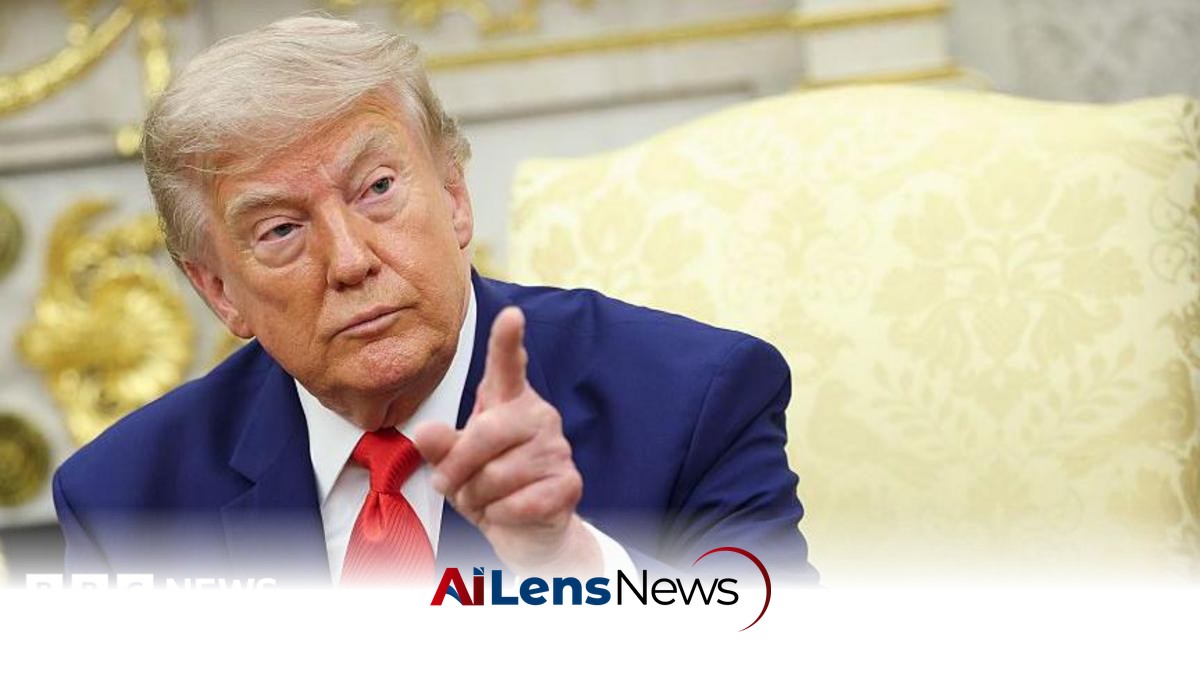


The US has announced new tariffs targeting around 60 trading partners, citing failures to address forced labour in their supply chains.
New Delhi, India Jul 24, 2026 ALN: The US is imposing new tariffs on around 60 trading partners accounting for the vast majority of its imports over claims they failed to properly stop forced labour.
The duties, ranging from 10% to 12.5%, target key economic partners – including the UK, China, EU, Canada, Japan, and India. They come in on Friday, as a temporary 10% tax on foreign goods introduced earlier this year expires.
This recent decision marks a significant development in the ongoing discourse surrounding trade practices and human rights, specifically the issue of forced labour. Forced labour refers to any work or service that people are coerced into performing against their will, often under the threat of punishment. The International Labour Organization (ILO) estimates that there are millions of victims of forced labour worldwide, including in industries such as agriculture, construction, and manufacturing.
The imposition of these tariffs is part of a broader strategy by the US government to hold countries accountable for labor practices that violate human rights. The move is the latest escalation in the global trade war reignited by US President Donald Trump when he returned to office last year. Under his administration, there has been a renewed focus on protecting American workers and ensuring that foreign competitors adhere to fair labor standards.
Earlier this year, the US Supreme Court ruled that many of the tariffs imposed globally under emergency powers were illegally enacted. This ruling has compelled the Trump administration to seek alternative legal avenues to pursue its flagship trade policy, leading to the invocation of different sections of US trade law.
In light of these developments, it was last month that the White House first proposed a series of 10-12.5% duties on goods arriving to American shores from dozens of countries over concerns they were not doing enough to tackle forced labour. On Thursday, US Trade Representative Jamieson Greer, acting under Trump's direction, announced that those duties would now take effect.
In his statement, Greer emphasized the dual nature of the tariffs, saying, "Today's action will begin to correct what is both a human rights abuse and distortive trade practice to improve the welfare of workers everywhere." This statement reflects the administration's commitment to intertwining trade policy with human rights advocacy, a stance that has received mixed reactions from various stakeholders.
Greer invoked Section 301 of the Trade Act of 1974, which governs US trade enforcement of practices that burden or restrict American commerce. This section has historically been used to address unfair trade practices, and its invocation in this context underscores the administration's intent to leverage trade policy as a tool for promoting ethical labor standards globally.
Earlier this week, the Trump administration also invoked a different statute, Section 338 of the Tariff Act of 1930, to impose 50% tariffs on products from Canada, further illustrating the aggressive stance the administration is taking toward trade relations. This move has already sparked concerns among Canadian officials and businesses, who are now assessing the potential impacts on their economy.
On Thursday, the Office of the US Trade Representative stated that the latest tariffs were being imposed on partners "for their failure to impose and effectively enforce a prohibition on the importation of goods produced with forced labour." The new duties apply to the top 60 US trade partners covering 99.4% of US imports, indicating the broad scope of the administration's approach.
The office also noted that Trump, in his second term, had made the adoption of a ban on imports made with forced labour a "critical" part of reciprocal trade agreements with other nations. This indicates a strategic shift in how the US is negotiating trade deals, prioritizing ethical labor practices alongside economic considerations.
So far, 10 trading partners have agreed to enact such a ban as part of these agreements, while other countries have begun to enact similar bans in response to US investigations in recent weeks. This suggests that the US's actions may be influencing international norms regarding forced labour, potentially leading to broader global changes in labor practices.
Trading partners that have "made commitments to adopt, and effectively enforce" bans on forced labour imports will be subject to a 10% tariff, while those that have not will face the higher 12.5% rate. This tiered approach reflects an attempt to incentivize compliance while penalizing non-compliance, although it may also create tensions between the US and its trading partners.
Greer expressed optimism about the progress made by some trading partners, stating he was "encouraged by the trading partners who have moved quickly to adopt forced labour import prohibitions, and look forward to ensuring their effective enforcement." This statement highlights the administration's focus on collaboration and enforcement, although it remains to be seen how effectively these measures can be implemented.
Trump has consistently argued that import taxes will create more US manufacturing jobs and boost the American economy. However, this assertion is met with skepticism from many economists, who warn that higher tariffs can lead to increased prices for everyday goods, such as coffee and microwaves. Because tariffs are typically paid by importing companies, those businesses often pass the extra costs on to consumers, potentially negating any economic benefits from job creation.
Furthermore, the president has also used the duties to press other countries on non-trade issues, such as labor rules, indicating a willingness to leverage trade policy as a means of influencing broader geopolitical dynamics. The White House insists that the tariffs are necessary to protect American workers and ensure fair competition, but the implications of this approach are complex and multifaceted.
Business groups and affected countries are expected to push back against the tariffs, highlighting concerns about the potential for a trade war and the economic ramifications of such a conflict. Many trading partners are already weighing potential legal challenges or retaliatory duties in response to the US's actions, which could further escalate tensions in international trade relations.
In anticipation of further developments, the administration is also preparing for additional action. The US trade representative is currently investigating 16 countries – accounting for the vast majority of US imports – over claims of manufacturing overcapacity, which could pave the way for additional duties later this year. This ongoing scrutiny underscores the administration's commitment to a rigorous enforcement of trade policies, although it also raises questions about the long-term sustainability of such an approach in an increasingly interconnected global economy.
To learn more about the latest developments in Economy, stay updated with our exclusive reports and analyses on AiLensNews.

