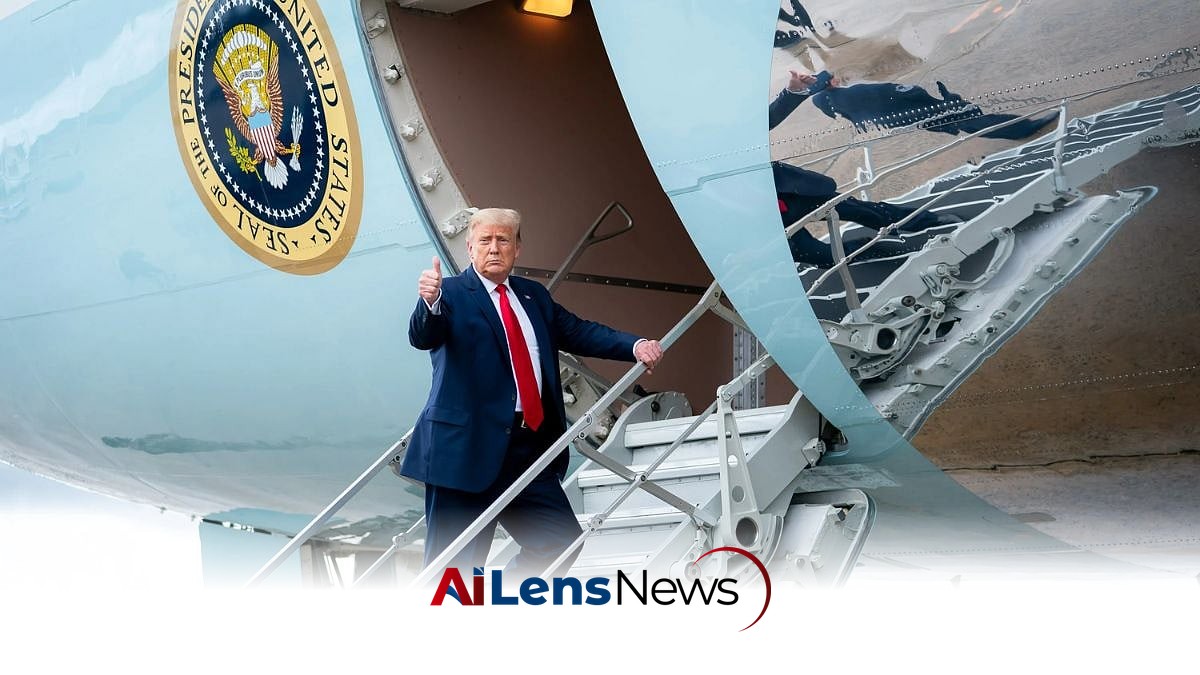


US intelligence warned of a potential Iranian missile attack on Donald Trump's aircraft, leading to a secretive evacuation during his Turkey visit.
New Delhi, India Aug 13, 2026 ALN: The covert operation that involved US President Donald Trump changing aircraft in Turkey last month was reportedly triggered by a significant security threat. US intelligence agencies had obtained information suggesting that Iran could launch a missile attack against the aircraft carrying Trump, according to a report by The New York Times.
The warning came on July 8, as Trump was preparing to depart Ankara on the final day of the NATO summit. The NATO summit, a critical gathering for the alliance's member nations, often serves as a platform for leaders to discuss pressing global security issues and strengthen diplomatic ties. Given the geopolitical tensions involving Iran, the security of high-profile attendees, such as the President of the United States, remains a paramount concern.
Two US officials familiar with the intelligence told the newspaper that American agencies had received several pieces of information indicating a specific threat involving a surface-to-air missile aimed at Air Force One. The potential for such an attack underscores the vulnerabilities that exist even for the most secure aircraft in the world. Surface-to-air missiles, particularly those that are portable, pose a significant risk in scenarios where the aircraft is operating in or near hostile territories.
The situation was further complicated by reports that an individual near the NATO summit had been spotted with a shoulder-fired missile. This alarming sighting raised the stakes for US security personnel, necessitating a rapid reassessment of Trump’s safety protocols. The presence of such weaponry in the vicinity of a major international event highlights the persistent threat of terrorism and the need for heightened vigilance in security operations.
US intelligence also assessed that Iranian operatives were aware of Trump's precise location in Ankara, including the floor of the building where he was staying. This level of situational awareness among hostile actors is particularly concerning, as it indicates a sophisticated intelligence capability and the potential for coordinated actions against high-profile targets.
The intelligence was deemed credible enough for US authorities to undertake an elaborate deception operation designed to safely move the president out of Turkey. This operation reflects the complexities involved in protecting a sitting president, especially in regions where tensions are high and adversarial groups may seek to exploit vulnerabilities.
Before his departure, Trump had publicly said he would fly out of Turkey on the older Air Force One "for old time's sake." This statement was likely intended to convey a sense of normalcy and continuity, which is often essential for maintaining public confidence in leadership during tumultuous times. However, the subsequent actions taken by security forces reveal the underlying gravity of the situation.
He subsequently boarded the aircraft in full view of cameras, reinforcing the impression that he would leave Turkey on that plane. However, the public departure was reportedly part of the security ruse. The use of misdirection in this case exemplifies the lengths to which security agencies will go to ensure the safety of a president, particularly when credible threats are present.
Once the aircraft took off carrying White House officials, security personnel, support staff, and members of the traveling press corps, Trump was reportedly transported through the airport concealed inside a catering container. This unconventional method of transport underscores the urgency and seriousness of the threat, as well as the innovative tactics employed by security forces to mitigate risk.
He was later moved onto a smaller military aircraft, which carried him out of Turkey. The use of a smaller, less conspicuous aircraft is a common practice in high-risk situations, allowing for a more agile response to potential threats.
The deception meant journalists traveling with Trump were unknowingly involved in the operation. Some reporters subsequently criticized the White House, saying they were used as decoys and should have been informed about the security threat. This raises important questions about the balance between national security and transparency, particularly regarding the media’s role in covering presidential activities. The ethical implications of involving journalists in such operations warrant further discussion, as the relationship between the press and the government is crucial in a democratic society.
Trump, meanwhile, appeared to downplay the reported danger when questioned about the unusual arrangement on Tuesday after returning from an event in Ohio. His response may reflect a broader strategy to maintain a sense of control and stability amid reports of threats, as public perception of safety is vital for any leader.
He said the Secret Service and military authorities had decided that he should use another aircraft and indicated that the decision was largely outside his control. This highlights the complex interplay between presidential authority and the recommendations of security personnel, who often operate under a different set of imperatives focused on safety and risk management.
"They wanted me to go on a different flight, different plane," Trump told reporters. "I guess there was a threat out there. I didn't really ask too much about it," he said. "I get a lot of threats." This statement illustrates the reality that high-profile political figures often live under the constant shadow of potential threats, which can come from various sources, including foreign adversaries, domestic extremists, and other unpredictable entities.
The incident also raises broader concerns about the implications of international relations, particularly regarding US-Iran tensions. The ongoing complexities of geopolitics in the Middle East continue to shape the security landscape for US officials abroad. Iran's regional ambitions and its history of hostile actions against perceived adversaries contribute to an environment where such threats are taken seriously.
In conclusion, the covert evacuation of President Trump from Turkey serves as a stark reminder of the vulnerabilities faced by leaders in high-stakes environments. The incident underscores the importance of robust intelligence operations, rapid response capabilities, and the delicate balance between transparency and security in the realm of political leadership. As the global landscape continues to evolve, the need for effective security measures and diplomatic strategies will remain paramount in safeguarding national interests and ensuring the safety of public figures.
To learn more about the latest developments in Crime & Law, stay updated with our exclusive reports and analyses on AiLensNews.

