

More
Checking your session
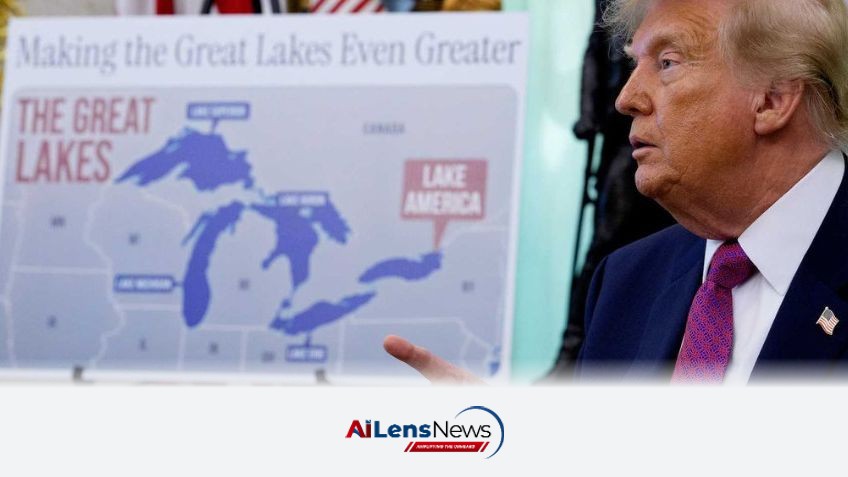



In a recent executive order, President Trump has directed the federal government to rename Lake Ontario as 'Lake America', emphasizing its economic significance.
New Delhi, India Aug 28, 2026 ALN: US President Donald Trump has ordered the federal government to rename Lake Ontario as “Lake America,” citing its economic importance and what he described as the United States’ leading role in protecting the Great Lakes. This executive order is part of a broader initiative by the Trump administration to emphasize American sovereignty and leadership over natural resources, especially those that have significant economic implications.
The executive order directs the US interior secretary to complete the renaming process within 30 days in coordination with the federal Board on Geographic Names. This board is responsible for maintaining uniformity in the naming of geographic features in the United States, and its involvement underscores the administration's commitment to formalizing the name change at the federal level.
This change applies to US federal usage of the name. Lake Ontario is shared by the United States and Canada, with the international border running through the lake. The renaming initiative raises questions about cross-border relations, particularly with Canada, as it may be perceived as a unilateral decision that disregards the shared nature of the lake. Historically, the relationship between the two countries has been characterized by cooperation, especially regarding the management of shared water resources.
“The United States is the greatest protector of the Great Lakes, including the body of water currently known as Lake Ontario,” Trump stated in the order. His assertion reflects a long-standing narrative in American politics that emphasizes the nation’s role in environmental stewardship and resource management. The Great Lakes, which encompass Lakes Superior, Michigan, Huron, Erie, and Ontario, are vital to both countries, providing drinking water, recreation, and economic opportunities.
“Without the security and investment provided by the United States, this freshwater system would not be open for shipping, recreation, and responsible use to the same extent as it is today,” he added. This statement underscores the administration's focus on economic development and infrastructure, particularly in regions that rely heavily on shipping and transportation routes provided by the Great Lakes.
Trump highlighted that the US Coast Guard operates nine of the 11 ice-breaking vessels on the Great Lakes and maintains commercial shipping lanes without charge. This operational detail not only emphasizes the United States' commitment to maintaining safe navigation in these waters but also reflects the significant federal investment in the infrastructure necessary to support economic activities in the region.
He also noted that the United States has invested nearly $4 billion in protecting the Great Lakes freshwater ecosystem over the past decade, while Canada has invested “far less” in similar programs. The absence of specific Canadian investment figures in the order could lead to further scrutiny and discussions about funding priorities and environmental responsibilities between the two nations.
Trump asserted that the deepest parts of the lake are within US territory and claimed that the United States holds most of its water volume. This territorial claim is significant because it reinforces the administration's narrative of American dominance over natural resources, but it also opens the door to potential disputes about water rights and usage agreements with Canada.
The order described the lake as an integral part of American exploration, settlement, commerce, and defense. This historical perspective is crucial in understanding the cultural significance of Lake Ontario to the United States. It cited the role of Oswego, New York, as a historic fort and the first US port of call from the St. Lawrence Seaway, as well as shipbuilding and naval operations at Sackets Harbor during the War of 1812. These historical references not only bolster the argument for renaming the lake but also serve to invoke a sense of national pride and identity.
The White House stated that the broader Great Lakes-St Lawrence Seaway system supports hundreds of thousands of American jobs and generates billions of dollars in economic output, cargo value, and business revenue. This economic argument is central to the administration's rationale for the name change, as it links the lake's identity directly to American prosperity and job creation.
This system carries iron ore, limestone, coal, agricultural products, and other bulk commodities. The emphasis on the economic implications of the Great Lakes highlights their importance as a transportation network that facilitates trade and supports local economies in surrounding areas.
Additionally, water from the lake is utilized by nuclear, natural gas, and oil-fired power plants and supplies drinking water to nearby communities, according to the order. This multifaceted use of Lake Ontario further complicates the implications of its renaming, as it could affect how various stakeholders perceive and interact with the resource.
“The Lake will continue to play a pivotal role in shaping America’s future and the global economy,” Trump remarked. This statement reflects a broader vision of America’s role in the world, positioning the nation as a leader in resource management and economic development.
“In recognition of this flourishing economic resource and its critical importance to our Nation’s economy and its people, I am directing that the Lake officially be renamed as Lake America,” he added. The choice of the name “Lake America” is indicative of a trend in recent years toward nationalistic branding of natural resources, which some critics argue could undermine collaborative efforts in environmental protection.
The interior secretary and the Board on Geographic Names must update the Geographic Names Information System and remove references to Lake Ontario from that federal database. This procedural step is essential to ensure that the new name is officially recognized in all federal documents and communications.
The board is also required to issue guidance mandating executive departments and federal agencies to use “Lake America” on maps, contracts, documents, and official communications. This directive reinforces the administration’s commitment to the name change and its implications for federal operations.
However, the order does not direct Canada, the province of Ontario, international organizations, or private map providers to adopt the new name. This limitation highlights the challenges of implementing a name change for a shared body of water and raises questions about the effectiveness of the order in achieving its intended goals. It also indicates a recognition of the complexities involved in international naming conventions and the potential for diplomatic friction.
It also states that the change must be implemented in accordance with existing law and available funding. This clause suggests that while the administration is pushing for the name change, practical considerations could influence the timeline and extent of its implementation.
Lake Ontario is the easternmost and smallest by surface area of North America’s five Great Lakes. It is bordered by New York state to the south and east and the Canadian province of Ontario to the north, west, and southwest. Its waters flow into the St. Lawrence River before reaching the Atlantic Ocean. The geographical significance of Lake Ontario as a crucial link in the Great Lakes-St. Lawrence Seaway system cannot be overstated, as it serves as a vital conduit for trade and transportation.
Trump had previously directed the US government in January 2025 to use “Gulf of America” instead of the Gulf of Mexico in federal references. That order also required changes to the Geographic Names Information System, although other countries and international bodies were not mandated to adopt the new terminology. This earlier directive sets a precedent for the current name change initiative and highlights the administration's ongoing focus on national branding of geographical features.
To learn more about the latest developments in World News & International Affairs, stay updated with our exclusive reports and analyses on AILensNews.

A new roadmap has been established through international mediation to implement …

Tim Cook announces Apple's donation to aid flood relief and rebuilding efforts i…

The death toll from the devastating floods in Nepal and Tibet has risen to over …

Rescue efforts in Nepal are on hold as officials report rising water levels in a…

Qatar has welcomed the inaugural field verification mission of the Expanded Join…