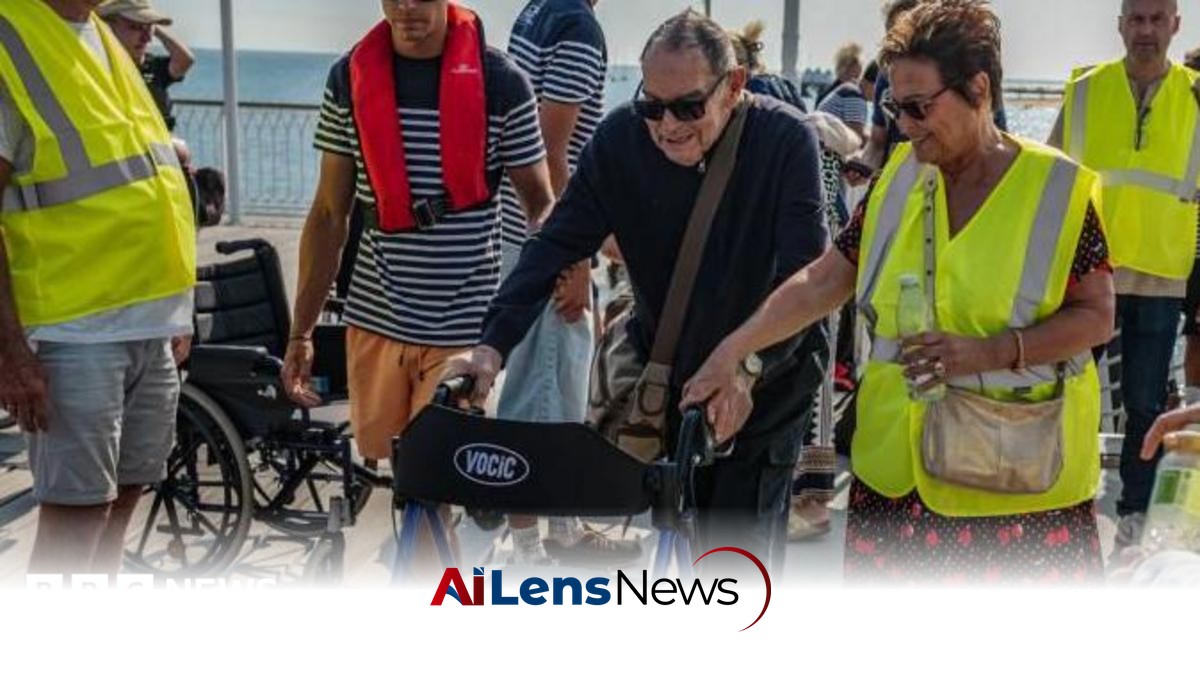


Families recount their frantic escapes from wildfires in France, detailing emergency evacuations and the chaos that ensued during their vacations.
New Delhi, India Jul 25, 2026 ALN: Families have relived how their tranquil holidays in France turned into a race to escape raging wildfires.
Tourists told the BBC of emergency alerts in the middle of the night, desperate drives just metres from six-storey high flames and the sight of people flocking to beaches with their suitcases. The wildfires, which have ravaged parts of south-west France and central Spain, have resulted in the displacement of more than 220,000 people, prompting the French military to assist in firefighting efforts while the Spanish government declared a national emergency.
These wildfires are not a new phenomenon in the region, but the intensity and scale of the current fires have raised alarm among local authorities and residents alike. Climate change has been cited as a significant factor contributing to the increasing frequency and severity of wildfires across Europe, particularly in Mediterranean countries like France and Spain. This year, the combination of extreme heat, dry conditions, and strong winds has created a perfect environment for wildfires to spread rapidly.
As the fires rage on, winds and continued heat are exacerbating the situation, with some tourists reporting smelling acrid smoke like a "bonfire" even in areas that are not directly affected by the flames. The hazardous conditions have raised concerns about air quality and health risks for both residents and visitors. Flights to Bordeaux and Madrid, the closest cities to the blaze-hit regions, are currently not affected, allowing some semblance of normalcy amidst the chaos. Earlier on Saturday, a French foreign minister described the fires as a "tragedy" but urged tourists not to cancel their travel plans, highlighting the importance of tourism to the French economy.
Among those caught up in the crisis is Zac Morrison, who arrived in Cap Ferret—a popular peninsula blanketed with pine trees 40 miles (65km) south-west of Bordeaux—on Thursday. The 21-year-old from London, who is on holiday with 10 members of his family, woke up to two text alerts at 4am and 6am ordering him to evacuate "by all means necessary". The urgency of the situation was underscored by the presence of the gendarmerie, who were going door to door to ensure that everyone was aware of the evacuation orders.
"We had to take everything," Morrison recounted. Since experiencing "panic" before a "well-organized" operation to clear out the entire peninsula, he mentioned receiving four different evacuation alerts from the authorities, the most recent at 5pm on Friday. This was after his family had already moved away from one fire, only to find themselves in the path of another. They took shelter on a beach in nearby Arcachon before a relative came to their aid with a place to stay. His brother Nate, 11, is still coming to terms with having seen the flames, a sight that is likely to be etched in his memory for years to come.
"Other people have been sleeping in schools and warehouses, and the beaches have had people just waiting for the go-ahead," Morrison added. "There's people on the beach here with their suitcases." The family was left awaiting instructions on whether they could continue their holiday until mid-August, a situation that has left many tourists in limbo. "It rained last night, but we are hearing that electricity may be cut out over the peninsula, especially as the ash clouds go towards Bordeaux... I've heard about houses burning in just an hour; it's scary, but sadly people here are getting used to it," he said, reflecting on the grim reality of living under constant threat from wildfires.
David Morton had enjoyed most of his week-long trip to Cap Ferret with his wife and two teenage sons, spending time in the forests under the baking sun. However, the mixture of "tinder dry" pine and intense heat helped upend their vacation on day five when the family was awoken on Friday morning. "Our phones were all flashing and bleeping; there was a message saying we had to evacuate immediately and drive on the one road out of the [Cap Ferret] peninsula," he recounted. The urgency was palpable as they literally threw everything into their suitcases and, within 15 minutes, were in the hire car, racing away from the encroaching flames.
Morton described the harrowing experience of coming within 500 meters of the main fire. "The flames were higher than full-size forest pine trees, so five or six storeys high, and it was clear this was a fire that was out of control at that point," he said, underscoring the sheer scale and danger of the situation. The family has since stayed with friends until their scheduled flight home from Bordeaux on Saturday, a bittersweet conclusion to what was meant to be a relaxing holiday.
Others are still stranded in the chaos. Rebecca Papin, a French-American visiting her holiday home in the commune of Biscarrosse, near the Cap Ferret peninsula, saw a large plume of smoke in the distance on Thursday. Just three hours later when she arrived home that night, "there were water planes in the sky dropping water, firefighter helicopters in the sky, and the entire distance was just a wall of flames," she told BBC Radio 4's Today programme. The sight was alarming, but the authorities appeared overwhelmed with trying to fight the fire and issued no evacuation order. As a result, she slept alongside her young children with her earplugs in, meaning she missed the sound of the evacuation overnight.
When she woke up in the morning, she found herself almost alone in the city, as the authorities had evacuated many residents. "The main roads are closed because they're on fire—the police advised me on Friday morning at 7:30 am to stay in my home, to not leave my home under any circumstance; there was ash falling from the sky like snow," she said, vividly describing the surreal and frightening atmosphere surrounding her. Two other British families told the BBC they had moved 100 miles away to other parts of France to continue their holidays, a testament to the widespread disruption caused by the fires.
BBC South's Joanna Kent, who was on holiday in the Cap Ferret peninsula earlier this week, recalled seeing her campsite deserted after two van loads of police told tourists they had 30 minutes to get out. Such rapid evacuations are becoming increasingly common as authorities scramble to manage the dangers posed by wildfires. While the wildfires show no sign of abating soon, the UK Foreign Office is currently not advising against travel to France or Spain, which may provide some reassurance to tourists still planning to visit the region.
Éléonore Caroit, France's minister for international partnerships, advised tourists on Saturday: "You have entire areas that are fine; you're seeing similar phenomena in Spain and other countries. I'm in Paris and nothing is happening, and most other regions are OK, so do please come to France and do not cancel your travel plans. But wherever you are, please do be advised as to what might be happening." This statement reflects the balancing act that authorities must perform in managing both public safety and the economic implications of tourism.
In Madrid, the fires are in the wider region far outside the city centre, and authorities are battling to stop different fires from merging. The flames have already shut down a facility for the US space agency NASA, located 37 miles (65km) west of the city. Madrid's regional president, Isabel Díaz Ayuso, described the fire there as the "worst fire in the history of the region," with the area facing a "perfect storm" of high temperatures, relentless wind, and merging fire fronts. As the situation continues to evolve, the impact of these wildfires will likely resonate far beyond the immediate areas affected, influencing policies on environmental management, tourism, and emergency preparedness in the years to come.
To learn more about the latest developments in Crime & Law, stay updated with our exclusive reports and analyses on AiLensNews.

